- Direct [link] to the mp3 file
- Experimental IPFS RSS Feed
- Executive Producers:
- Ross Easterling, Sir Macanudo, de La Paz
- Sir Karl with a K, Baron of the Internment Camp of New York
- Sir Rounded by my Privilege
- Associate Executive Producers:
- Sir Joseph of the HMS Pinafore
- Become a member of the 1433 Club, support the show here
- Knights & Dames
- Brittney Baxter -> Dame of the Amazeballs
- Per Christian Møller -> Sir Grumpy Dane - Protector of the happy medicated danes
- Matt Waltz -> Sir Waltz of Tempe
- Andrew Marcus -> Sir Rounded by my Privilege
- Check black knight Josh A
- End of Show Mixes: NEal JOnes - Lee O LaPuke - Rolando Gonzalez!
- Engineering, Stream Management & Wizardry
- Mark van Dijk - Systems Master
- Ryan Bemrose - Program Director
- Clip Custodian: Neal Jones
- Ukraine
- When Victoria Nuland said "Fuck the EU, they should have taken her at her word"
- Zlensky is the new Avenatti
- Ukraine Timeline
- 1990 Soviet Union Collapse
- The current conflict in Ukraine has its seeds in the 1990’s and the US-backed collapse of the Soviet Union. During high-level Two Plus Four Treaty talks pertaining to Germany’s reunification in 1990, talks between US Secretary of State James Baker III and then-Soviet leader Mikhail Gorbachev, along with France, the UK and the West German government, over unification of Germany, Baker gave a verbal promise that NATO would not move “one inch” to the East to threaten former Soviet territories, in return for the USSR allowing German reunification within NATO.
- Putin’s 2007 Munich Speech
- At the 2007 annual Munich Security Conference, as the Bush-Cheney administration had announced plans to install US missile defense systems in Poland, Romania and the Czech Republic to,“guard against rogue states such as North Korea or Iran,” Russia’s Putin delivered a scathing critique of the US lies and violation of their 1990 assurances on NATO. By that time 10 former communist Eastern states had been admitted to NATO despite the 1990 US promises. Furthermore, both Ukraine and Georgia were candidates to join NATO following US-led Color Revolutions in both countries in 2003-4. Putin rightly argued the US missiles were aimed at Russia, not North Korea or Iran.
- In his 2007 Munich remarks Putin told his Western audience, “It turns out that NATO has put its frontline forces on our borders, and we continue to strictly fulfil the treaty obligations and do not react to these actions at all. I think it is obvious that NATO expansion does not have any relation with the modernization of the Alliance itself, or with ensuring security in Europe. On the contrary, it represents a serious provocation that reduces the level of mutual trust. And we have the right to ask: against whom is this expansion intended? And what happened to the assurances our western partners made after the dissolution of the Warsaw Pact? Where are those declarations today? No one even remembers them.” Putin added, “But I will allow myself to remind this audience what was said. I would like to quote the speech of NATO General Secretary Mr Woerner in Brussels on 17 May 1990. He said at the time that: “the fact that we are ready not to place a NATO army outside of German territory gives the Soviet Union a firm security guarantee”. Where are these guarantees?” That was 15 years ago.
- The 2014 Maidan Coup d’Etat
- By November 2013 an economically corrupt and floundering Ukraine under elected and also very corrupt President Viktor Yanukovych, announced that, rather than accept a “special” association with the EU, Ukraine would take a far more generous offer from Moscow to join the Eurasian Economic Union led by Moscow. Russia had agreed to cut the price of Russian gas to Ukraine by 30% and to buy $15 billion of Ukraine bonds to ease the Kiew financial crisis.
- At that point, on 21 November, Arseniy Yatsenyuk, the man selected by Washington’s Victoria Nuland and Kiev Ambassador Geoffrey Pyatt, together with then-Vice President Joe Biden, launched what were called Maidan Square protests against the Yanukovych regime backed by US NGOs. On February 20, 2014 after CIA-organized snipers, reportedly recruited from nearby Georgia, killed dozens of student protesters and also police, leading Yanukovych to flee, Yatsenyuk became Prime Minister in a hand-picked US-run regime, hand-picked by Nuland and Biden among others.
- Later in December 2014 in an interview with a Russian newspaper, George Friedman of Stratfor, a private firm consulting to the Pentagon and CIA among others, said of the US-led February 2014 Kiev regime change, “Russia calls the events that took place at the beginning of this year a coup d’etat organized by the United States. And it truly was the most blatant coup in history.” He was boastful in the interview.
- That Kiev coup regime proceeded after February 22, 2014 to wage a war of extermination and ethnic cleansing of Russian-speakers in eastern Ukraine, led to a large degree by a private army of literal neo-nazis from Right Sector (banned in Russia), the same ones who ran security in the Maidan Square and launched a reign of terror against Russian-speaking Ukrainians. Battalions were formed of neo-nazi mercenaries. They were given official state status as “Ukrainian National Guard” soldiers, the Azov Battalion, financed by Ukrainian mafia boss and billionaire oligarch, Ihor Kolomoisky, the financial backer of Zelenskyy as president. The Azov soldiers even sport open SS runes as its logo. In 2016, the Office of the UN High Commissioner for Human Rights (OHCHR) accused the Azov Battalion, officially upgraded to a regiment in January 2015, of committing war crimes such as mass looting, unlawful detention, and torture.
- Today Nuland is Biden’s Under Secretary of State for Political Affairs responsible for Ukraine and Russian affairs. She is well aware of who the Azov Battalion are.
- Zelenskyy and Munich 2022
- On February 19 in Munich, Ukrainian President Zelenskyy made his threat to deploy nuclear weapons on Ukrainian territory. He expressed this as his unilateral revocation of the 1994 Budapest Memorandum, although Ukraine was not a signatory of the agreement. Two days later on the evening of February 21, Putin made his speech recognizing the sovereign independence of the Donetsk and Lugansk People’s Republics. He explicitly referenced Zelenskyy’s Munich nuclear weapons pledge: “This is not empty bravado,” Putin stressed in his speech.
- On March 6 Moscow state news agency, RAI Novosti, quoted a senior Russian SVR foreign intelligence source with details on a secret Ukraine project, reportedly with vital covert Western support, to build a Ukrainian nuclear missile capability and a Ukrainian atom bomb in brazen violation of the Nuclear Non-Proliferation Treaty. According to the report, Ukrainian nuclear scientists were disguising the developments by locating them near the high-radiation levels of Chernobyl nuclear reactor site, an explanation for the swift Russian moves to secure Chernobyl. “It was there, judging by the available information, that work was underway both on the manufacture of a “dirty” bomb and on the separation of plutonium,” RIA Novosti quotes the source. The primary bomb research facility was located at the National Scientific Center, “Kharkov Institute of Physics and Technology.” As of this writing reports of fierce fighting underway between Russian forces and neo-nazi Ukrainian Azov fighters who reportedly are planning to blow up the research reactor site and blame it on Russia. The battle for control of the large Zaporizhzhia Nuclear Power Plant is also apparently part of the attempt to conceal the illegal Ukraine bomb project.
- It now begins to become more clear that Putin had serious reason to react at the Ukraine nuclear threat. A Ukrainian nuclear missile within six minutes of Moscow would present existential danger whether Ukraine were in NATO or not.
- Huge Military Buildup- Biowarfare?
- There was more. Ukrainian press reported a year ago about new Western-built de facto NATO naval bases in Ochakov and Berdyansk as, “modern infrastructure facilities capable of receiving ships of all types, equipped according to NATO standards and built with the money of the alliance countries.” The media boasted, “In three years we will be able to strike at Russian ships in the Black Sea with our mosquito fleet. And if we combine with Georgia and Turkey, the Russian Federation will be blocked,’ Ukrainian military experts boasted. “
- In addition, the US Pentagon had no less than eight, perhaps as many as 30 top-secret bioweapons research labs across Ukraine testing DNA of some 4,000 military volunteers. Once Russian soldiers moved to secure the evidence, the US Embassy in Kiev deleted previous mention of the sites from its website, and Ukrainians reportedly moved to destroy the lab evidence. Ukrainian labs in Kharkiv and elsewhere were operating in cooperation with the United States. Stocks of such weapons were being secretly stored in direct violation of international conventions.
- A full month before the Russian military action on 24 February in Ukraine, independent biowarfare researcher, Dilyana Gaytandzhieva, obtained documents detailing “US Pentagon biological experiments with a potentially lethal outcome on 4,400 soldiers in Ukraine and 1,000 soldiers in Georgia. According to the leaked documents, all volunteer deaths should be reported within 24 h (in Ukraine) and 48 h (in Georgia).” She details the human experiments, which include testing for antibodies against some 14 pathogens including Crimean-Congo hemorrhagic fever, Borrelia species (Lyme disease) and others. According to the documents the labs in Ukraine and Georgia are part of a Pentagon “$2.5 billion Defense Threat Reduction Agency (DTRA) Biological engagement program which includes research on bio agents, deadly viruses and antibiotic-resistant bacteria.”
- On March 6, in a statement to the official RAI Novosti in Moscow, Major General Igor Konashenkov, spokesman for the Russian Ministry of Defense, stated they had received documents, “from employees of Ukrainian biological laboratories confirming that components of biological weapons were being developed in Ukraine, in close proximity to Russian territory.” He noted, “In the course of a special military operation, the facts of an emergency cleansing by the Kiev regime of traces of a military biological program being implemented in Ukraine, funded by the US Department of Defense, were uncovered.”
- Added to this evidence of nuclear and bioweapon WMD placements inside Ukraine in recent years, the West NATO member countries have been pouring billions of dollars of military equipment including anti-tank weapons and explosives into Ukraine while Zelenskyy, rumored by opposition to be in hiding in the US Embassy in Warsaw, calls repeatedly for a NATO “No-Fly” zone over Ukraine, an act that would be a direct casus belli of war between Russia and NATO a war that rapidly could go nuclear or beyond.
- The question is whether this years-long provocation by Washington and NATO of Russian national security via Ukraine is aimed at destroying the viability of Russia as a sovereign nation and military power. Is it a calculated move to use sanctions against Russia to cause global collapse and energy crises, food shortages and worse, all to advance the Davos 2030 Great Reset agenda? Blame it on the “evil Putin” and Russia while BlackRock and the financial powers reorganize the world? It is too early to tell but certain is that whatever prompted the action by Russia on February 24, 2022 had to have been far more serious than CNN or other controlled Western media are telling us.
- Psaki false flag
- Now that Russia has made these false claims, and China has seemingly endorsed this propaganda, we should all be on the lookout for Russia to possibly use chemical or biological weapons in Ukraine, or to create a false flag operation using them. It’s a clear pattern.
- US / Ukraine Biolabs agreement
- Cancelling Russia
- Putin responsible for covid
- The Energy Gambit
- Switching to Saudi, Venezuela and Iran - swapping prisoners already
- Can you switch oil type Willy Nilly? Refining same?
- Energy models on shutdown price level
- Our models (!) predict weird things over 225. Imho they become very unreliable at such extreme points. My personal opnion is that 190 is sustainable for a brief period. Anything over 6 months will result in unpredictable events. We suspect that at a certain point there simple will not be enouge oil and goverments will intervene to save the “vital”or “to big to fail” industries. Its hard to predict how this will look.
- If this whole reshuffling of the oil supply chain will work we should be more or less ok. Any hickups and it will become unpredictable. The worst case scenario I have seen is at 350 and that will for sure come with big government interventions. The carless Sunday would be a happy memory. I have not seen any scenarios dealing with this.
- Great Reset Finance
- We Won Again - Banker on SWIFT Deplatforming
- The winners last time were the insiders in the American system. Doesn’t mean it was a good thing, but a fact. Same here.
- The central banks used the same financial playbook with Venezuela, Iran, Syria and Afghanistan, but this time many major economic actors jumped in without a legal requirement to do so. There is no tenable outsider position for anyone who accumulates wealth. It seemed possible a month ago. It’s clearly impossible now.
- There’s a lot of people mumbling about China responding by going rogue, but the more likely thing is that they go more inside the system. They can see the size of their economy will give them power an army never could.
- Swift Disconnection driven by EU
- Details from SWIFT
- Ukraine and Russia Geopolitical Issues and Sanctions FAQ
- FAQs for Russian financial sanctions
- Sanctions affecting connectivity to Russian banks
- BICs subject to disconnection
- We understand that at this time SWIFT customers may have requests for information. Due to the large number of customers around the world, we are unable to complete individual questionnaires at present.
- Recognising this need, we are keeping the community informed through these continually updated FAQs and via our regular support and customer communications channels.
- SWIFT is unable to interpret regulations on behalf of our customers or comment on what defines alternate payment channels or private messaging networks and/or on the legality of using them. We encourage our customers to engage their legal teams on such questions. We are also unable to provide operational advice on anything other than SWIFT-specific operations.
- We appreciate your understanding and encourage you to check these resources regularly for the latest updates and information.
- What is the status of sanctions affecting SWIFT connectivity for Russian banks?
- As a neutral utility with a global systemic character, SWIFT acts in the interests of the entire member community and plays a pivotal role in supporting the global economy through its provision of secure financial messaging services. Any decision to impose sanctions on countries or individual entities rests with the competent government bodies and applicable legislators. SWIFT is and always has been in full compliance with applicable sanctions.
- On 1 March 2022, pursuant to international and multilateral action to intensify financial sanctions against Russia, EU Council Regulation (EU) 2022/345 concerning restrictive measures in view of Russia's actions destabilising the situation in Ukraine was passed. This regulation prohibits specialised financial messaging providers, such as SWIFT, from providing such services as of 12 March 2022 to entities designated therein. SWIFT is incorporated under Belgian law and must comply with this regulation. Consequently, SWIFT will disconnect access of designated Russian entities to the messaging system on 12 March 2022
- Which BICs will be disconnected from the SWIFT Network?
- The Broadcast on March 2 announced the implementation of EU COUNCIL REGULATION (EU) 2022/345, and listed the 7 Russian entities and 7 Russia based subsidiaries, all designated according to the EU Regulation's requirements. As confirmed in the Broadcast on March 4, those BICs are as follows:BICInstitutionVTBRRUMMJSC VTB BANKVTBRRUM2JSC VTB BANKVTCARUMMJSC VTB CAPITALMOSWRUM2BM-BANK JOINT-STOCK COMPANYPOSBRUMMPOST BANK JOINT STOCK COMPANYCNOVRUMMNOVIKOMBANK JSCPRMSRUMMPROMSVYAZBANK PJSCJSNMRUMMBANK OTKRITIE FINANCIAL CORPORATION (PUBLIC JOINT-STOCK COMPANY)RUDLRUMMBANK OTKRITIE FINANCIAL CORPORATION (PUBLIC JOINT-STOCK COMPANY)OBJSRUMMOTKRITIE BROKER JOINT STOCK COMPANYRUIDRUMMROSGOSSTRAKH BANKROSYRU2PTHE ROSSIYA BANKSOMRRUMMSOVCOMBANKDALVRU8XORIENT EXPRESS BANKBFEARUMMVEB BANK (VNESHECONOMBANK)EXIRRUMMEXIMBANK OF RUSSIA JSC
- When will disconnection take place?
- The institutions listed above, and any related test-and-training BICs, will be disconnected between the hours of 10.00 GMT and 23.00 GMT on 12 March 2022.
- All queued messages pending at the time of disconnection will automatically be aborted, and no subsequent retrieval will be possible.
- [NEW – 8 MARCH 2022] Why are there new BICs listed in addition to those mentioned in the March 2 broadcast?
- The Broadcast on March 2 announced the implementation of EU COUNCIL REGULATION (EU) 2022/345, and listed the 7 Russian entities and 7 Russia based subsidiaries, all designated according to the EU Regulation's requirements.
- This list of entities, translates – at a more technical and operational level – in a broader set of Live and T&T BICs, which have been confirmed in the Broadcast on March 4. We trust this list of BICs helps our community prepare at operational level.
- What are the steps for a disconnection?
- In the first instance, a pre-notification will go out to key stakeholders confirming SWIFT's intention to comply with applicable sanctions and initiate the disconnection process.
- Subsequently, the affected entities and related Service Bureau will be notified of the disconnection.
- SWIFT will then initiate the disconnection through our standard provisioning process at the time specified in the notification.
- Once completed, a broadcast will be sent to the community informing them of the disconnection.
- How will I know which BICs have been subject to disconnection?
- Once the impacted BICS have been disconnected, a broadcast message will be sent to all FIN users to inform them.
- Deactivated sanctioned BICs are removed from the online directories and will get the updated status "D" (Deleted) in the other directories as of the next monthly update.
- We continuously monitor ongoing developments and if there is any change to the status of sanctioned BICs we will advise by broadcast.
- What happens if I have messages in flight at the time of disconnection?
- In line with SWIFT policies, all messages still in queue at the time of disconnection/suspension/deactivation would automatically be aborted, and no subsequent retrieval would be possible. In such cases, the "new" status of deactivated BICs is shown as "obsolete" in the free BIC search on swift.com main page as of the deactivation date.
- How do I prevent my back office system sending messages to the deactivated BICs?
- You should both revoke and delete the RMA authorizations with the deactivated BICs. This will prevent your CBT from sending authenticated messages. You can also remove the deactivated BICs from the correspondent file of your CBT to force your CBT to reject messages to these BICs before they are sent to the SWIFT network.
- What will happen to a message I send to a deactivated bank?
- The message will be marked with error code H50
- What will happen to a file I send over SWIFTNet to a deactivated bank?
- The file will be rejected with a CUG error.
- What will happen to a message in which I use the BIC of a deactivated bank in the body of the message text?
- The message will be NAKed with error code T28
- How can I identify messages NAKed due to imposed sanctions?
- NAKs will work as usual, they arrive on your SWIFT interface as per normal practice.
- In addition, SWIFT will send you an MT066 Solicited Undelivered Message Report in reply to your MT046 Undelivered Message Report Request. You can specify in your request if you want the MT066 reply to give you all undelivered messages at report time or all undelivered messages for more than nn hours (nn = range between 1 and 24 hours). In the reply MT066 you can find the message status in field 341.
- Will the deactivation of these banks be permanent? Will other banks be added and/or removed and if so, where can we find the latest updated list?
- We continuously monitor regulatory developments relevant to SWIFT's operations. As per standard process, we will advise on any further adjustments via a broadcast message.
- If the banks are reinstated on SWIFT, what will I have to do to communicate with them again?
- You will have to reintroduce the BICs in the correspondent file of your CBT and you will have to re-initiate any revoked RMA authorization.
- Will correspondent banks that have sent messages to these banks in the past be able to put in a request to SWIFT to retrieve these messages?
- Correspondent banks (sending or receiving customers) can put in a request to SWIFT to retrieve message data in accordance with the SWIFT Data Retrieval Policy. As per this policy, they can either: i) request retrieval when this possibility is offered as part of the SWIFT services and products, as is documented in the relevant service description; or ii) request mass retrievals of their message data in an emergency or other exceptional circumstance.
- For the sake of clarity, upon deactivation, deactivated customers can no longer request nor authorise retrieval of their messages.
- In the event a bank is disconnected from the network, what is the impact on their contracts for the various products and services provided by SWIFT?
- If a bank is disconnected from the SWIFT network, all its underlying contracts are terminated.
- In the event a bank is subjected to US technology-related sanctions, what is the impact on SWIFT products and services, such as tokens?
- A bank designated SDN (by US OFAC) will not trigger blocking export /re-export of US technology. However, if the bank is designated under US Export control restrictions, then any new shipment of tokens would be blocked. They would still be allowed to use tokens previously acquired.
- What cyber security measures does SWIFT currently have in place?
- All SWIFT services are operating as normal.
- SWIFT takes security very seriously and we have a strong control environment in place for physical and cyber security.
- Building on the strong physical and cyber security control environment already in place as part of the baseline threat level at SWIFT, we continuously monitor the threat landscape, which may result in increasing or decreasing our physical and/or cyber threat level.
- Raising the threat level results in additional prevention/detection/response and/or recovery measures. These would typically include increased resourcing focused on intelligence gathering, network scanning, dedicated threat hunting and monitoring for known Indicators of Compromise (IoC) and Tactics, Techniques and Procedures (TTP).
- SWIFT also has relationships with key industry cyber security organizations, including the Financial Services Information Sharing and Analysis Center (FS-ISAC).
- What business continuity measures does SWIFT have in place?
- All SWIFT services are operating as normal.
- As part of our normal business continuity preparedness, SWIFT has robust plans in place for all our critical services with the ability to continue normal operations in a crisis situation. We remain ready to activate these plans if necessary.
- Can SWIFT help me to comply with sanctions?
- Yes, SWIFT has a wide range of services to help customers meet their responsibilities to comply with national and international legislation, while supporting the resilience and integrity of the global financial system as a global and neutral service provider.
- We offer a range of screening solutions that can be implemented quickly, according to our customers' own risk appetites. The Transaction Screening Service is used by approximately 1,000 institutions to screen SWIFT traffic against the latest sanctions lists, whilst our Payment Controls solution screens transactions as they go over the SWIFT network to help institutions identify anomalies in their traffic, which might indicate a cyber risk or fraud.
- You can find out more about these services here.
- There are also a host of resources available on the SWIFT Knowledge Centre to support you with your sanctions screening requirements, including links to Publications, Knowledge Based Articles, How To Videos, SWIFTSmart courses, and other related products (e.g. Name Screening, Sanctions List Distribution, Transaction Screening).
- How quickly will SWIFT be updating in sanctions lists within the Transaction Screening Service (TSS) and Sanctions Screening Service (SSS) products?
- Details (content and timing) of the sanctions list updates are made available to customers on swift.com (SSS) or in the application itself (TSS).
- We attempt to update and activate new lists in a diligent manner, to ensure they are taken into account soon after publication by the regulators or, for commercial third-party lists, soon after being made available by the supplier.
- If we are not able to activate changes to a public sanctions list within a reasonable period upon their publication by the regulator, then we will inform customers about the exact date of activation of such changes in the service.
- I am a SWIFT service bureau – where do I direct my customers if they have questions?
- Please send them the link to these FAQs in the first instance.
- For any other questions, please direct them to SWIFT Customer Support.
- A scheduled update to one of my SWIFT services didn't happen as planned, when will it happen now?
- Following the sanctions announcement on March 1st by the European Commission, we have had to reprioritise certain releases, updates and installations. We will communicate the new dates as soon as is practically possible via our usual communication channels.
- How / where can I view my SWIFT message traffic flows to help me understand the potential impact of the sanctions on my operations?
- If you are a user of our Compliance Analytics tool you can use it to analyse your institution's SWIFT payments traffic and get a view of your branch and correspondent activity.
- You can also use our Traffic Analytics tool within Watch Traffic to analyse your organisation's FIN, INterAct and FileAct traffic volumes.
- For more information, click on the product names above, visit the SWIFT Knowledge Centre or speak to your relationship manager.
- Where do I go for further information?
- This page contains the most up to date information and is regularly updated.
- If you have any further questions, please get in touch with your designated SWIFT relationship manager.
- Food Intelligence
- Beef Is Now A “Luxury Meat” And Goldman Sachs Says To Brace..
- Americans could be cutting steaks and burgers from their diets as inflation soars, if beef-packer profit margins are any indication.
- Processors like Tyson Foods Inc. and JBS USA are making the least amount of money per head of cattle slaughtered in more than two years, according to data from HedgersEdge LLC. That’s a sign that demand for the luxury meat is flagging.
- Pig Pharma
- Arena Pharma ticks higher on Nasdaq delisting notice for Pfizer deal - NewsBreak
- Mandates & Boosters
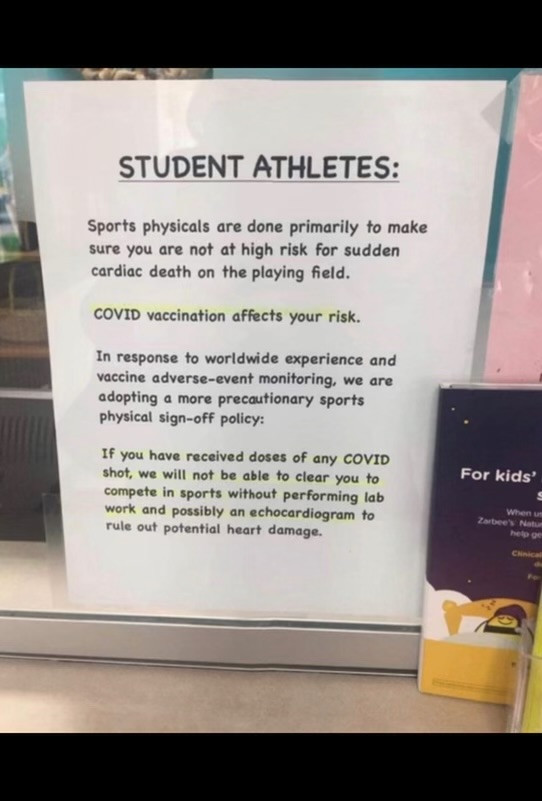
- Pediatric office in a School Oregon
- VAERS
- Some thoughts on the death of Shane Warne
- First off, apologies if I ramble a bit - I've had a couple of pints from the latest batch of home brew, and so far the science says that it's a lot stronger than I expected!
- I thought I could add a bit of context about the tragic passing of Shane Warne last week, which came up briefly in show 1432, and in a couple of donation notes. He probably wasn't that well known over in the US, but he was a global superstar in the cricketing world. Think Tiger Woods or Michael Jordan, but blonde.
- He was arguably the best player of the nineties and noughties, and his ability to win matches for Australia was second to none. A true force of nature on the field, and a mega personality off it - he was rumoured to be partial to a fair few round-table delicacies, and in later life he became a pretty decent World Poker Tour player. I guess his ability to out-think opponents on the cricket field transferred nicely to the poker table.
- In terms of how he died, he did have the coof last year, he had been vaccinated, and of course allegedly taking various substances probably didn't help. Who knows, maybe all three got him. Or perhaps spending three years with Liz Hurley wore him out ;) Just kidding!
- In any case, his passing at the young age of 52 has brought a great sadness to the sport. It feels like a Kobe moment, he was taken too early. One of my favourite players of all time, and that's high praise indeed from an Englishman. As I write this I've just read he's going to be given a state funeral, which tells you how much he meant to Australia.
- CDC VAIDS?
- Connection in the CDC, by 3/11 expect massive news public announcement
- As of this weekend, almost all employees of CDC know that the vaxx causes VAIDS(vaccine induced auto immune disease syndrome)or new HIV crisis as has been 100% scientifically confirmed. They are demanding that the CDC leadership makes major public news conference announcement by March 10th stating this, or the employees will whistleblow to news agencies everywhere by march 11th.
- Get ready for a shock to the system like never seen before.
- CDC just released this... HIV Cluster Detection and Response
- Coincidentally all this HIV/AIDS shit popping up after the vax.
- https://www.cdc.gov/hiv/programresources/guidance/cluster
- STORIES
- QRZ.com Removes Russian Callsigns | DX-World
- UPDATE III '' Published on QRZ.com by AA7BQ
- The 24-hour restriction on our database has ended. It was done in protest to raise awareness of the situation in Ukraine and it wasn't without controversy. Good arguments were made on both sides of the issue and now it's time to reconcile, think about what was said, and try and find a way to move forward with dignity.
- QRZ most certainly isn't going to end the war or even make a dent in it. I let my feelings and sympathy for the victims speak from the heart in the hope that something good could come from it. I'm sorry for causing such an uproar and you can be certain that it won't happen again, to any country or region for as long as QRZ lives. We said what our hearts needed to say and now we have to get back to our jobs and families and loved ones. Peace be with all.
- UPDATE II '' It would appear QRZ.com owners have had a rethink as Russian and Belarussian callsigns are again searchable and on display. [Time: 16:30z]
- This post should now be titled: '' QRZ.com Had Removed Russian Callsigns''
- UPDATE I '' Belarus callsigns have had also been removed from the QRZ.com database.
- We were alerted that all Russian amateur radio callsigns have been removed from the huge QRZ.com database. We checked for ourselves and sure enough they are.
- Here's the reason according to AA7BQ , the founder and publisher of QRZ.com [UPDATE '' url now deleted]
- Do you agree on QRZ.com's decision to wipe out all Russian callsigns from their database?
- NO (80%, 555 Votes)YES (18%, 127 Votes)OTHER (2%, 11 Votes)Total Voters: 693
- GM is working with PG&E to turn electric vehicles into a virtual power grid in California - The Verge
- General Motors and utility Pacific Gas and Electric are teaming up to determine how electric vehicles can be used to power people's homes during a blackout '-- or even feed power back into the grid during times of peak demand. The pilot will take place in PG&E's home state of California, where wildfires are putting strain on the state's energy infrastructure.
- GM is the latest automaker to team up with a utility around the idea of ''vehicle-to-grid'' technology. (PG&E has also partnered with BMW around a similar idea.) The idea is to use bi-directional charging equipment to push and pull energy from electric vehicles at any given time. In essence, it treats high-capacity batteries as not only tools to power EVs but backup storage cells for the electrical grid.
- GM expects that it will have ''1 million units of EV capacity'' in North America by 2025
- GM expects that it will have ''1 million units of EV capacity'' in North America by 2025, said Rick Spina, vice president of EV commercialization at the company. Unlike other automakers, GM has yet to release an EV with ''vehicle-to-load'' capabilities, but Spina said that it plans on correcting that via an over-the-air software update soon.
- ''We're on the cusp of turning our EVs into a power source for our customers,'' Spina said. ''And these customers aren't even aware of it.''
- This summer, GM will test bi-directional charging technology at PG&E's lab in Northern California, as well as the ''software-defined communication protocols'' that will enable power to flow from a charged EV into a person's home automatically when the power fails. Later, GM and PG&E will identify a select group of customers in California to test these technologies in their own homes, with the goal of launching wider customer trials by the end of the year.
- ''Imagine a future in which there's an EV in every garage that functions as a backup power source whenever it's needed,'' Spina said.
- There's still a lot to be determined, such as how GM will convert power from the EV battery from direct current to alternating current. Spina said the company has yet to determine whether that process will happen in the vehicle itself or through another piece of equipment, like a wall-mounted charger.
- The potential, Spina said, is to transition away from dirty, gas-powered generators toward something cleaner and more useful. The average California home uses around 20 kilowatt-hours of power a day, while a Chevy Bolt has a battery with 60kWh capacity, Spina said. That translates into at least two or three days worth of electricity for a single home, he said.
- using a broad swath of EVs to ''smooth'' the grid
- Other possibilities include using a broad swath of EVs to ''smooth'' the grid during times of peak demand, like a summer heatwave. In those scenarios, Spina said he could envision some kind of payout of ''customer benefit'' to those EV owners who are using their vehicles to feed power back into the grid.
- PG&E, which is based in San Francisco, serves a territory that's a fertile testing ground for vehicle-to-grid technology. It's already home to more than 320,000 electric vehicles. That's roughly 20 percent of all electric cars in the US, according to the utility. By 2030, 5 million EVs are expected to be on the road in California. (Last year, California became the first state to ban the future sale of internal combustion engines.)
- With enough EVs connected to the grid, they could become sizable ''virtual power plants.'' These are basically just networks of connected batteries that utilities might be able to call upon collectively when they need more juice. Interconnected residential solar power systems can also serve the same purpose. The hope is that by working together, all of those batteries can alleviate stress on the grid whenever there's peak demand. Virtual power plants could also replace polluting, fossil-fueled ''peaker plants'' that utilities have historically relied on when they're short on energy.
- EU mulls bonds for energy, defence: press
- The EU is planning to issue bonds to finance energy and defence in the wake of Russia's invasion of Ukraine, Bloomberg reported on March 8.
- The proposals could be presented after EU leaders hold an emergency summit in Versailles in France on March 10-11, sources told the news agency. The bonds would be issued by the European Commission and the proceeds would go to member states in the form of concessionary loans.
- Opinion: The price of gasoline isn't really at a record high. In fact, the inflation-adjusted cost of driving a mile was higher for most of the past century - MarketWatch
- Inflation is soaring and many families are struggling to keep ahead, but it might help to know that real prices have been higher before without crashing the economy.
- With the war on Ukraine coming on top of a global inflationary surge, the retail price of gasoline in the United States has soared by 80 cents a gallon since the beginning of the year to an all-time record of $4.17 per gallon, we are told. This statistic is true, but trivial.
- Breaking news: U.S. inflation rate climbs again to 7.9%, CPI shows, and Ukraine war threatens more pain for consumers
- People who believe gasoline prices have never been so high are suffering from what economists call ''the money illusion.'' Simply put, this means our brains are fooling us into thinking we've never had it so bad, when actually the cost of driving a mile in your gas-powered vehicle is now lower than it was for most of the past century.
- Yes, prices are up, but so are our incomes. And cars are much more efficient now than they were even 10 years ago.
- The real price of gasoline per mile driven is nowhere near a record. MarketWatch Once you adjust for the purchasing power of a dollar and the increased gas mileage of the cars and trucks on the road, you'll recognize that '-- even with the huge price increases in just the past few weeks '-- gasoline prices RB00, -0.43% aren't so high that they'll crush the economy.
- Money illusionI last wrote about the money illusion in August. You're suffering from the money illusion if you think that nominal prices are what's important, instead of what your income can buy. It's matter of perspective.
- It's like your smug granddad lecturing you about how a candy bar ''ought'' to cost a nickel, just as it did back in the day. But everyone knows a nickel isn't worth what it used to be and we should start acting like we know it.
- Prices aren't fixed units that never change, like temperatures, distances or weights. Instead, prices are relative. Context matters.
- Gasoline cost $1.25 a gallon back in 1980, but the average worker was only making $6.75 an hour. It took the typical worker about 11 minutes to earn enough to buy a gallon of gas. Now with gas costing $4.17 a gallon, it takes a typical worker making $26.94 an hour just over nine minutes to earn enough to buy a gallon.
- And that gallon of gas takes you a lot further, which is what you really should care about when you fill up your tank. The utility you can get from using that gallon of gasoline is the only thing that matters to you. What matters to politicians may be different.
- Cars are more efficientIn 1980, gas mileage was so awful that driving a mile cost 30 cents for gas (in today's dollars). Today '-- if your vehicle gets the national average of about 23 miles per gallon '-- driving a mile costs about 16 cents for the gas. And if gasoline goes to $4.50 as some analysts predict, the cost will be a bit under 20 cents a mile.
- For most of the years between 1923 and 1980, gasoline cost about 25 cents a mile (in 2022 dollars). Gas prices weren't so high during those years that they prevented people from enthusiastically embracing automobiles. That's when the car completely transformed the American way of life.
- Which means gas prices aren't so high now that they'll cripple our economy. Yes, they are higher than they were a year ago, but they've been much higher before. The economy managed to grow in the early 1980s and the early 2010s (not to mention the 1920s, the 1940s, 1950s and 1960s) when the cost of gas per mile was higher.
- Gas would have to get to nearly $7 a gallon to match the 30 cents per mile of 1980 and 1981.
- Wheat isn't at a record, eitherAnd, by the way, the same logic applies to the price of wheat. What really matters is the nutritional value of the wheat and how long you'd have to work to earn the money to buy it.
- The real price of wheat has been trending lower until recent months. MarketWatch In nominal terms, wheat futures were barreling this week toward an ''all-time high'' of $13.50 per bushel (about 60 pounds). But in real '-- inflation-adjusted '-- terms, the cost of wheat was more than $30 (in 2020 dollars) in previous price spikes in 1920, 1947 and 1974.
- More on the money illusion:Breaking news: 'Americans have never seen gasoline prices this high'--nor have we seen the pace of increases so fast and furious': Gas tops $4 a gallon
- Also read: Diesel's cost climb could hit consumers harder than record gasoline prices
- Finally: Wheat continues surge toward all-time high as Russian invasion of Ukraine shuts down exports
- September 11 Accomplice Sent Home to Saudi Arabia
- President Joe Biden's Department of Defense released Mohammad Mani Ahmad al-Qahtani back into the arms of Saudi Arabia after nearly 20 years in prison for his involvement in the September 11 terrorist attack.
- Dubbed the ''20th hijacker'' from September 11, al-Qahtani was transferred out of Guantanamo Bay this week after a review board determined last year that he did not present a current national security threat.
- ''The United States appreciates the willingness of Saudi Arabia and other partners to support ongoing U.S. efforts toward a deliberate and thorough process focused on responsibly reducing the detainee population and ultimately closing of the Guantanamo Bay facility,'' the Defense Department said in a statement.
- Mohammad Mani Ahmad al-Qahtani has allegedly suffered from schizophrenia since a young age, according to Shayana Kadidal, senior managing attorney of the Guantanamo project at the Center for Constitutional Rights, with witnesses testifying to have seen him talking to himself and hearing voices.
- Al-Qahtani had been accused of working with al Qaeda in lead up to the 9/11 attack
- ''In a statement from February, the Center for Constitutional Rights said that an independent psychiatric expert examined al-Qahtani at Guantanamo and confirmed the diagnosis of schizophrenia in 2016, and the military's own doctors unanimously agreed with that conclusion,'' reported CBS News.
- Former Bush administration official Susan Crawford declined to recommend that al-Qahtani be prosecuted in 2009, charging that his treatment in prison ''met the legal definition of torture.''
- ''That's why I did not refer the case,'' Crawford told The Washington Post.
- Mohammed al-Qahtani was tortured so badly that he was ineligible to be tried at the war crimes court https://t.co/nMfYzptvhI
- '-- Kyle Rempfer (@Kyle_Rempfer) March 8, 2022
- Declassified court documents from 2016 show that al-Qahtani had been accused of working with al Qaeda in lead up to the 9/11 attack and would have been the ''20th hijacker'' had he not been denied entry into the United States after immigration officers ''found the circumstances of his travel and his conduct to be suspicious,'' according to the documents. Per CBS News:
- The declassified documents said the lead hijacker, Mohammed Atta, was ''almost certainly'' waiting to pick up al-Qahtani at the Orlando airport in 2001 when he was denied entry and deported to the United Arab Emirates.
- The government said al-Qahtani returned to Pakistan and Afghanistan in August 2001 to tell Atta and Osama bin Laden separately that he was denied entry to the U.S. He then traveled to Kabul to fight against the U.S. and its allies, the documents said. The government said al-Qahtani was briefly in Tora Bora and rejoined bin Laden and his bodyguards before being captured.
- The documents alleged he ''repeatedly'' tried to ''disassociate himself'' from al Qaeda, although the government said that they believed his ''repeated denials of terrorism involvement'' limited their ''insight into his motivation.'' His family has no known links to terrorism, the government said.
- President Joe Biden has aimed to eventually close Guantanamo Bay, currently home to 38 detainees.
- Sen. Marco Rubio (R-FL) denounced al-Qahtani's release in a statement on Monday, calling him a ''terrorist who made it his life goal to kill Americans.''
- ''I believe he remains committed to jihad and the destruction of the United States,'' Rubio said. ''Now, because of the Biden Administration's misguided policies, he has the opportunity to once again return to the battlefield.''
- ''The decision to transfer al-Qahtani is not simply a lapse in judgment, it is a massive error which poses a serious risk to our national security and the security of our allies,'' he added.
- Sen Rubio issued a statement following the transfer of Al-Qaeda terrorist Mohammed al-Qahtani from Guantanamo Bay to Saudi Arabia, calling it "a massive error which poses a serious risk to our national security and the security of our allies.''
- Read more'¬¸https://t.co/hXF7EwkNCZ
- '-- Senator Rubio Press (@SenRubioPress) March 8, 2022
- Britain to start approval process for Rolls-Royce mini nuclear reactor | Reuters
- A Rolls-Royce logo is seen at the company's aerospace engineering and development site in Bristol, Britain, December 17, 2015. REUTERS/Toby Melville
- Register now for FREE unlimited access to Reuters.comLONDON, March 7 (Reuters) - The British government has asked its nuclear regulator to start the process for approving Rolls-Royce's (RR.L) planned small- scale modular nuclear reactor, which policymakers hope will help cut dependence on fossil fuels and lower carbon emissions.
- Britain last year backed a $546 million funding round at the company to develop the country's first small modular nuclear reactor (SMR), part of its drive to reach net zero carbon emissions and promote new technology with export potential. read more .
- Energy minister Kwasi Kwarteng has also said new nuclear projects will play an important part in Britain's efforts to reduce its reliance on expensive gas, which hit fresh record high prices on Monday amid the crisis in Ukraine.
- Register now for FREE unlimited access to Reuters.comSMRs can be made in factories, with parts small enough to be transported on trucks and barges and assembled more quickly and cheaply than large-scale reactors.
- Each mini plant can power around one million homes and Rolls-Royce has forecast the SMR business could create up to 40,000 jobs based on British and export demand.
- Britain's Office for Nuclear Regulation (ONR) said it had been asked to begin a Generic Design Assessment (GDA) for Rolls-Royce SMR Ltd's 470 megawatt SMR design.
- ''The assessment will begin once the necessary arrangements around timescales and resources have been put in place,'' the ONR said in a statement.
- A GDA is the formal process for approving a new nuclear reactor. This is the first time a small scale reactor has been assessed by regulator.
- The process typically takes around 4-5 years for large scale reactor designs.
- Register now for FREE unlimited access to Reuters.com Reporting by Susanna TwidaleEditing by Mark Potter
- Our Standards: The Thomson Reuters Trust Principles.
- War in Ukraine Triggers Global Food Emergency | 2022-03-09 | SupplyChainBrain
- Russia's invasion of Ukraine means the food inflation that's been plaguing global consumers is now tipping into a full-blown crisis, potentially outstripping even the pandemic's blow and pushing millions more into hunger.
- Together, Russia and Ukraine account for a whopping portion of the world's agricultural supplies, exporting so much wheat, corn, sunflower oil and other foods that it adds up to more than a tenth of all calories traded globally. Now, shipments from both countries have virtually dried up.
- Commodity markets are soaring '-- wheat is up about 50% in two weeks and corn just touched a decade high. The surging costs could end up weighing on currencies in emerging markets, where food represents a bigger share of consumer-price baskets. And analysts are predicting export flows will continue to be disrupted for months even if the war were to end tomorrow.
- The crisis extends beyond just the impact of grain exports (critical as they are). Russia is also a key supplier for fertilizers. Virtually every major crop in the world depends on inputs like potash and nitrogen, and without a steady stream, farmers will have a harder time growing everything from coffee to rice and soybeans.
- Plainly speaking, there are few other places on the planet where a conflict like this could create such a devastating blow to ensuring that food supplies stay plentiful and affordable. It's why Russia and Ukraine are known as the breadbaskets to the world.
- ''It's an amazing food shock,'' said Abdolreza Abbassian, an independent market analyst and a former senior economist at the United Nations' Food and Agriculture Organization. ''I don't know of a situation like this in the 30 years I was involved in this sector.''
- The shock is already reverberating across the world.
- In Brazil, another agricultural powerhouse, farmers can't get the fertilizers they need because retailers are reluctant to provide price quotes. In China, one of the world's biggest food importers, buyers are snapping up purchases of U.S. corn and soybean supplies amid concerns that fewer crop shipments from Russia and Ukraine could set off a global scramble for grains. In Egypt, people are worried that prices for the subsidized loaves of bread they depend on could rise for the first time in four decades, while footage of citizens in Turkey trying to grab tins of cheaper oil went viral. And within Ukraine itself, food is running short in some major cities.
- ''The damage is done,'' Abbassian said. ''We'll have months before we return to anything called normality.''
- The timing couldn't be worse. When the pandemic first hit in 2020, images of lines snaking around food banks and empty grocery shelves shocked the world as nearly a tenth of the global population went hungry. But at the time, food inventories were still abundant.
- That's no longer the case. Grains are the staples that keep the world fed, with wheat, corn and rice accounting for more than 40% of all calories consumed. But grain stockpiles are poised for a fifth straight annual decline. A combination of higher shipping costs, energy inflation, extreme weather and labor shortages have made it harder to produce food.
- As a result, global food prices are already at record highs, with the benchmark U.N. index increasing more than 40% over the past two years. The surge has had crushing consequences. Food insecurity has doubled in the past two years, and the World Food Programme estimates 45 million people are on the brink of famine.
- The current crisis is going to make things worse, likely sending hunger to unprecedented levels as the conflict turns millions of people into refugees and sends food prices even higher.
- ''The bullets and bombs in Ukraine could take the global hunger crisis to levels beyond anything we've seen before,'' David Beasley, executive director of the U.N. agency, said in a statement.
- The world has grown hugely dependent on Ukraine and Russia for their wheat, a crop used in everything from bread to couscous and noodles. The nations account for a quarter of global trade. They are also cheap suppliers, which makes their exports favorites for importers in the Middle East and North Africa, including in Egypt, the world's biggest wheat buyer.
- Benchmark wheat futures traded in Chicago reached a record-high price Tuesday.
- ''You're going to see a spike of starvation around the world,'' Eurasia Group President Ian Bremmer told Bloomberg TV's Surveillance.
- Wheat is a key commodity to watch because bread prices have a long history of kickstarting unrest. Going back to the days of the French Revolution, food insecurity has sent people into the streets demanding better conditions. Supplies from Russia have been part of this bigger picture before. In 2010, the country experienced a record heat wave that devastated crops, and the government banned exports. Wheat prices in international markets doubled in a matter of months, raising the cost of bread for millions of people. The price run-up simmered as part of the mix of factors that sparked uprisings in the Arab Spring.
- While Russia's wheat hasn't come directly under sanction, trade from the country has been severely disrupted. Some Russian grain is flowing by land, while vessel transit is near a standstill due to the military action in the Black Sea.
- Meanwhile in Ukraine, where farming is so core to the national identity that its flag depicts blue skies blanketing yellow fields, growers are finding fieldwork perilous, while some have joined the military just weeks before spring planting begins. Analysts are warning that lots of acres could go bare this year.
- ''The potential is here for a serious hole in world grain supplies in 2022,'' said Scott Irwin, an agricultural economist at the University of Illinois.
- Food moves through the world in a complex web of imports and exports.
- Many countries have positioned agricultural production toward exporting a few key products, rather than for food sufficiency. So nations like Ghana and Cameroon can be big global players in the cocoa market, but are still hugely dependent on shipments for wheat.
- Meanwhile, grain-exporting nations can see what's happening in Russia and Ukraine and decide that the world won't have enough wheat or barley, so instead of shipping, they move to keep supplies at home. That can lead to a dangerous domino effect of increasing protectionism that hurts the world's poorest and the countries most-dependent on imports.
- There are some early signs of protectionism brewing. Hungary is banning grain exports, and Serbia's president said Monday the country will soon curb wheat shipments. Argentina and Turkey made moves last week to increase their control over local products. And Moldova, albeit a small shipper, temporarily halted exports of wheat, corn and sugar from this month.
- In Cameroon, which imports all of its wheat supplies, prices for grain shipments have jumped 70%. On top of that, the surging price of oil is sending freight rates soaring, so transportation costs for wheat have climbed by some 70% as well, according to Jean Marie Kakdeu, president of the Cameroon Coalition for the Promotion of National Production.
- ''The country could experience famine if nothing is done to resolve'' the increase in prices, Kakdeu said.
- Other players could see an opening with what's happening in Russia and Ukraine and decide to fill the hole. India, for example, has increased wheat shipments in recent years. Vijay Iyengar, chairman and managing director of Singapore-based Agrocorp International Pte., predicts the South Asian country will see exports exceed a record 7 million tons in the current season if the conflict drags on.
- But many of the nations that could typically help fill supply deficits are themselves seeing production problems. In Brazil, a major supplier of corn and soybeans, a crippling drought is ruining crops. Dry weather also wilted fields in Canada and parts of the U.S. last year. Farmers in North America could see the current prices as a reason to plant more this spring, but it will be months before those acres get harvested.
- ''It's a global commodity squeeze at the moment,'' said Andy Soo, commodities broker at Advanced Research Commodities in Singapore.
- Nate Mook has been on the ground in western Ukraine, serving meals to families who are waiting as many as 30 to 40 hours in line to cross the border in Poland. It's becoming hard to source some kinds of food where he's been working in Lviv, while he hears from his World Central Kitchen colleagues in Kyiv that they're running into shortages. Supply chains are crumbling '-- as just one example, truck drivers that would be deployed for mass distribution of things like rice or potatoes are afraid to go out for fear of being mistaken for a military vehicle and getting attacked.
- ''I imagine in the days and weeks ahead things are going to get harder,'' said Mook, chief executive officer of the food-relief group.
- In Russia, too, hunger will likely be on the rise as sanctions hurt the nation's economy. In the 1990s, economic sanctions against Iraq were linked to the death of half a million children as malnutrition rose.
- Since the start of the pandemic, hunger has been increasing in almost every corner of the world, with the biggest toll coming in parts of Africa and Asia.
- ''The last thing the world needed at this point was another conflict, because conflict is driving hunger in the world,'' said Deepmala Mahla, vice president for humanitarian affairs at CARE. ''I just find it unacceptable to a level of disbelief that in this day and age, people are sleeping hungry when the world has the ability and is producing more than the food required to feed everyone.''
- Brian Deese - Wikipedia
- American business executive and government official
- Assumed office January 20, 2021PresidentJoe BidenDeputyDavid KaminBharat RamamurtiSameera Fazili
- Preceded by Larry Kudlow In office February 23, 2015 '' January 20, 2017PresidentBarack Obama Preceded by Pete Rouse Succeeded by Jared KushnerStephen MillerActing
- In office June 9, 2014 '' July 28, 2014PresidentBarack Obama Preceded by Sylvia Mathews Burwell Succeeded by Shaun Donovan In office June 27, 2013 '' February 13, 2015PresidentBarack Obama Preceded by Heather Higginbottom Succeeded by Robert GordonBornBrian Christopher Deese
- ( 1978-02-17 ) February 17, 1978 (age 44) Belmont, Massachusetts, U.S. Political partyDemocraticSpouse(s)Kara Arsenault
- EducationMiddlebury College (BA)Yale University (JD)Brian Christopher Deese (born February 17, 1978) is an American economic and political advisor who is the 13th Director of the National Economic Council, serving under President Joe Biden.[1] He also served as a senior advisor to President Barack Obama.[2] Earlier in the Obama administration, Deese served as the deputy director and acting director of the Office of Management and Budget. Deese also served as deputy director of the National Economic Council.[3] Deese served as the Global Head of Sustainable Investing at BlackRock.
- Early life and education [ edit ] Deese was born in Belmont, Massachusetts. He earned a Bachelor of Arts degree in international politics and economics from Middlebury College in 2000 and a Juris Doctor from Yale Law School in 2009.[4] In 2002, Deese was named a finalist for the Rhodes Scholarship, though he was not ultimately selected. [5]
- Career [ edit ] Deese worked as a junior fellow at the Carnegie Endowment for International Peace and as a research assistant at the Center for Global Development,[6] hired by founder Nancy Birdsall, according to The New York Times, where he co-authored the book Delivering on Debt Relief. Later he worked as a senior policy analyst for economic policy at the Center for American Progress, under Gene Sperling.[7]
- Clinton and Obama 2008 presidential campaigns [ edit ] After the Center for American Progress, Deese joined Hillary Clinton's presidential campaign as her economic policy director. After Clinton was defeated in the primaries, Deese went to work as an economic advisor to the Barack Obama 2008 presidential campaign.[8]
- Following the 2008 presidential election, he served as a member of the Economic Policy Working Group for the presidential transition.[9]
- In the James S. Brady Press Briefing Room of the White House, National Economic Council Director Brian Deese participates in a briefing Friday, January 22, 2021.
- National Economic Council [ edit ] At the start of the Obama presidency, Deese was appointed as a special assistant to the president for economic policy, serving in the National Economic Council (NEC). According to The New York Times, he emerged as "one of the most influential voices" on the auto industry, and specifically the Chrysler and GM bailout. Deese argued against the government letting Chrysler liquidate based on a concern around the impact on industrial communities across the mid-west.[10]
- In 2011, Deese was named deputy director of the NEC. In this role, he coordinated policy development for the White House on taxes, financial regulation, housing, clean energy, manufacturing, and the automotive industry. According to The New Republic, he was among Washington's "most powerful, least famous people".[11]
- Office of Management and Budget [ edit ] Deese was named deputy director of the Office of Management and Budget in the summer of 2013. He briefly served as the acting director in summer 2014, between the departure of Sylvia Mathews Burwell and the appointment of Shaun Donovan.[citation needed ]
- Senior Advisor to the President [ edit ] Following the departure of John Podesta, Deese took over his brief on climate and energy. Unlike Podesta, who served as Counselor to the President, Deese was promoted to the position of Senior Advisor to the President.[12][13] In this position, Deese played an influential role in negotiating the Paris Climate Agreement in December 2015.[14] Along with Katie Beirne Fallon, Deese helped to negotiate the 2015 Bipartisan Budget Act, which replaced the budget sequestration and increased federal spending by $80 billion over two years.[15][16] In February 2016, the President tapped Deese to oversee the Supreme Court nomination process, which led to the President's nomination of Chief Judge Merrick Garland to the Supreme Court on March 16, 2016.[17]
- BlackRock [ edit ] As Global Head of Sustainable Investing from October 2017 until December 2020, Deese led BlackRock's Sustainable Investing Team which "is focused on identifying drivers of long-term return associated with environmental, social and governance issues."[18] In an interview with The Weather Channel, Deese was asked about BlackRock's "heavy investments" in the fossil fuel industry.[19] Deese said that BlackRock's role is to provide clients with "more choices and more options" in investments and "this is not just about excluding entire industries or entire classes of companies, but it's also about getting to understand, again, which of these companies is better positioned for the transition."[19]
- During this time his salary was at least $2.3 million, with the possibility that through BlackRock's restricted stock plan, Deese could have made an additional $2.4 million.[20][21]
- References [ edit ] ^ Joe Biden (December 3, 2020). "Deese to be Biden's top White House economic adviser - Introducing Brian Deese as Director of the National Economic Council". Politico. Archived from the original on December 15, 2021 . Retrieved November 29, 2020 '' via YouTube. ^ "Brian Deese". Rocky Mountain Institute. Archived from the original on December 19, 2018 . Retrieved December 18, 2018 . ^ "Brian Deese". Washington Post politics. Archived from the original on December 19, 2018 . Retrieved December 18, 2018 . ^ "Middlebury College National Fellowship & Scholarship Competition Results". Archived from the original on August 12, 2006. 2002 Nominees: Claire Bowen '02 (American Literature), Brian Deese '00 (Political Science) ... 2002 Finalists: Claire Bowen, Brian Deese ^ "Middlebury College National Fellowship & Scholarship Competition Results". Archived from the original on August 12, 2006. 2002 Nominees: Claire Bowen '02 (American Literature), Brian Deese '00 (Political Science) ... 2002 Finalists: Claire Bowen, Brian Deese ^ "Biography: Brian Deese". PetersonInstitute.org. Archived from the original on July 21, 2011 . Retrieved July 7, 2011 . ^ Deese, Brian (September 13, 2004). "That Rosy Unemployment Rate". AmericanProgress.org. Archived from the original on March 3, 2018 . Retrieved July 7, 2011 . ^ Block, Sandra (October 18, 2008). "McCain vs. Obama: The story on taxes". USA Today. Archived from the original on December 5, 2010 . Retrieved July 7, 2011 . ^ "Policy Working Groups". Change.gov. Archived from the original on July 19, 2011 . Retrieved July 7, 2011 . ^ Rattner, Steven (2011). Overhaul: An Insider's Account of the Obama Administration's Emergency Rescue of the Auto Industry. Mariner Books. p. 122. ISBN 978-0547577425. ^ The Editors (November 3, 2011). "Washington's Most Powerful, Least Famous People". The New Republic. Archived from the original on December 15, 2019 . Retrieved October 25, 2011 . ^ Dovere, Edward-Isaac (January 21, 2015). "Brian Deese to succeed John Podesta". Politico. Archived from the original on February 16, 2015 . Retrieved February 16, 2015 . ^ "Senior Advisor Brian Deese". whitehouse.gov. Archived from the original on July 14, 2019 . Retrieved March 2, 2015 '' via National Archives. Brian Deese is currently serving as Assistant to the President & Senior Advisor. His duties include overseeing climate, conservation and energy policy and advising the President on a range of domestic and international policy issues. ^ "Statement by the President on the Paris Climate Agreement". whitehouse.gov. December 12, 2015. Archived from the original on January 21, 2017 . Retrieved July 23, 2016 '' via National Archives. ^ Herszenhorn, David M. (October 27, 2015). "A Budget Deal Promising Peace Is Rooted in Modest Goals". The New York Times. ISSN 0362-4331. Archived from the original on November 2, 2015 . Retrieved July 23, 2016 . ^ "Remarks by the President at Signing of the Budget Act of 2015". whitehouse.gov. November 2, 2015. Archived from the original on February 16, 2017 . Retrieved July 23, 2016 '' via National Archives. ^ "Obama taps senior adviser Brian Deese to run Supreme Court nomination process". Washington Post. Archived from the original on August 22, 2016 . Retrieved July 23, 2016 . ^ "Brian Deese Biography". BlackRock. BlackRock. Archived from the original on October 17, 2020 . Retrieved May 5, 2020 . ^ a b "Climate Corner Office: BlackRock's Brian Deese Talks Sustainable Investing with Neil Katz". YouTube. The Weather Channel. Archived from the original on August 8, 2020 . Retrieved May 5, 2020 . ^ [1] ^ Schwartz, Brian (March 20, 2021). "Biden's closest advisors have ties to big business and Wall Street with some making millions". CNBC . Retrieved March 27, 2021 . External links [ edit ] Media related to Brian Deese at Wikimedia Commons"Brian Deese, Senior Advisor." The White House."Nomination of Brian C. Deese to be Deputy Director of the Office of Management and Budget" (PDF) . U.S. Government Printing Office. May 13, 2013. Office Name Term Office Name Term White House Chief of Staff Ron Klain 2021''pres. National Security Advisor Jake Sullivan 2021''pres. White House Deputy Chief of Staff Jen O'Malley Dillon 2021''pres. Deputy National Security Advisor Jonathan Finer 2021''pres. White House Deputy Chief of Staff Bruce Reed 2021''pres. Homeland Security Advisor Elizabeth Sherwood-Randall 2021''pres. Counselor to the President Steve Ricchetti 2021''pres. White House Communications Director Kate Bedingfield 2021''pres. Jeffrey Zients 2021''pres. Deputy White House Communications Director Pili Tobar 2021''pres. Senior Advisor to the President Mike Donilon 2021''pres. Kate Berner 2021''pres. Anita Dunn 2021 White House Press Secretary Jen Psaki 2021''pres. Director, Public Engagement Cedric Richmond 2021''pres. Deputy Press Secretary Karine Jean-Pierre 2021''pres. Director, Intergovernmental Affairs Julie Chvez Rodriguez 2021''pres. Director, Speechwriting Vinay Reddy 2021''pres. Chair, Council of Economic Advisers Cecilia Rouse 2021''pres. Director, Digital Strategy Rob Flaherty 2021''pres. Director, Domestic Policy Council Susan Rice 2021''pres. Director, Legislative Affairs Louisa Terrell 2021''pres. White House Cabinet Secretary Evan Ryan 2021''pres. Director, Presidential Personnel Catherine M. Russell 2021''pres. Director, Oval Office Operations Annie Tomasini 2021''pres. White House Staff Secretary Jessica Hertz 2021 Personal Secretary to the President Neera Tanden 2021''pres. Personal Aide to the President Stephen Goepfert 2021''pres. Director, Management and Administration Anne Filipic 2021''pres. Chief of Staff to the First Lady Julissa Reynoso Pantale"n 2021''22 Director, Scheduling and Advance Ryan Montoya 2021''pres. vacant 2022 Director, Office of Science and Technology Policy Eric Lander 2021''pres. White House Social Secretary Carlos Elizondo 2021''pres. Director, Office of Management and Budget Shalanda Young (acting) 2021''pres. Chief of Staff to the Vice President Hartina Flournoy 2021''pres. United States Trade Representative Katherine Tai 2021''pres. White House Chief Usher Robert B. Downing 2021''pres. Director, Office of National Drug Control Policy Rahul Gupta 2021''pres. Director, White House Military Office Maju Varghese 2021''pres. Chair, Council on Environmental Quality Brenda Mallory 2021''pres.(s) Indicates nominee requiring Senate confirmation.
- $1.5 Trillion Omnibus Bill Would Fund Climate, Energy, Water
- WASHINGTON, DC, March 9, 2022 (ENS) '' Today, two days before deadline, Senate Appropriations Committee Chairman Patrick Leahy, a Vermont Democrat, and Vice Chair Richard Shelby, an Alabama Republican, released the full text of the bipartisan $1.5 trillion fiscal year 2022 Omnibus Appropriations Bill. The Senate and House are expected to vote on the package this week before the government funding deadline of March 11.
- While the measure funds both defense and non-defense spending, it includes a 6.7 percent increase for non-defense discretionary programs, the largest increase in four years.
- Democrats fought for this increase to allow Congress to make new investments in science and research, health care, climate change adaptation and mitigation, and implementation of the bipartisan infrastructure bill, among other priorities.
- ''This bill makes bold investments in critical areas that went underfunded or even neglected in the previous administration, including education, childcare, healthcare, the environment, science and research, and many more,'' Senator Leahy said, announcing Democrat agreement with Senate Republicans on the committee.
- ''The bill includes $13.6 billion in emergency assistance to Ukraine and our NATO allies. It includes $15.6 billion in emergency assistance to continue to combat the COVID pandemic, ensuring we have the vaccines and therapeutics needed combat this virus, including critical aid to fight the virus abroad,'' Leahy explained.
- ''It is unquestionably in the interest of the American people that the House and the Senate act quickly to pass this bill and send it to the President,'' Leahy said. ''This agreement is the product of months of hard work and compromise.''
- Senator Patrick Leahy (D-VT), left, speaks with Sen. Richard Shelby (R-AL) at a committee meeting in 2018. Leahy and Shelby are the top two appropriators in the Senate. (Photo courtesy Office of Senator Leahy)For their cooperation, Leahy thanked his Vice Chairman Richard Shelby, an Alabama Republican; Congresswoman Rosa DeLauro, the Connecticut Democrat who chairs the House Appropriations Committee; and the Republican Ranking Member of that committee Congresswoman Kay Granger of Texas.
- Senator Shelby said today, ''After many months of work, in close cooperation with Chairman Leahy, we have reached an agreement to fund the government for the remainder of the current fiscal year. Throughout this process, I have insisted upon dollar-for-dollar parity for defense and non-defense increases, preservation of long-standing legacy riders, and the exclusion of partisan poison pills. I am pleased that we have achieved all three goals.''
- ''The bill includes a $42 billion increase in defense spending, provides robust funding for border security, and preserves policies that protect life. It also provides critically needed emergency assistance for our allies that are resisting Russian aggression in Ukraine without decreasing base defense funding by a single dollar. '... The House and Senate should act quickly and send it to the President.''
- Senator Leahy ensured that his home state of Vermont has some of the environmental funding in this bill, particularly for Lake Champlain.
- A view of the New York shore of Lake Champlain from the Vermont shore. December 12, 2021 (Photo by Mike Mahaffie)A freshwater glacial body of water, Lake Champlain lies between the Adirondack Mountains of New York and the Green Mountains of Vermont '' 125 miles long from the Canadian province of Quebec south to Whitehall, New York.
- Polluted rainwater and snowmelt runoff from parking lots, roads and streets, logging roads, farm fields and croplands, and lawns is reaching Lake Champlain from the streams and rivers draining into it.
- Phosphorus is one of the nutrient pollutants found in the runoff and is the greatest threat to clean water in Lake Champlain. Too much phosphorus pollution stimulates growth of toxic algal blooms that can turn Lake Champlain water green and poison people and their pets.
- Roughly 20 million gallons of water are pumped from the lake every day to supply drinking water to about 145,000 people from the 100 public water supplies that are monitored and regulated by the states and Province of Qu(C)bec. About 35 of these are community water systems; the rest are motels, trailer parks, restaurants, and other businesses.
- The Omnibus bill includes more than $30 million for restoration of this unique lake.
- Lake Champlain Basin environmental infrastructure and habitat restoration projects $5.25 million.Leahy secured $20 million, a $5 million increase, for the Lake Champlain Geographic Program, which is a U.S. Environmental Protection Agency program designed to implement a comprehensive pollution prevention, control and restoration plan for protecting the Lake Champlain Basin.Climate Change and the Environment
- ''The climate crisis poses a significant threat to human health and the environment,'' the bill states. It includes:
- ' $3.2 billion '' a historic level of funding and a 12 percent increase '' for Energy Efficiency and Renewable Energy (EERE) to support vehicle technologies, wind power, solar energy, weatherization assistance programs, and renewable grid integration.
- ' $2.94 billion at the Department of Energy to support research, development, and demonstration of cybersecurity, grid innovation, and carbon-free power sources keeping the United States at the forefront of energy innovation.
- Electric school buses parked with their charging stations. They serve the Stockton Unified School District, which implemented its $500,000 smart charging strategy and management solutions to establish the district's zero-emission school bus fleet. May 2021 (Photo courtesy The Mobility House)' $1.903 billion to the Department of Transportation to mitigate the effects of climate change in our transportation system.
- ' $1.234 billion for the new Carbon Reduction program to help reduce transportation related greenhouse gas emissions.
- ' $425 million for the Environmental Protection Agency's clean air programs to tackle the existential threat of climate change and address the continuing burden of harmful air pollution on communities across the country.
- ' $92 million for diesel emission clean up grants that take high polluting diesel engines off the streets and out of communities.
- ' $31.97 million for Tribal Climate Resiliency funding through Bureau of Indian Affairs to help Tribal communities address and prepare for the effects of climate change.
- ' $2.7 billion for State Revolving Loan funds to build climate resilient water infrastructure and address other priority water challenges.
- ' $1.23 billion for EPA's Superfund program to create jobs and protect the public by cleaning up hazardous waste sites and $46 million for brownfield grants that tackle contaminated properties and power local economic growth.
- ' $5.877 billion, an 8 percent increase, for the National Oceanic and Atmospheric Administration (NOAA) for, among other things, climate modeling and prediction and helping communities adapt to a change climate. This amount includes a more than $40 million increase for various NOAA climate-related projects and programs, such as $18 million for climate research and $6.25 million for offshore wind permitting and expansion.
- ' $41.5 million, a 24 percent increase, for the Assistance to Coal Communities Program within the Economic Development Administration at the Department of Commerce to support communities transitioning away from coal-fired power plants.
- ' $587 million in EPA geographic programs to restore and build the resilience of priority waterbodies across the country through community-led initiatives.
- Wildland Fire and Fire Prevention
- The Marshall Fire eats away at dry grass and trees in Boulder County, Colorado, January 5, 2022 (Photo by Jack)''Increasingly intense wildfires have destroyed communities across the country,'' the bill states. Funding in the bill includes:
- ' $5.7 billion, a 5.5 percent increase, for the Forest Service to radically improve forest restoration and fire risk reduction efforts and to increase year-round staffing to carry out this work.
- ' $2.45 billion for the Wildfire Suppression Operations Reserve Fund.
- Energy and Water Development
- The Energy and Water Development fiscal year 2022 appropriations bill totals $54.971 billion in new discretionary budget authority, $3.2 billion more than fiscal year 2021. The bill provides over $10 billion to improve the nation's water infrastructure, which includes funding for the Army Corps of Engineers' Civil Works program at $8.3 billion, an increase of $548 million over fiscal year 2021.
- Funding for the Corps will be used to build projects that reduce the risk of storm damage, improve the efficiency of U.S. ports, harbors, and inland waterways, and restore aquatic environments.
- The bill also includes $1.924 billion for the Bureau of Reclamation, an increase of $233 million over fiscal year 2021, to assist the Western states in maintaining water supply for Tribes, rural communities, and parts of the country experiencing drought conditions.
- U.S. Senator Dianne Feinstein, the California Democrat who chairs the Energy and Water Development Appropriations Subcommittee, said, ''I'm pleased that the omnibus federal spending bill the Senate will soon consider includes significant investments to modernize our water infrastructure and boost funding for clean energy.''
- ''The bill includes more than $10 billion for the Corps of Engineers and Bureau of Reclamation to complete water infrastructure projects, many of which will help California better respond to severe drought,'' Senator Feinstein said.
- ''The bill also includes more than $45 billion for Energy Department programs to fight climate change, expand renewable energy programs, conduct research at national laboratories and universities, improve cybersecurity capabilities and continue nuclear nonproliferation efforts,'' she explained.
- A new marine-powered desalination device developed by the National Renewable Energy Lab, NREL. Affectionately called HERO WEC, the device will enter the Waves to Water Prize DRINK Contest Finale, set for April 2022. Supported by the U.S. Department of Energy's Water Power Technologies Office and administered by NREL, the $3.3 million contest aims to accelerate innovation in small, modular, wave-powered desalination systems that can produce clean water in disasters or water-scarce coastal and island locations.The bill provides $1.924 billion for the Department of Interior, which is $233 million over fiscal year 2021. This amount includes $23 million for the Central Utah Project, which moves water from the Colorado River basin in eastern Utah to the western slopes of the Wasatch Mountain range where population and industrial development are rapidly growing.
- Funding for the Bureau of Reclamation of $1.747 billion includes $155 million to advance Western long-term drought strategies, such as water storage, water recycling and reuse, and desalination.
- Department of Energy funding provides a historic level of $3.2 billion for the Department of Energy's Energy Efficiency and Renewable Energy division, EERE, a $339 million increase over fiscal year 2021 levels.These increased funds will support EERE efforts to decarbonize vehicles, hydrogen research and development, marine, wind, and solar energy, and weatherization assistance programs, and renewable grid integration.
- ''These programs are foundational to facilitating our nation's ongoing transition to a clean energy economy,'' the bill states.
- Energy Sector Cybersecurity
- The agreement provides $185.8 million for Cybersecurity, Energy Security, and Emergency Response (CESER), $29 million over 2021 levels. The increased funding will ensure continued success of the Department's programs aimed at strengthening the security and resilience of the U.S. energy sector. Further, the CESER funding will expand the Department's ability to coordinate and respond to threats facing the energy sector by leveraging the private sector, industry, and National Labs.
- The agreement provides $1.654 billion for nuclear energy research and development, $147 million over fiscal year 2021 levels. The funding continues to fund two advanced reactor demonstration projects approved in the last month of the Trump administration as well as small modular reactors. The agreement would also support a high-assay low-enriched uranium, HALEU, program for advanced reactor fuel development.
- Fossil Energy and Carbon Management
- The agreement provides $825 million for Fossil Energy and Carbon Management, an increase of $75 million over fiscal year 2021 levels. The increase in funding is focused on negative emission technologies like direct air capture and industrial carbon capture. Funding will expand research on how to turn captured carbon dioxide into usable products.
- Defense Environmental Cleanup
- The agreement provides $6.7 billion for Defense Environmental Cleanup activities, an increase of $284 million over fiscal year 2021 levels. Weapons research and development production dating as far back as World War II has left behind millions of gallons of hazardous waste. The bill provides increases across defense cleanup sites in: Washington, Idaho, California, Nevada, New Mexico, Tennessee, and South Carolina.
- The Omnibus Bill goes in two directions simultaneously on nuclear weaponry '' nonproliferation and armaments.
- The bill provides $2.354 billion for nonproliferation activities, an increase of $94 million over fiscal year 2021. The bill funds efforts to secure radiological materials in the U.S. and abroad, to conduct research and development activities on nuclear proliferation and detonation detection, and installation of radiological detection equipment at border crossing and seaports around the world.
- The bill provides $15.92 billion for nuclear weapons activities, an increase of $575 million over fiscal year 2021 levels and nearly seven times the amount set aside for nonproliferation.
- The bill fully funds life extension programs for the B61, W88, and W80-4 warheads. Increases are also included to address deferred maintenance among NNSA's facilities and improve its ability to modernize the nuclear stockpile.
- The bill funds Naval Reactors at nearly $2 billion, a $234 million increase over fiscal year 2021. The agreement includes funds for operations and infrastructure activities at facilities in Idaho, which provides for storage of spent fuel from U.S. Naval reactors; New York and Pennsylvania. The U.S. Navy currently operates 95 total nuclear power plants including 71 submarines, 10 aircraft carriers, and four prototype plants.
- To view the full text of the 2022 Omnibus Appropriations Bill, click here.
- Featured image: From left: Vermont Senator Patrick Leahy, chairman of the U.S. Senate Appropriations Committee, and Alabama Senator Richard Shelby, vice chairman of the Committee, hear 2022 budget testimony from Secretary of Defense Lloyd Austin, and Chairman of the Joint Chiefs of Staff Army General Mark Milley. Washington, DC, June 17, 2021. (Photo by Navy Petty Officer 1st Class Carlos M. Vazquez II courtesy Dept. of Defense)
- Environment News Service (ENS) (C) 2022 All Rights Reserved.
- Nets Ignore Biden Admin Freeing 20th 9/11 Hijacker from Gitmo | Newsbusters
- On Monday night, it was reported that the Biden administration would be releasing would be 9/11 hijacker Mohammad Mani Ahmad al-Qahtani from Guantanamo Bay. This outrageous revelation was completely ignored on Tuesday night by the three evening news broadcasts.
- Instead of reporting this despicable news, ABC's World News Tonight, CBS Evening News, and NBC Nightly News all decided their time was better spent on local weather reports, a fire in New York City's Central Park, and a small plane crash in Denver Colorado.
- While those are all important stories in the local communities where they took place, they aren't as big of a story as the release of a terrorist who would've taken part in the terrorist attacks that killed nearly three thousand Americans if he wasn't denied entry into the United States in August 2001.
- Al-Qahtani is referred to as the 20th hijacker who was widely expected to be aboard United Flight 93 since that flight had four hijackers instead of five like the other hijacked planes that day.
- Despite his apparent desire to come to the United States and kill thousands of innocent Americans, the Biden Defense Department decided in February that he was no longer a threat, and would be released from Guantanamo Bay and sent back to his home country of Saudi Arabia, according to a press release.
- ''On June 9, 2021, the Periodic Review Board process determined that law of war detention of Mohammad Mani Ahmad al-Qahtani was no longer necessary to protect against a continuing significant threat to the national security of the United States. Therefore, the PRB recommended that al-Qahtani be repatriated to his native country of Saudi Arabia, subject to security and humane treatment assurances'' the Defense Department statement says.
- This is the latest move in the Biden administration's plan to close the Guantanamo Bay Detention Camp according to The Daily Caller.
- This latest example of bias by omission from the three networks was made possible by Prevagen on ABC and Simplisafe on CBS and United Healthcare on NBC. Their information is linked so you can let them know about the biased news they fund.
- Clinton Global Initiative Reactivated After Long Hiatus
- In a statement on Friday, former President Bill Clinton said the Clinton Global Initiative (CGI) will be making its comeback to address the many challenges facing the world today, from climate change to Russia's invasion of Ukraine to the coronavirus pandemic.
- ''Cooperation and coordination has never been more urgent than it is now,'' wrote the former president. ''The COVID-19 pandemic has ripped the cover off of longstanding inequities and vulnerabilities across our global community. The existential threat of climate change grows every day.''
- ''Democracy is under assault around the world, most glaringly in Ukraine where Russia has launched an unjustified and unprovoked invasion that has put millions of lives in grave danger,'' he continued. ''The number of displaced people and refugees worldwide is higher than it has ever been'--more than one in 95 of all people alive on the planet today has been forced to flee their home'--and rising.''
- Partners in the @ClintonGlobal community are on the ground in Ukraine and across the region to provide urgent critical care. Here's a look at some of these important efforts: https://t.co/QAtjiGnRiS
- '-- Clinton Global Initiative (@ClintonGlobal) March 6, 2022
- A subset of the infamous Clinton Foundation, the Clinton Global Initiative ''convenes global and emerging leaders to create and implement solutions to the world's most pressing challenges,'' according to its website.
- ''Rather than directly implementing projects, CGI facilitates action by helping members connect, collaborate, and develop Commitments to Action '-- new, specific, and measurable plans that address global challenges,'' it says of itself.
- The Clinton Global Initiative ended in 2016 as Hillary Clinton launched her presidential campaign, fearing it could create a conflict of interest. It will convene for between September 19 to September 21 in New York City.
- ''Just like the world we're living in, the September meeting will likely look different than the ones we held before. But what will not be different is the spirit that has driven CGI from the very beginning'--the idea that we can accomplish more together than we can apart,'' the former president said in his announcement.
- Past events have featured A-list celebrity speakers and top business executives such as Ben Affleck, Bono, and former Presidents Barack Obama and Jimmy Carter. The initiative has also been sponsored by major corporations, from Coca-Cola, Barclays, Goldman Sachs, Blackstone Group, Laureate Education, Monsanto, and Standard Chartered Bank. As the Washington Examiner profiled in 2016 upon the initiative's downturn, CGI has drawn criticism for ''its atypical method of operation.''
- The last 5 years have ripped the cover off of longstanding global vulnerabilities, but I still believe we can accomplish far more together than we can apart. That's why I'm looking forward to the next chapter of @ClintonGlobal. My letter here: https://t.co/SQAJFmIF6G https://t.co/S1cHCwUHFS
- '-- Bill Clinton (@BillClinton) March 4, 2022
- ''Instead of issuing traditional grants to groups in need, the Clinton Global Initiative's primary function is to convene powerful figures from the business, political or entertainment worlds and encourage them to pledge contributions for future projects called 'commitments,''' noted the Examiner.
- ''However, the group's most recent philanthropic portfolio indicates fewer than half of the thousands of commitments made since 2005 have ever been completed,'' it added. ''The charity's financial structure has also raised eyebrows, since most direct contributions go toward the annual meeting or salaries rather than philanthropy.''
- The Moon Isn't What You Think It Is: Lunar Anomalies That Can't Be Ignored '' Down the Chupacabra Hole
- Each night the moon makes its majestic appearance. Without this luminous sphere, our planet would be a vastly different place. It is responsible for the ocean's tides, seasons, temperatures, and Earth's very rotation. Both humans and animals are affected by the lunar presence. Scientists have theories about the planetary object's origins yet all remain mere speculation. Some researchers disagree with current hypotheses and have proposed an intriguing conclusion. They argue the moon is an artificial satellite intentionally placed into orbit by advanced extraterrestrials.
- ''The Moon is bigger than it should be, apparently older than it should be and much lighter in mass than it should be. It occupies an unlikely orbit and is so extraordinary that all existing explanations for its presence are fraught with difficulties and none of them could be considered remotely watertight.''
- -Alan Butler, Who Built the Moon?
- Lunar Lore Throughout History While the notion that the moon is a synthetic celestial body may seem unimaginable, it has been discussed for thousands of years. Our ancient ancestors who had no contact with one another all shared nearly identical stories about a ''time before the moon''. Greek philosophers Aristotle and Plutarch referenced an age in which the astronomical orb did not exist. In Africa, Zulu legends chronicle how the planetoid was similar to an egg with its yoke removed. Certain Native American tribes believed their evening spotlight was brought here by advanced alien beings. Indigenous Colombians recounted a pre-lunar civilization in their writings. These diverse groups all describe a terrible cataclysm upon the moon's arrival. Widespread fatalities reduced the population to a single race. Modern science has ascertains that humans share one common ancestor: Mitochondrial Eve. Might it be plausible ancient fables may be in fact be knowledge of events long forgotten?
- Ancient cultures around the globe all speak of a time 'before the moon'. Rang Like a Bell & Strange Sounds Emitting Prior to mankind's historic cosmic ventures, Apollo 10 traveled to the dark side of the moon. During radio transcripts, the astronauts recount hearing ''eerie outer space music''. Bizarre electromagnetic tones similar to the frequencies recorded inside Saturn's rings were clearly audible. A dreadful otherworldly orchestra encompassed the ears of every voyager. NASA representatives quickly dismissed the acoustic oddity and blamed radio waves interfering with the moon's magnetic field. However, their argument is not applicable as the satellite does not possess a magnetic field.
- Apollo 12 infamously landed on the moon in November of 1969 and its intense force produced an artificial earthquake. Seismic devices registered the impact covered a forty-mile range. Astonishingly, the object rang like a bell for over thirty-five minutes. Aerospace officials were greatly intrigued by this phenomenon. On the following mission, executive personnel decided to send a heavier rocket and document the results. Apollo 13 was deployed and its module struck with the equivalence of eleven tons of TNT. For three hours, the planetoid reverberated with sounds similar to a massive gong. Such acoustics would be physically impossible for a solid mass to produce.
- Sounds emitting from the moon were likened to the eerie frequencies recorded near Saturn. Anomalous Crater Depths & Unnatural Metallurgic Composition Earth's ever-revolving companion is laden with millions of craters in varying diameters. Size and force of impact dictate how large or small the indentation will be. With such a broad range in breadth, one would expect to see varying depths. Perplexingly, all cavities have staggeringly shallow proportions, as if a protective metallic barrier is shielding the moon's interior. Another chilling factor is its chemical composition. Cosmonauts attempted to drill into several craters but could barely penetrate the surface. After multiple failed boring attempts, metallurgists performed extensive tests on the materials. Analysis lead to a startling conclusion: the elements were not naturally occurring. Brass, titanium, and mica comprise the ethereal sphere'-- compounds often utilized in architectural design.
- All craters have an identical depth despite being vastly different in size. Structures on the Surface On November 23, 1966, a manned orbiter took photographs of the lunar surface. Shockingly, six enormous megalithic structures were captured on film. It was a groundbreaking discovery that made the front page of newspapers including LA Times and Washington Post. The monoliths feature incredible geometric precision and unnatural right angles. Researchers estimate the towers could be taller than skyscrapers found on Earth. Russian space engineer, Alexander Abramov, studied these perplexing images and noted the spire's arrangement accurately matched the Great Pyramids of Giza.
- NASA claimed the architectural anomalies were an optical illusion and publicly declined further investigation. Nevertheless, years later, Apollo 17 obtained additional shots of these peculiar monuments. For decades prior, poor-quality images of the moon circulated. Things changed in 1994 after Jose Escamilla colorized several black and white photos acquired from a new shuttle. With this alteration, previously indecipherable details became apparent. Through his minor edit, several colossal formations became distinctly visible.
- Structures were discovered on the Moon which identically matched Egypt's Great Pyramids. Moon's Light Mass A particularly puzzling aspect of the strange space rock is its incredibly light volume. Although the satellite is a quarter of Earth's eight thousand mile diameter, it only has 1.2% of the mass. Four moons should theoretically be equivalent to one Earth. In reality, it would take over eighty-one moons to produce our world's total mass. Two Russian scientists, Mikhail Vasin and Alexander Shcherbakov, found this fact more than unsettling. In 1970 they risked their entire careers when they published an article in a major magazine titled Is the Moon the Creation of Alien Intelligence? After years of examination, both men concluded the moon was placed in orbit eons ago by sentient beings currently unknown to society. In their writings, they state: ''If higher life only developed on Earth because the Moon is exactly what it is, and where it is, it becomes irrational to cling to the idea that it is a natural object.''
- Russian scientists likened the Moon to an artificial Sputnik orbiting Earth. Mathematical Components Examining the geometrical and mathematical aspects of the Moon, Sun and Earth bring forward incredibly startling revelations. Consequently, the numbers are so eerily precise that one begins to ponder: might it occur by grand design as opposed to mere coincidence?
- For example, the sun is 400 times larger than the moon's diameter and 400 times further to Earth. For this reason, both appear perfectly equal in size. Without this phenomenal anomaly, lunar and solar eclipses would be unattainable. Our planet rotates 366 times when orbiting the Sun while the Sun is 366% of the Moon's polar circumferences. In 10,000 days, the Moon orbits Earth 366 times. The Moon's perimeter totals 1,092 kilometers and there are 109.2 Earth diameters across the Sun. When the planet is furthest from the Sun, there are 109.2 Sun diameters between our world and the hydrogen star. The Moon's polar circumference is 27.3% the size of Earth's polar circumference. Every 27.3 days the Moon will orbit Earth and travel 1,092 kilometers at the equator every 27.3 days.
- Without the Sun & Moon's precise measurements, solar and lunar eclipses would be impossible. Somber Demeanor of Astronauts Landing on the moon was one of humanity's most triumphant accomplishments. If such a feat transpired, one would imagine a celebratory homecoming . Yet when the astronauts returned to Earth, their demeanors were incredibly somber. During an interview, the group seemed uncomfortably tense. Each man was oddly hesitant and visibly uncomfortable. Some hypothesize it is because their entire worldview had just been drastically turned upside down. During Apollo's first mission there are two minutes where the camera and radio feed disappear completely. Neil Armstrong switched to the medical channel and exclaimed: ''they're here'... they're parked on the side of the crater. They're watching us.''
- Astronauts returned to Earth with incredibly somber and bizarre demeanors. If you would like to learn more about this synthetic satellite, check out 'Who Built the Moon?' by C hristopher Knight and Alan Butler.
- Insuring an EV? Make Sure to Consider These Factors - WSJ
- Protecting your electric car may mean changes to your home insurance as well'--sometimes for the better
- Drivers shopping for an electric vehicle are learning that they need to take more insurance questions into account than they might with a gas-powered car.
- EV charging and its requisite wiring upgrades could affect homeowners insurance. Insurance experts say clients often ask whether storing a giant lithium-ion battery in the garage poses a fire risk.
- Advertisement - Scroll to Continue
- Drivers shopping for an electric vehicle are learning that they need to take more insurance questions into account than they might with a gas-powered car.
- EV charging and its requisite wiring upgrades could affect homeowners insurance. Insurance experts say clients often ask whether storing a giant lithium-ion battery in the garage poses a fire risk.
- The good news: Data suggests electric vehicles aren't more dangerous to drive or park in your driveway than their internal combustion counterparts, according to the nonprofit Insurance Information Institute and Insurance Institute for Highway Safety. The bad: Your new EV will likely be more expensive to insure.
- Here's what to know if you're making the switch to electric, according to insurance experts.
- How much will my car insurance go up?The average cost to insure a conventional internal combustion engine vehicle in the U.S. is $193 a month, according to insurance comparison website Insurify. It costs $230 a month on average to insure a hybrid vehicle and $317 for an all-electric vehicle, meaning EV owners can pay up to 64% more for coverage.
- Advertisement - Scroll to Continue
- Why is insuring an EV so much more expensive?Insurers look at several factors to calculate your rate, including your driving record, credit score, age and gender. None of these factors change when you switch to an EV, says Janet Ruiz, spokeswoman for the Insurance Information Institute.
- What does change, Ms. Ruiz says, is the cost of parts and labor if your insurer must pay to fix or replace the car after a collision.
- As electric vehicles have become more popular, they have gotten less expensive to repair. ''Now that electric cars have been out for a while, the gap between insuring them and standard cars is lessening,'' Ms. Ruiz says.
- But recent supply-chain snarls and labor shortages have complicated the calculation, driving insurance prices up across the board.
- Advertisement - Scroll to Continue
- Will my home-insurance premium increase if I install an EV charging station? Probably not. If anything, your premium might actually go down.
- Most home insurers don't look at electricity usage when calculating the price to insure your home, says Greg Pannhausen, who runs home-insurance coverage for Farmers. And if you upgrade your electrical system to handle charging your new EV, he says you could see your rates decrease. Homeowners with older houses who have failed to upgrade their wiring, he adds, can be penalized.
- Will my home be protected if my electric vehicle catches fire in my garage? Standard home insurance covers most house fires, Ms. Ruiz says. But you shouldn't worry too much about storing an EV. ''I don't see any increased fire risk with an electric vehicle,'' she says.
- Fully electric vehicles pose less of a fire risk than hybrids and gas cars, according to 2021 data from the National Transportation Safety Board compiled by insurance-comparison site AutoinsuranceEZ. There were 25 EV fires per 100,000 sales, compared with 3,475 hybrid fires and 1,530 internal-combustion engine fires per 100,000 sales, respectively.
- Advertisement - Scroll to Continue
- Will my home insurance go up if I install solar panels? If you install solar panels that add considerable value to your home to supply energy to your EV, you could see your premiums increase marginally.
- ''Those roofs become extremely expensive, which can drive the premium a bit,'' says Mr. Pannhausen. That said, he adds, it should be a very small percentage of your annual rate.
- Advertisement - Scroll to Continue
- How can I make sure my property is as protected as possible? Don't try to take any EV charging rewiring into your hands, Mr. Pannhausen says.
- ''Make sure you get the contractor, the electrician out there, because you never know when something could go awry and you never want to lose something to a fire that could have easily been prevented,'' he says.
- Corrections & AmplificationsElectric vehicles are composed of various materials. A previous version of this article incorrectly said that electric vehicles are made largely of fiberglass. (Corrected on March 7.)
- Write to Rachel Wolfe at rachel.wolfe@wsj.com
- Twin Pack 12oz Betty Crocker Hamburger Helper (Beef Pasta)
- Twin Pack 12oz Betty Crocker Hamburger Helper (Beef Pasta) for $1.59 >
- Now: $1.75Shipping is free w/ Prime or on orders of $25+.
- Thanks to Community Member
- Rezoy for sharing this deal.
- About this item:America's favorite Hamburger Helper in a delicious beef pasta entree, blending pasta, sauce and real spicesMake Hamburger Helper in three easy steps: simply brown beef, stir in ingredients and pasta sauce and simmerPackaged food is made with real herbs and spices and no artificial flavors or colors from artificial sourcesAdd your own twist with additional ingredients and head to the Betty Crocker website for Hamburger Helper recipes and pastas the whole family will love Editor's Notes & Price Research About this deal:This price is $0.59 lower (25 % savings ) than the list price of $2.34.About this product:Rating of 4.5/5 from over 400 Amazon customer reviews.About this store:Information about Amazon returns can be found here.Don't have Amazon Prime? Students can get a free 6-Month Amazon Prime trial with free 2-day shipping, unlimited video streaming & more.If you're not a student, there's also a free 1-Month Amazon Prime trial available. Original Post Written by Edited March 4, 2022 at 02:14 PM by
- Alex Jones and Donald Trump: A Fateful Alliance Draws Scrutiny - The New York Times
- The Infowars host tormented Sandy Hook families and helped elect President Donald J. Trump. His role in the Jan. 6 Capitol attack is now of growing interest to congressional investigators.
- Alex Jones speaking on the East Front of the Capitol on Jan. 6, 2021, as rioters breached the building. Credit... Jose Luis Magana/Associated Press March 7, 2022
- WASHINGTON '-- The day President Donald J. Trump urged his supporters to ''be there, will be wild!'' at the Capitol on Jan. 6, 2021, Alex Jones spread the message to millions.
- ''This is the most important call to action on domestic soil since Paul Revere and his ride in 1776,'' Mr. Jones, the Infowars broadcaster, said on his Dec. 19, 2020, show, which airs live online and on a network of radio stations. Mr. Jones, whose lies about the 2012 Sandy Hook Elementary School shooting fueled years of threats against the 26 victims' families, urged his listeners to take action.
- A little more than two weeks later, Mr. Jones joined his followers at the Capitol as a behind-the-scenes organizer '-- a crucial role in the riot that is under increasing scrutiny by congressional investigators.
- It is part of a reckoning Mr. Jones faces on multiple fronts. He is still fighting a half-dozen defamation lawsuits filed by the targets of his false claims, including the relatives of 10 Sandy Hook victims. Late last year the Sandy Hook families won four default judgments against him after he for years resisted court orders, and in upcoming trials, juries will decide how much he must pay them.
- For Jan. 6, Mr. Jones helped secure at least $650,000 from a Publix grocery-store heiress, Julie Fancelli, an Infowars fan, to underwrite Mr. Trump's rally on the Ellipse the morning of the attack, $200,000 of which was deposited into one of Mr. Jones's business accounts, the House committee investigating the Jan. 6 attack said. The night before the riot Mr. Jones was at the Willard Intercontinental Hotel in Washington, where Trump aides and allies had set up an outpost. He has longtime ties to at least a half-dozen people arrested after the riot, including the founder of the far-right Oath Keepers militia, Stewart Rhodes, still a regular guest on Infowars, and Joseph Biggs, a former Infowars employee and Proud Boys leader.
- The House committee has subpoenaed Mr. Jones, and included a three-page list seeking his related communications and financial records. The panel is also seeking Mr. Jones's communications with Mr. Trump, his family and anyone from the White House or Congress in the days before the riot. Questioned by the panel this year, Mr. Jones invoked his Fifth Amendment right against self-incrimination more than 100 times, and is trying to block the committee's demand for records in court.
- Whatever the outcome of the Jan. 6 investigation, Mr. Jones's journey from Sandy Hook to the assault on the Capitol is a reflection of how conspiracy theories in the United States have metastasized and corroded public discourse in the digital age. A defender of President Vladimir V. Putin of Russia and a former regular on RT, the Kremlin-funded international television outlet, Mr. Jones espoused such extreme views of American democratic society '-- he has cast airport security screenings as a plot to usurp Americans' freedoms '-- that in 2011 RT stopped inviting him on air.
- But after Mr. Trump appeared live in an interview on Infowars' website in December 2015, Mr. Jones traveled from the fringes to become part of a newly radicalized Republican Party. Infowars grossed more than $50 million annually during the Trump presidency by selling diet supplements, body armor and other products on its website, records filed in court indicate. During and after the Jan. 6 riot, Infowars promoted its merchandise alongside graphic videos, including footage by an Infowars cameraman of the shooting death of a pro-Trump rioter, Ashli Babbitt, by a Capitol Police officer during the attack.
- Mr. Jones did not respond to messages seeking comment. His lawyer, Norm Pattis, said his client had done nothing wrong on Jan. 6. Video footage from the Capitol that day shows Mr. Jones using a bullhorn to try to discourage people from rioting.
- ''Over many years Infowars has become a go-to source for people deeply suspicious of the government, so it should come as no surprise that many of the attendees at the rally had passed through Infowars' doors,'' Mr. Pattis said. ''But that doesn't mean any of them are guilty of criminal conspiracy or misconduct.''
- Dan Friesen, whose podcast, ''Knowledge Fight,'' explores Mr. Jones's place in America's conspiracist tradition, said that people should not be shocked by what happened on Jan. 6, given Mr. Jones's history. ''This kind of flare-up just seemed inevitable,'' he said.
- Image A Trump campaign rally in Dallas in 2019. Credit... Andrew Harnik/Associated Press Mr. Jones owes some of his core conspiracy themes to Gary Allen, a speechwriter for the former Alabama governor George Wallace who in the 1960s and 1970s was one of the far-right John Birch Society's most revered writers and thinkers. As a teenager, Mr. Jones found Mr. Allen's 1971 ''None Dare Call It Conspiracy'' on his father's bookshelf, and came to share Mr. Allen's view that a cabal of global bankers and power brokers, not elected officials, controlled American policy. Mr. Allen, who died in 1986, sold his theories by mail order in books, filmstrips and cassettes, a marketing model later adopted by Infowars.
- Mr. Jones got his start in broadcasting in the early 1990s with simultaneous shows on the Austin radio station KJFK and on Austin community access TV. In 1993, a siege by federal law enforcement ended in an inferno at the Branch Davidian compound near Waco, Texas, killing about 80 Davidians and four law enforcement officers. Mr. Jones asserted, evidence to the contrary, that the sect and its leader, David Koresh, were a peaceful religious community marked by the government for murder. He raised $93,000 from his listeners to rebuild the compound's church.
- The deed made Mr. Jones a celebrity among ''patriot'' militia members, including some involved in armed standoffs with the federal government. In 1995, Mr. Jones pushed bogus claims that the government plotted the bombing of the Alfred P. Murrah Federal Building in Oklahoma City that killed 168 people, including 19 children. The perpetrator, Timothy McVeigh, had also expressed rage at the Branch Davidian compound's destruction.
- Mr. Jones and his wife at the time, Kelly Jones, founded Infowars around 1999, when they began producing feature-length, conspiracy-themed videos that they sold by mail or gave away, urging people to pass them around and spread the word.
- After December 2012, when Mr. Jones falsely claimed that the Sandy Hook shooting was a government pretext for draconian gun control measures, traffic to his website surged. In 2013, at a gathering in Dallas marking the 50th anniversary of John F. Kennedy's assassination, Mr. Jones met Roger J. Stone Jr., a Trump friend and adviser shunned by mainstream Republicans.
- Mr. Stone, who saw a valuable new constituency for Mr. Trump in Infowars' disaffected audience, joined the show as a host and brokered Mr. Trump's December 2015 interview with Mr. Jones. In that interview, broadcast on the Infowars website, Mr. Trump joined Mr. Jones in casting America as a nation besieged by ''radical Muslims'' and immigrants, and predicted he would ''get along very well'' with Mr. Putin. He ended by praising Mr. Jones's ''amazing reputation.''
- The next year Mr. Jones was a V.I.P. invitee to Mr. Trump's speech accepting the presidential nomination at the Republican National Convention in Cleveland, where the Infowars broadcaster stood on the convention floor with tears streaming down his face as Mr. Trump spoke.
- Image Mr. Jones on the first day of the Republican National Convention in 2016. Credit... Hilary Swift for The New York Times The Trump era also brought Mr. Jones new scrutiny. In 2017, he dodged a lawsuit by publicly apologizing and removing from Infowars his shows promoting Pizzagate, the lie that top Democrats were trafficking children from Comet Ping Pong, a Washington pizzeria. The conspiracy theory inspired a gunman to enter the restaurant and fire a rifle inside. No one was hurt, but the episode shocked the capital and many Americans. By 2019, Mr. Jones had been barred from all major social media platforms for violating rules banning hate speech.
- Capitol Riot's Aftermath: Key DevelopmentsMr. Jones's lawyers have downplayed his influence. ''He's playing a character,'' one of the lawyers, Randall Wilhite, told a Texas judge in 2017.
- By late 2020, when Mr. Jones was spreading the word to his listeners about Jan. 6, Mr. Rhodes made a pivotal appearance on the Infowars website. ''We have men already stationed outside D.C. as a nuclear option in case they attempt to remove the president illegally,'' Mr. Rhodes told Mr. Jones on Nov. 12, 2020, five days after President Biden was declared the winner. Mr. Rhodes pledged to provide security for a pro-Trump rally in Washington that occurred two days later.
- Mr. Jones responded: ''Stewart, can you not feel history happening right now?''
- (Mr. Jones later told his audience that he thought the Oath Keepers' plans for Jan. 6 amounted to ''playing soldier'' and that if the group had indeed planned to ''detonate a rebellion,'' he did not support that.)
- But on the night before the Capitol attack, when Mr. Jones was with Trump allies at the Willard Hotel, he told a cheering crowd at a nearby rally that ''globalists'' had tried to steal the election. ''As I told them 20 years ago, I'll tell them again: I don't know how this is going to end, but if they want a fight, they'd better believe they've got one!'' he said.
- The next day Mr. Jones marched with Ali Alexander, a ''Stop the Steal'' organizer also summoned by the Jan. 6 committee, from Mr. Trump's speech on the Ellipse to the Capitol grounds.
- In trials beginning this spring, juries will determine how much Mr. Jones must pay the Sandy Hook families in damages. Although the damages could sink Mr. Jones's business, some of his recent comments suggest that it is the committee's investigation that worries him more.
- ''Believe me, the problems with this is the least of my problems,'' Mr. Jones told Mark Bankston, a lawyer for the families of two Sandy Hook victims, in a December deposition.
- ''You're referring to Jan. 6?'' Mr. Bankston asked.
- ''All of that, yeah,'' Mr. Jones replied.
- This article is adapted from ''Sandy Hook: An American Tragedy and the Battle for Truth,'' to be published by Dutton on March 8.
- India wants to bypass dollar to keep trading with Russia '-- RT Business News
- New Delhi considering switching to rupee-ruble settlements amid sanctions on Moscow
- India is in search of efficient tools to skirt around the latest penalties imposed on Russia over the conflict in Ukraine, as New Delhi looks to keep trade with Moscow going, Indian media reports.
- Among the options reportedly being considered are making settlements via foreign financial institutions that don't operate in countries that have supported the punitive measures against Russia, routing payments through minor Russian lenders unaffected by the SWIFT ban, and boosting its rupee-ruble arrangement.
- Russian banking majors Sberbank and Gazprombank have been exempted from the latest sanctions so far due to their essential role in processing payments for the EU's gas and oil imports from Russia.
- ''We are looking into this. Even if these banks face sanctions from the US, payments can be made in euros as these transactions are still being carried out until further sanctions,'' said a government official, as quoted by The Economic Times.
- The official added that the full impact of the latest penalties against Russia is yet to be felt.
- Repaying Russian debt through a rupee auction held by the Bank of Russia is reportedly another option under consideration. Such a repayment is made through the exports of identified commodities and services.
- In 2014, India and Russia agreed to make payments through the rupee-ruble trade after India faced a threat of secondary sanctions over a defense agreement with Russia. Washington has once again threatened New Delhi with sanctions over the arms deal this week.
- Bilateral trade between India and Russia amounted to $8.1 billion in the fiscal year ended March 2021, with exports to Russia at $2.6 billion and imports at $5.5 billion.
- For more stories on economy & finance visit RT's business section
- A Bomb Cyclone Could Wallop Northeast With Heavy Snow | ZeroHedge
- Despite the unseasonably warm temperatures in the eastern US earlier this week, winter isn't over with eleven days left in the season.
- AccuWeather forecasters warn a potential 'bomb cyclone' could unleash accumulating snowfall from the central Appalachians to the interior Northeast on Friday through Saturday.
- "Confidence is growing for a significant storm that will bring wide-reaching impacts," AccuWeather Meteorologist Alex DaSilva said.
- The end-of-the-week storm will take aim at the Eastern Seaboard and is expected to undergo rapid strengthening, perhaps reaching bomb cyclone status.
- "Winds across the entire Northeast and mid-Atlantic will be very gusty Saturday and Saturday night," DaSilva said.
- AccuWeather meteorologists are still determining the rain-snow line, but models already suggest somewhere around Interstate 95.
- In the interior Northeast, accumulating snowfall is expected.
- "It is within this Appalachian zone that the air will be cold enough at the onset of precipitation, or turn colder dramatically during the event, for mostly snow to fall, with accumulations ranging from a few inches to a foot or more," AccuWeather Senior Meteorologist Alex Sosnowski said.
- Nothing is locked in as meteorologists will likely be more definite in their forecasts on Thursday evening.
- Deportation agents use smartphone app to monitor immigrants | AP News
- LOS ANGELES (AP) '-- U.S. authorities have broadly expanded the use of a smartphone app during the coronavirus pandemic to ensure immigrants released from detention will attend deportation hearings, a requirement that advocates say violates their privacy and makes them feel they're not free.
- More than 125,000 people '-- many of them stopped at the U.S.-Mexico border '-- are now compelled to install the app known as SmartLink on their phones, up from around 5,000 less than three years ago. It allows officials to easily check on them by requiring the immigrants to send a selfie or make or receive a phone call when asked.
- Although the technology is less cumbersome than an ankle monitor, advocates say tethering immigrants to the app is unfair considering many have paid bond to get out of U.S. detention facilities while their cases churn through the country's backlogged immigration courts. Immigration proceedings are administrative, not criminal, and the overwhelming majority of people with cases before the courts aren't detained.
- Advocates said they're concerned about how the U.S. government might use data culled from the app on immigrants' whereabouts and contacts to round up and arrest others on immigration violations.
- ''It's kind of been shocking how just in a couple of years it has exploded so quickly and is now being used so much and everywhere,'' said Jacinta Gonzalez, senior campaign director for the Latino rights organization Mijente. ''It's making it much easier for the government to track a larger number of people.''
- The use of the app by Immigration and Customs Enforcement soared during the pandemic, when many government services went online. It continued to grow as President Joe Biden called on the Department of Justice to curb the use of private prisons. His administration has also voiced support for so-called alternatives to detention to ensure immigrants attend required appointments such as immigration court hearings.
- Meanwhile, the number of cases before the long-backlogged U.S. immigration court system has soared to 1.6 million. Immigrants often must wait for years to get a hearing before a judge who will determine whether they can stay in the country legally or should be deported.
- Since the pandemic, U.S. immigration authorities have reduced the number of immigrants in detention facilities and touted detention alternatives such as the app.
- The SmartLink app comes from BI Inc, a Boulder, Colorado-based subsidiary of private prison company The GEO Group. GEO, which runs immigration detention facilities for ICE under other contracts, declined to comment on the app.
- Officials at Immigration and Customs Enforcement, which is part of the Department of Homeland Security, declined to answer questions about the app, but said in a statement that detention alternatives ''are an effective method of tracking noncitizens released from DHS custody who are awaiting their immigration proceedings.''
- In recent congressional testimony, agency officials wrote that the SmartLink app is also cheaper than detention: it costs about $4.36 a day to put a person on a detention alternative and more than $140 a day to hold someone in a facility, agency budget estimates show.
- Advocates say immigrants who spent months in detention facilities and were released on bond are being placed on the app when they go to an initial meeting with a deportation officer, and so are parents and children seeking asylum on the southwest border.
- Initially, SmartLink was seen as a less intensive alternative to ankle monitors for immigrants who had been detained and released, but is now being used widely on immigrants with no criminal history and who have not been detained at all, said Julie Mao, deputy director of the immigrant rights group Just Futures. Previously, immigrants often only attended periodic check ins at agency offices.
- ''We're very concerned that that is going to be used as the excessive standard for everyone who's in the immigration system,'' Mao said.
- While most people attend their immigration court hearings, some do skip out. In those cases, immigration judges issue deportation orders in the immigrants' absence, and deportation agents are tasked with trying to find them and return them to their countries. During the 2018 fiscal year, about a quarter of immigration judges' case decisions were deportation orders for people who missed court, court data shows.
- Advocates questioned whether monitoring systems matter in these cases, noting someone who wants to avoid court will stop checking in with deportation officers, trash their phone and move, whether on SmartLink or not.
- They said they're concerned that deportation agents could be tracking immigrants through SmartLink more than they are aware, just as commercial apps tap into location data on people's phones.
- In the criminal justice system, law enforcement agencies are using similar apps for defendants awaiting trial or serving sentences. Robert Magaletta, chief executive of Louisiana-based Shadowtrack Technologies, said the technology doesn't continually track defendants but records their locations at check ins, and that the company offers a separate, full-time tracking service to law enforcement agencies using tamperproof watches.
- In a 2019 Congressional Research Service report, ICE said the app wasn't continually monitoring immigrants. But advocates said even quick snapshots of people's locations during check ins could be used to track down friends and coworkers who lack proper immigration authorization. They noted immigration investigators pulled GPS data from the ankle monitors of Mississippi poultry plant workers to help build a case for a large workplace raid.
- For immigrants released from detention with ankle monitors that irritate the skin and beep loudly at times, the app is an improvement, said Mackenzie Mackins, an immigration attorney in Los Angeles. It's less painful and more discreet, she said, adding the ankle monitors made her clients feel they were viewed by others as criminals.
- But SmartLink can be stressful for immigrants who came to the U.S. fleeing persecution in their countries, and for those who fear a technological glitch could lead to a missed check in.
- Roseanne Flores, a paralegal at Hilf and Hilf in Troy, Michigan, said she recently fielded panicked calls from clients because the app wasn't working. They wound up having to report in person to immigration agents' offices instead.
- ''I see the agony it causes the clients,'' Flores said. ''My heart goes out to them.''
- Taxin reported from Orange County, California. Biraben reported from Los Angeles, California.
- (20) Jen Psaki on Twitter: "Now that Russia has made these false claims, and China has seemingly endorsed this propaganda, we should all be on the lookout for Russia to possibly use chemical or biological weapons in Ukraine, or to create a false flag oper
- Jen Psaki : Now that Russia has made these false claims, and China has seemingly endorsed this propaganda, we should all be on'... https://t.co/AJxSQuDABF
- Wed Mar 09 21:48:10 +0000 2022
- Beef Is Now A ''Luxury Meat'' And Goldman Sachs Says To Brace For ''One Of The Largest Energy Supply Shocks Ever'' '' End Of The American Dream
- The new global economic crisis that we have entered into is starting to hit home with hard working American families in a major way. I have been hearing from so many people that are absolutely horrified by how rapidly the price of gasoline is rising. Especially for those that have to drive a lot, this is going to cause a tremendous amount of pain. Food prices continue to surge as well, and this is particularly true when it comes to meat. Unless you are a vegan or a vegetarian, you are probably accustomed to eating quite a bit of meat on a regular basis. Unfortunately, now we are being told that Americans are going to have to cut back due to global supply problems. In fact, a Yahoo Finance article that I came across earlier today actually referred to beef as a ''luxury meat'''...
- Americans could be cutting steaks and burgers from their diets as inflation soars, if beef-packer profit margins are any indication.
- Processors like Tyson Foods Inc. and JBS USA are making the least amount of money per head of cattle slaughtered in more than two years, according to data from HedgersEdge LLC. That's a sign that demand for the luxury meat is flagging.
- In my entire life, I have never heard beef called a ''luxury meat'' before.
- But with the way that the price of beef is rising, many Americans will soon only be able to eat it once in a while.
- In normal times, those moving away from beef would be able to eat more chicken and more turkey, but thanks to a devastating new outbreak supplies of chicken and turkey are going to be getting a whole lot tighter. For much more on this, please see an article that I just published entitled ''Nearly 2.8 Million Birds (Mostly Chickens And Turkeys) Have Died In The First Month Of America's Raging New Bird Flu Pandemic''.
- Of course it isn't just meat supplies that are going to be tightening. Ukraine and Russia normally account for about 30 percent of all global wheat exports, but now the war is going to cause that number to drop precipitously.
- As panic about global food supplies spreads, some countries are already placing restrictions on how much can be sent out of the country.
- For example, on Wednesday Indonesia ''tightened curbs on palm oil exports''.
- And in eastern Europe, Serbia, Hungary and Bulgaria have all recently made moves to make sure that their people have enough to eat'...
- Serbia announced on Wednesday it will ban exports of wheat, corn, flour and cooking oil as of Thursday to counter price increases while Hungary banned all grain exports last week.
- Bulgaria has also announced it will increase its grain reserves and might restrict exports until it has carried out planned purchases.
- But of even greater concern is what Ukraine has decided to do.
- Normally, Ukraine is one of the biggest exporters in the entire world, but now the Ukrainian government has issued an emergency order which essentially bans the export of most food'...
- Ukraine, known as the ''breadbasket of Europe'' given it's long been among the world's top ten wheat exporters and supplied over $6 billion in agricultural products to the European Union in 2020, has issued an emergency order Wednesday banning the export of grains and other products.
- The ban includes the export of wheat, oats, millet, buckwheat, sugar, live cattle, meat, and other products considered vital to the global economy. But amid wartime, and with Ukraine's government saying many of its citizens are now starving under Russian siege, Ukraine's minister of agrarian and food policy Roman Leshchenko said the drastic action was taken to avert a ''humanitarian crisis in Ukraine,'' stabilize the market and ''meet the needs of the population in critical food products,'' according to the AP.
- I can understand why Ukraine has made this decision, but this is going to have a devastating domino effect. Lebanon normally gets 60 percent of the wheat that it uses from Ukraine, and the fact that they have been cut off from Ukrainian wheat is already causing major problems'...
- Lebanon could face wheat shortages from July, forcing the government to reduce subsidized flat rounds of Arabic bread, which sustain the 80 percent of Lebanon's population who live in poverty, according to a report by The Irish Times. Flour mills in Lebanon delivered supplies only to bread bakeries on Monday and Tuesday, forcing bakers who make pastries and thyme pizzas to close as a means of rationing wheat imported from Ukraine, which supplies 60 percent of the country's wheat needs.
- I am stunned when I read things like that.
- If the war stretches on for an extended period of time, how bad will things be 6 months from now?
- Here in the United States, fertilizer prices are causing havoc for farmers all over the country.
- If you don't believe me, perhaps you will believe a prominent farmer from Iowa that Tucker Carlson just interviewed'...
- Ben Riensche, the owner of Blue Diamond Farming Company in Iowa and a farmer of 16,000 acres in that state, told Carlson that the sanctions will have a far-reaching impact on our food supplies in the very near future.
- ''Soaring fertilizer prices are likely to bring spiked food prices,'' Riensche said. ''If you're upset that gas is up a dollar or two a gallon, wait until your grocery bill is up $1,000 a month, and it might not just manifest itself in terms of price. It could be quantity as well. Empty-shelf syndrome may be starting.''
- Weeks ago, I passed along what a farming insider shared with me.
- He explained that some fertilizer prices had doubled or even tripled in price, and he warned that this would make growing corn unprofitable for farmers all over America this year.
- And that was before the war in Ukraine started.
- Speaking of the war, Goldman Sachs is now telling us that it could result in ''one of the largest energy supply shocks ever'''...
- ''Given Russia's key role in global energy supply, the global economy could soon be faced with one of the largest energy supply shocks ever,'' Goldman Sachs said in the Monday night report, adding that the scale of the shock is ''potentially enormous.''
- I have been writing a lot about the price of oil lately, because it affects just about all of us on a daily basis.
- We all have to fill up our vehicles with gasoline, and that is going to become a lot more expensive. For example, gas prices in Washington D.C. have been shooting up dramatically'...
- The trajectory of gas prices at the Mobil station four miles north of the White House has been brutal, clocking in at $3.85 a week ago, $4.17 on Friday, then $4.43 Tuesday, leaving Elizabeth Lopez, a mother of three and employer of six, feeling trapped.
- ''I don't know how we can do it,'' Lopez said, filling up a Chrysler minivan across from a shuttered tire shop in Northwest Washington.
- Needless to say, this is just the beginning.
- If people think that things are bad now, how are they going to feel when the price of gasoline is six or seven dollars a gallon?
- And as the price of gasoline rises, so does gasoline theft. In fact, it is being reported that thieves are already drilling holes in fuel tanks so that they can siphon off the gasoline inside'...
- A FOX 11 viewer shared photos of what happened to a vehicle '-- a thief drilled a hole in the fuel tank, draining all the gas. AAA is seeing a rise in gas siphoning and theft across the country, and now they're warning car owners about how to keep their vehicles safe.
- ''This is a sign of the times you know,'' AAA's Doug Shupe said. ''It's thieves looking for ways that they can make money by stealing what is becoming an increasingly more expensive and valuable commodity, gasoline.''
- At one time, I never would have imagined that anyone would ever drill a hole in my fuel tank so that they could steal my gasoline.
- But times have completely changed, and the worse things get the more desperate people are going to become.
- I know that this article is getting quite long, but I wanted to squeeze as much in as I could.
- Global events have really started to accelerate, and conditions are changing at a pace that is absolutely breathtaking.
- We really have entered a ''perfect storm'', and things are only going to get crazier in the months ahead.
- ***It is finally here! Michael's new book entitled ''7 Year Apocalypse'' is now available in paperback and for the Kindle on Amazon.***
- About the Author: My name is Michael Snyder and my brand new book entitled ''7 Year Apocalypse'' is now available on Amazon.com. In addition to my new book I have written five other books that are available on Amazon.com including ''Lost Prophecies Of The Future Of America'', ''The Beginning Of The End'', ''Get Prepared Now'', and ''Living A Life That Really Matters''. (#CommissionsEarned) When you purchase any of these books you help to support the work that I am doing, and one way that you can really help is by sending digital copies as gifts through Amazon to family and friends. Time is short, and I need help getting these warnings into the hands of as many people as possible. I have published thousands of articles on The Economic Collapse Blog, End Of The American Dream and The Most Important News, and the articles that I publish on those sites are republished on dozens of other prominent websites all over the globe. I always freely and happily allow others to republish my articles on their own websites, but I also ask that they include this ''About the Author'' section with each article. The material contained in this article is for general information purposes only, and readers should consult licensed professionals before making any legal, business, financial or health decisions. I encourage you to follow me on social media on Facebook and Twitter, and any way that you can share these articles with others is a great help. These are such troubled times, and people need hope. John 3:16 tells us about the hope that God has given us through Jesus Christ: ''For God so loved the world, that he gave his only begotten Son, that whosoever believeth in him should not perish, but have everlasting life.'' If you have not already done so, I strongly urge you to ask Jesus to be your Lord and Savior today.
- Wall Street's Biggest ESG Preacher Suffers Massive Loss On Russian Exposure | ZeroHedge
- BlackRock founder and CEO Larry Fink has never shied away from an opportunity to burnish his reputation with some ESG virtue-signaling, which is what makes this latest news so much more surprising. As it happens, BlackRock's "Emerging Frontiers" fund has just booked its biggest loss yet after doubling down on Russian assets last month, according to Bloomberg.
- That's right, the emerging markets hedge fund run by the world's largest asset manager (and greatest virtue signaler) has taken a shellacking after its bet with Russia, booking a loss equivalent to 10% of its total AUM. After closing its Russian positions last month (and saving itself from yet more losses), the EM Frontiers fund is now down 7% for the year. The fund was managing some $960 million as of the end of January, and had invested 9% of its money in Russian assets at the peak, making Russia its largest national exposure.
- *BLACKROCK HEDGE FUND UPPED ITS RUSSIA BET, SUFFERED RECORD LOSSWait, the ESG preacher blew up on Russia longs?
- '-- zerohedge (@zerohedge) March 9, 2022One senior BlackRock exec tasked with managing the fund said he decided to increase the firm's exposure after a team trip to Russia back in January. He cited cheap valuations, a cheap currency and a large current account surplus as reasons for the investment.
- Sam Vecht, head of the team that manages the fund, told investors he raised the bet further when the invasion began, one of the people said. The fund currently has zero exposure to Russia, after writing down all its positions, two people said.
- A spokesman for the world's largest asset manager declined to comment.
- ''We travelled to Russia at the end of January to assess the situation on the ground given our large net long position there,'' the fund told clients in a letter, sent before the war began. The letter cited Russia's large current account surplus, attractive bond returns, cheap stock valuations and undervalued currency as reasons for the bullish bets.
- Despite Russian stocks losing the most for the fund in January, exposures were kept and later raised. ''We believe the risk reward of being long Russian equities is favorable relative to the risk we see of conflict,'' the team said in the letter. The Emerging Frontiers fund has never lost money in a full year since launching in Sept. 2011, according to the letter.
- Vecht is a BlackRock veteran, and is the head of the emerging Europe and frontiers team within the fundamental active equity division of BlackRock's Active Equities Group. He manages pools of capital that include long and long-short positions.
- Source: BloombergHe's not the first on Wall Street to be exposed for buying up Russian assets, although his buys were a little earlier than JP Morgan and Goldman, which bought up foreign currency debt belonging to Russian firms.
- Of course, this isn't the first time BlackRock and Fink have shown their true colors. WSJ castigated Fink after the release of his latest letter to BlackRock's shareholders, you remember the one about sharheolder capitalism.
- Well, WSJ had a few choice words for Fink:
- ''Putting your company's purpose at the foundation of your relationships with your stakeholders is critical to your long-term success. . . . Your company's purpose is its north star in this tumultuous environment. . . . It is more important than ever that your company and its management be guided by its purpose.'' Mr. Fink's four-page letter invokes the word ''purpose'' eight times.
- But whose purpose, exactly? In the same letter, Mr. Fink also calls on CEOs to set ''short-, medium-, and long-term targets for greenhouse gas reductions.'' His demands are explicit: ''We ask you to issue reports consistent with the Task Force on Climate-related Financial Disclosures.'' BlackRock regularly makes demands such as these of its portfolio companies, requiring them to meet the standards of the Sustainability Accounting Standards Board.
- Sounds like more self-aggrandizing preaching.
- Here's what's in Biden's executive order on crypto
- U.S. President Joe Biden signed an executive order on Wednesday calling on the government to examine the risks and benefits of cryptocurrencies.
- It's a long-awaited directive that has had the crypto industry on edge, not least due to growing regulatory concern around the world surrounding the nascent digital asset market.
- There had been reports of a divide between White House officials and Treasury Secretary Janet Yellen leading to delays in the policy rollout.
- The crypto market got wind of the executive order overnight after the Treasury accidentally put out a since-deleted statement calling it "historic" and releasing some of the details ahead of time.
- The order was finally signed Wednesday. It calls on federal agencies to take a unified approach to regulation and oversight of digital assets, according to a White House fact sheet.
- Here are the key things to know.
- Protecting consumersThe measures announced Wednesday will focus on six key areas:
- Consumer and investor protectionFinancial stabilityIllicit activityU.S. competitiveness on a global stageFinancial inclusionResponsible innovationProtecting consumers is an important part of the directive. There have been countless stories of investors falling for crypto scams, or losing huge sums of money through cyberattacks on exchanges or users themselves.
- The Biden administration is calling on the Treasury to assess and develop policy recommendations on crypto. It also wants regulators to "ensure sufficient oversight and safeguard against any systemic financial risks posed by digital assets."
- While policymakers have been keen to downplay any systemic risks resulting from crypto, there have been increasing concerns over the role played by stablecoins. These are digital tokens that are meant to be pegged to the value of existing currencies like the U.S. dollar.
- Tether, the world's largest stablecoin with $80 billion in circulation, has attracted the ire of regulators over claims its token is not sufficiently backed by dollars held in reserve. Tether says its coin is fully backed, however the makeup of its reserves includes short-term debt obligations like commercial paper, not just cash.
- The topic of stablecoins was notably absent from the White House's announcement Wednesday, though Yellen has made clear she wants to see Congress introducing regulation for the sector.
- Illicit activityAnother key area Biden's executive order focuses on is rooting out illegal activity in the crypto space.
- The president has called for an "unprecedented focus of coordinated action" from federal agencies in mitigating illicit finance and national security risks posed by cryptocurrencies. He is also urging international collaboration on the issue.
- Read more about cryptocurrencies from CNBC ProLast month, U.S. officials seized $3.6 billion worth of bitcoin '-- their biggest seizure of cryptocurrencies ever '-- related to the 2016 hack of crypto exchange Bitfinex.
- Following Russia's invasion of Ukraine, authorities are now also concerned about the possible use of crypto in helping sanctioned Russian individuals and companies evade the restrictions.
- Proponents of crypto say it is highly difficult for funds to be laundered through digital currency, however, as all transactions are kept public on an unchangeable record-keeping system known as the blockchain.
- Climate changeIt's a more subtle point, but Biden also dropped a mention of the sheer energy cost baked into digital currencies like bitcoin. He wants the government to study ways to make crypto innovation more "responsible," reducing any negative climate impacts.
- Bitcoin relies on a mechanism known as proof of work to confirm transactions and generate new units of currency. A decentralized network of computers competes to solve complex math puzzles in order to mine the cryptocurrency. The more computing power a miner has, the higher their chances of being rewarded in new bitcoin.
- That has raised alarm bells for policymakers around the world, with China even banning crypto mining completely last year. That move led to an exodus of crypto miners from the country to the U.S. and other countries, such as Kazakhstan.
- U.S. competitivenessPart of the language in the White House announcement focuses on giving the U.S. a competitive edge over other countries when it comes to crypto development. This is especially significant now that China has effectively banned cryptocurrencies.
- Biden has tasked the Department of Commerce with "establishing a framework to drive U.S. competitiveness and leadership in, and leveraging of digital asset technologies."
- Several crypto industry figures have called for such action, including the bosses of Coinbase, Kraken and the Winklevoss twins' Gemini exchange.
- The Blockchain Association, an organization that represents multiple well-known crypto companies, said Wednesday that Biden "has the opportunity to ensure America remains the global leader for technological innovation for years to come."
- Digital dollarFinally, the Biden administration also wants to explore a digital version of the dollar.
- It comes as China has led the charge toward central bank digital currencies, or CBDCs, with more and more people using smartphones to make payments and handle their finances.
- Biden isn't saying whether the U.S. should launch its own digital currency. Rather, he's calling on the government to place "urgency" on research and development of a potential CBDC.
- The Federal Reserve last year began work on exploring the potential issuance of a digital dollar. The central bank released a long-awaited report detailing the pros and cons of such virtual money, but didn't take a position yet on whether it thinks the U.S. should issue one.
- While CBDCs could rapidly speed up the settlement of payments, policymakers are evaluating a number of issues around financial stability and privacy.
- 'Watershed moment'Delivery of the new policy agenda removes a key source of uncertainty for an industry that has already been rocked by numerous regulatory hiccups and scandals.
- Earlier this year, crypto start-up BlockFi was hit with a record $50 million fine by the U.S. Securities and Exchange Commission over allegations it violated securities laws with its retail lending product. The penalty was part of a larger $100 million settlement which included payments to 32 states.
- Coinbase has similarly run into trouble with the watchdog, though it managed to avoid punishment. The SEC threatened Coinbase with legal action over a product similar to BlockFi's which offered users interest payments on their crypto holdings. The company subsequently dropped plans for the service.
- "This is a watershed moment for crypto, digital assets, and Web 3, akin to the 1996/1997 whole of government wakeup to the commercial internet," Jeremy Allaire, CEO of crypto firm Circle, said on Twitter.
- Crypto investors appeared to agree. Prices of bitcoin surged above $42,000 Wednesday on optimism over the U.S. executive action.
- Clarification: This story has been updated to clarify that the move by President Biden was an executive action.
- "This Is Absurd" - Wall Street Pushes For Defense Stocks To Get 'ESG' Label | ZeroHedge
- There's little doubt that the growing influence of 'ESG' investing helped lead Western Europe to its present unfavorable position, allowing Russia to dominate the energy space. But going forward, a handful of Wall Street analysts are contemplating another 'ESG' revamp: allowing "military weapons" and "defense" stocks to be considered "ESG" plays.
- If you are thinking that this seems a little, well, off, don't worry - you're not alone. One prominent ESG investor said he was approached about the possibility last week, but he called the idea "absurd", according to NYT.
- Leslie Samuelrich, president of the Green Century Funds, which was founded by nonprofit groups, including the California Public Interest Research Group and the Citizen Lobby of New Jersey, was appalled by the notion.
- "This is absurd,'' she said. ''It feels very opportunistic and shallow." She added that Ukraine needed to be defended. "I'm part Ukrainian,'' she said. ''Of course, they need weapons."
- But she said that had nothing to do with investing in funds devoted to socially responsible investing. "Those who argue that weapons belong in a sustainable portfolio are capitalizing on the horrific attack," she said. ''Excluding military and civilian firearms has been a long-held screen by authentic responsible investors.''
- Among the idea's biggest supporters are two Citigroup analysts, who recently published research advocating the notion.
- At least that's the view of two analysts with Citi, who argue that the height of social responsibility at this moment requires putting your investment money into the stocks of companies that make weapons.
- "Defending the values of liberal democracies and creating a deterrent, which preserves peace and global stability," is so important that weapons makers should be included in funds that carry an E.S.G., or "environmental, social and governance," label, the two analysts, Charles J. Armitage and Samuel Burgess, wrote.
- But opponents of this idea have a somewhat different worldview than their more bullish peers because they believe it's "so important" to cut weapons makers some slack in these particularly trying these times.
- It certainly does to Andrew Behar, the chief executive of As You Sow, an advocacy and research group that frequently files shareholder proxy proposals on E.S.G. issues.
- ''We don't think that you should have any weapons systems in an E.S.G. fund," he said. The group provides an online tool on the web site Weapon Free Funds that enables investors to screen mutual funds and exchange-traded funds on this issue.
- Already, ESG stocks have been outperforming vanilla military stocks, but that could easily change should regulators make one modest tweak to European rules.
- They acknowledge that E.S.G. investing has become a big deal in the United States and, even more so, in Europe. And they say that stocks that are identified as E.S.G. or green '-- those of companies with relatively low carbon emissions '-- are trading at a premium. They were unavailable for an interview, but in a series of research notes and in a conference call with clients since Feb. 1, they noted that with the rise of the E.S.G. movement, military contractors have fallen out of favor with many investors, particularly in Europe.
- They would like that to change, in part through a technical measure: by labeling military contractors as E.S.G. compliant in the European Union's so-called taxonomy regulations, which aim to be ''a gold standard'' in guiding private and public investors. Those regulations have already been the subject of fierce debate because of a decision to label some nuclear power and natural gas plants as ''transitional'' green investments.
- Of course, including weapons stocks could risk rendering the ESG label meaningless, putting the overall trend at risk. NYT's sources cited Raytheon, the massive defense contractor, as an example: how could a company like this - which manufactures weapons used by the Saudi government in its proxy war in Yemen - be considered "socially responsible?"
- One example might be Raytheon, an important US military contractor, he said. Raytheon is a major supplier of arms to Saudi Arabia, which used them to bomb civilians in Yemen, The New York Times has found. "That might not bother some people who are committed to sustainable investing," Mr. Hale said, "but it will bother a lot of them."
- As Hale said, it's a "slippery slope".
- At a certain point, he said, when you start labeling things like weapons as ''sustainable investing or socially responsible investing or E.S.G.,'' you will find that you are on ''a slippery slope,'' he said.
- "Virtually any business or industry can concoct some rationale for what they do and call it sustainable and make an argument to include it in a taxonomy or category or what have you."
- For example, if black becomes white, and up becomes down, then what's the point of even having labels anymore?
- Labeling military spending as socially responsible ''threatens to make all your labels meaningless."
- "Defence stocks are ESG"ð https://t.co/SQray097oJ pic.twitter.com/UMKvW3TcZq
- '-- Misha Saul (@misha_saul) March 8, 2022
- Ukraine-Russia Conflict | World Economic Forum Freezes Relations With Russian Entities
- New Delhi: Amid the rising tensions between Ukraine and Russia, the World Economic Forum (WEF) said on Wednesday that it was freezing all relations with Russian entities and would not allow anyone on the sanctions list to attend the high profile annual meeting, news agency AFP reported.
- In a statement to AFP, WEF said, ''Following its condemnation of Russia's ongoing attack on Ukraine, the forum is complying with the evolving international sanctions and following the rapidly-developing situation.''
- The World Economic Forum says it is freezing all relations with Russian entities, and will not allow anyone on the sanctions list to take part in the annual high-powered meeting in Davoshttps://t.co/C8qwxLZwpk
- '-- AFP News Agency (@AFP) March 9, 2022 ''Therefore the forum freezes all its relations with Russian entities, and will not engage with any sanctioned individual or institution in any of our activities, inclusive the annual meeting,'' the statement added.
- The WEF announcement comes on the backdrop of Russian aggression in Ukraine that has led to the displacement of nearly 2.2 million people.
- In an attempt to coerce Russia into bringing down its assault in Ukraine, the West has implied multiple economic sanctions on the country, including the ban on Russian oil imports by the US, making it the most sanctioned country in the world.
- The WEF usually hosts the annual gathering of the global political and business leaders in the Swiss resort of Davos in January. However, this year, it was postponed for May 22-26 due to coronavirus concerns according to AFP.
- Russia is facing flak from the western world over its invasion into Ukraine on February 24.
- ALSO READ | Russia Says Not Trying To 'Overthrow' Ukrainian Government Of President Zelensky
- While Ukraine is getting humanitarian support from the West along with weapons, no country has yet sent in their troops to the east European country. The US and NATO allies have also closed their air space for Russia in the past few days in their attempts to persuade Russia to stop the assault.
- AFP quoted the WEF founder as saying that ''the inability and unwillingness to find substantive solutions to problems like this in the 20th century led to the WWII catastrophe.''
- ''Of course, such a heated global conflict is impossible in principle. This is what I am pinning my hopes on because this would be the end of humanity,'' he added.
- FDA clears CRISPR cattle for meat production | Successful Farming
- Following a safety review, U.S. food regulators said short-haired cattle produced through gene editing can be raised for meat production. Meat from the cattle could be available for purchase in as little as two years, said the Food and Drug Administration.
- LISTEN: GMO vs. CRISPRThe so-called PRLR-SLICK cattle join a short list of gene-edited animals approved by the FDA for human consumption, including Aqua Bounty's GMO salmon and a pig whose meat lacks the sugar that causes some people to have allergic reactions to red meat.
- ''We expect that our decision will encourage other developers to bring animal biotechnology products forward for the FDA's risk determination in this rapidly developing field, paving the way for animals containing low-risk IGAs (intentional genomic alterations) to more efficiently reach the marketplace,'' said Steven Solomon, director of the FDA Center for Veterinary Medicine.
- READ MORE: Mimicking meatThe gene-edited cattle were the first to receive an FDA ''low-risk determination for enforcement discretion.'' The agency reviewed data about the gene-edited cattle before deciding the genetic alteration was similar to naturally occurring mutations seen in cattle in hot climates. ''Further, the food from the cattle is the same as food from conventionally bred cattle that have the same slick-hair trait,'' said the FDA.
- Acceligen, a ''precision breeding'' company based in the Minneapolis suburbs, used the CRISPR gene-editing technique to produce cattle with the short-hair trait, known as a slick coat. Some scientists say cattle with an extremely short coat may be better able to tolerate hot weather.
- ''Our solutions allow genetics companies to continue to breed high-merit animals while also addressing health and welfare traits,'' said Acceligen on its website. The company said it was interested in beef and dairy cattle, hogs and fish.
- In a statement, the FDA said farmers who produce and breed PRLR-SLICK cattle using conventional breeding techniques would not have to register with the agency.
- READ MORE: Gene editing is a new tool to combat virulent nematodesTrump administration officials proposed during their final days in office to put the USDA, rather than the FDA, in charge of regulating genetically engineered livestock. The hog industry was the leading proponent of the transfer of jurisdiction, saying the FDA moved too slowly. Since the dawn of agricultural biotechnology in the 1990s, the FDA has overseen GE animals and the USDA has regulated GE plants.
- Arena Pharma ticks higher on Nasdaq delisting notice for Pfizer deal - NewsBreak
- Seeking AlphaNew York City, NY
- Seeking Alpha is an industry leader in mining the wisdom of the crowds for insights on every topic of interest to investors. Our editors curate investing news and analysis from a network of stock analysts, traders, economists, academics, financial advisers and industry experts '-- all who engage in our community.
- https://seekingalpha.comIN THIS ARTICLEYOU MAY ALSO LIKEBy Joshua Fineman
- Arena Pharmaceuticals (NASDAQ:ARNA) rose 1.1% in after hours trading after a Nasdaq delisting notice indicated the company's last trading day would be Thursday due to the completion of its sale to Pfizer Inc (NYSE:PFE)....
- seekingalpha.comComments / 0
- RelatedNovavax expects to apply for full approval of COVID vaccine in H2Feb 28 (Reuters) - Novavax Inc (NVAX.O) said on Monday it would pursue full approval of its COVID-19 vaccine in the second half of this year and forecast total revenue of between $4 billion and $5 billion for 2022. "We expect to gain additional authorizations where we have already filed,...
- 3 Dirt-Cheap Dividend Stocks to Buy in MarchWall Street thinks all three of these stocks could jump by double-digit percentages over the next 12 months.
- Buying These 2 Stocks Is a Good Way to Hedge Against a Market CrashThese two companies stand to hold up through recessions because of their business models.
- Novavax earns bullish views from analysts on outlook for COVID-19 vaccineNovavax (NVAX +0.3%) is set to close higher on Tuesday for the fourth straight session as Wall Street cheers the outlook for its COVID-19 vaccine despite lower-than-expected financials posted by the Maryland-based biotech yesterday. Named NVX-CoV2373, the protein-based vaccine has been cleared by more than a dozen regulatory agencies worldwide,...
- IN THIS ARTICLEArena Pharma gains after report Pfizer deal will clear without HSR second requestArena Pharmaceuticals (NASDAQ:ARNA) rose 3.5% in after hours trading on a report that its planned sale to Pfizer Inc. (NYSE:PFE) won't require a longer review from the Federal Trade Commission, according a Dealreporter item. The waiting period under the Hart-Scott Rodino ("HSR") act for the deal is expected to expire...
- Pfizer's CEO says Jared Kushner wanted him to divert vaccine supplies from Canada, Japan, and Latin America to boost the US's COVID-19 jab stockpileAlbert Bourla said Kushner thought the US should come first and said the government could "take measures" to enforce its will and get COVID-19 shots.
- Occidental Petroleum Is Firing On All CylindersThe company is coming back from what looked like an impossible situation. Occidental Petroleum (OXY) is coming back from what looks like one of the worst timed acquisitions in recent memory. The actual takeover itself is something I have seen many companies execute successfully. This particular acquisition was followed by an OPEC pricing war and the coronavirus demand destruction. That was certainly an unexpected and likely unprecedented string of bad luck. But investors are now benefitting from yet another unforeseen twist of future events. Here comes the good luck.
- YOU MAY ALSO LIKEWhy Nvidia, Micron, and AMD Stocks Popped TuesdayMore worries over semiconductor shortages spark a relief rally today.
- Apple Stock Premarket: Buy At Jim Cramer's Entry Price?On Tuesday, February 22, Apple stock (AAPL) - Get Apple Inc. Report sank once again. This was the fifth straight time that AAPL shares ended the trading day in the red, this time down by 1.8%. But here's the silver lining: after declining almost 10% from a recent peak reached...
- The U.S. is about to approve a fourth COVID vaccine that could be a silver bullet solution to the anti-vax crisisNever miss a story: Follow your favorite topics and authors to get a personalized email with the journalism that matters most to you. It might not be long until a fourth COVID vaccine is available in the U.S., and it's a big deal. Novavax Inc.'s COVID-19 vaccine is on...
- 2 Dividend Kings And Princes To Buy In March"There is only one criterion to be included among the Dividend Kings: a publicly-traded company must increase its total fiscal-year dividend payout for a minimum of 50 consecutive years." - Dogs of the Dow. Foreword. As supplement to this article, please note that Dogs of the Dow has published a...
- Maverix Metals buys three royalties on Nevada gold projectsMaverix Metals (NYSE:MMX) +5.3% pre-market after agreeing to acquire a package of three royalties on gold projects in Nevada from Waterton Precious Metals Fund II Cayman LP for $5M. Maverix says the properties have strong exploration and development potential for gold while providing immediate cash flow through advance royalty payments.
- Pfizer and Moderna set to make $51 BILLION in COVID-19 vaccine sales in 2022: Global health leaders call for pharma companies to make shots available in the developing worldPfizer and Moderna, manufacturers of the two most popular used vaccines in the United States and much of the rest of the world, are expecting to bring in $51 billion in vaccine sales this year, according to earnings statements published by the companies. Pfizer expects to lead the way, with...
- My Top 2 Buffett Stocks to Buy and Hold in 2022 (and Beyond)Emulating successful investors can help you build a strong portfolio.
- Walgreens teams up with Labcorp for free at-home COVID test kitsWalgreens (NASDAQ:WBA) is partnering with Labcorp (NYSE:LH) to provide the Pixel by Labcorp (LH) COVID-19 at-home collection kit for free to individuals who meet certain clinical guidelines. To qualify, an individual must be experiencing mild symptoms; exposed to someone with COVID-19; live or work in a congregate setting; and/or asked...
- Eco Wave Power Global plans to apply for delisting from Nasdaq First North in StockholmEco Wave Power Global (WAVE) plans to apply for delisting from Nasdaq First North Growth Market in Stockholm as it shifts attention to its recent listing on the Nasdaq Capital Market. The formal application for delisting will be submitted to Nasdaq First North no earlier than 3 months from Feb....
- Tuesday's Top Analyst Upgrades and Downgrades: AMD, Baxter, Constellation Energy, CrowdStrike, Datadog, Nutrien, SentinelOne, Zhihu and MoreTuesday's top analyst upgrades and downgrades included Advanced Micro Devices, Baxter International, Constellation Energy, CrowdStrike, Datadog, Nutrien, Sandstorm Gold, SentinelOne and Zhihu.
- Pfizer's Cannabinoid-Related Biotech Company Arena's Q4 Net Loss Grows 27% YoYArena Pharmaceuticals, Inc. (NASDAQ:ARNA) revealed Wednesday financial results for the fourth quarter and full year ended Dec. 31, 2021. Net loss for the fourth quarter was $155.6 million compared to a net loss of $122.2 million for the same period in 2020. Basic and diluted net loss per share for...
- Why Pfizer Shares Are Trading Higher TodayPfizer Inc (NYSE: PFE) is trading higher Wednesday after the company received Breakthrough Therapy Designation from the U.S. Food and Drug Administration for PF-06482077, or RSVpreF, the company's respiratory syncytial virus vaccine candidate. The FDA's Breakthrough Therapy Designation is designed to expedite the development and review of drugs intended to...
- Seeking AlphaNew York City, NY
- Seeking Alpha is an industry leader in mining the wisdom of the crowds for insights on every topic of interest to investors. Our editors curate investing news and analysis from a network of stock analysts, traders, economists, academics, financial advisers and industry experts '-- all who engage in our community.
- Arena Pharma stock ticks higher on Nasdaq delisting notice for Pfizer deal (NASDAQ:ARNA) | Seeking Alpha
- To ensure this doesn't happen in the future, please enable Javascript and cookies in your browser.
- Is this happening to you frequently? Please
- report it on our feedback forum.If you have an ad-blocker enabled you may be blocked from proceeding. Please disable your ad-blocker and refresh.
- Why Revive the Commute When Gas Prices Are So High?
- 10:17 PM IST, 08 Mar 20223:34 AM IST, 08 Mar 202210:17 PM IST, 08 Mar 20223:34 AM IST, 08 Mar 2022
- (Bloomberg Opinion) -- Russia's invasion of Ukraine is fueling sticker shock at the pump for Americans and sharpening already uneasy feelings about the impact of inflation. Why then are we in such a hurry to end pandemic-era work-from-home policies and force employees to commute to offices again?
- (Bloomberg Opinion) -- Russia's invasion of Ukraine is fueling sticker shock at the pump for Americans and sharpening already uneasy feelings about the impact of inflation. Why then are we in such a hurry to end pandemic-era work-from-home policies and force employees to commute to offices again?
- ''It's time for Americans to get back to work and fill our great downtowns again,'' President Joe Biden said during this month's State of the Union address. ''You can't stay home in your pajamas all day,'' New York City Mayor Eric Adams said in a recent speech aimed at encouraging local employers to bring workers back to the city's still relatively empty offices. Both comments were well-intentioned: There is a cost in keeping wide swaths of the working population out of city skyscrapers '-- to local restaurants, to fare-funded mass transit systems and to broader perceptions of urban vitality and safety. Declining Covid case counts across the U.S. present an opportunity to reverse some of that pain.
- But there's also a cost to resuming the pre-pandemic daily grind, one that's become only more acute as Russia's hostilities and increasingly aggressive sanctions in response send shockwaves through energy markets. Driving was the most popular commuting option in the U.S. in 2017 but also the most expensive, with an annual median cost of $2,782, according to a survey sponsored by the Department of Housing and Urban Development and conducted by the U.S. Census Bureau. The average national cost of gas was elevated that year relative to recent history as the oil industry recovered from a 2014-2015 slump but pales in comparison to today's prices. U.S. regular unleaded prices averaged $2.49 a gallon in 2017; the national cost hit a record on Monday at $4.17, according to AAA. (Adjusted for inflation, gas prices were higher in 2008, when the average price per gallon reached roughly $5.37, and they don't cause as much pain as they used to. Still, Americans are feeling the pinch.)
- Both the European Union and the U.S. are racing to rejigger their energy strategies as Western leaders contemplate ways to increase the economic penalties for Russia's decision to start an unprompted war in Ukraine. The Biden administration on Tuesday announced a ban on U.S. imports of Russian fossil fuels including oil. The U.K. will announce a similar move, though it will continue to allow imports of natural gas and coal, Bloomberg News reported. Meanwhile, the European Union's executive arm is mapping out a path to curb its use of Russian gas by almost 80% this year. Such a reordering of energy markets '-- considered unthinkable only a few weeks ago '-- would obviously entail a reconsideration of supply, whether the source is U.S. shale companies, alternative imports of liquid natural gas or renewable energy. But these policies would be more effective and ultimately less painful at home if governments consider the demand side of the equation as well. Encouraging companies to let employees continue working from home '-- as so many did for the better part of the past two years '-- would seem a decent place to start.
- Fossil fuel demand collapsed during the pandemic as cars stayed parked, businesses closed temporarily and global air travel ground to a virtual halt. The U.S. consumed about 124 billion gallons of finished motor gasoline in 2020, or roughly 8 million barrels a day, according to the U.S. Energy Information Administration. That was the lowest level since 1997 and a 14% slide from the use record set in 2018. It wasn't that long ago (April 2020, to be exact) that oil prices briefly turned negative as the demand drop fueled an inventory glut. Interestingly, even though people spent significantly more time at home during 2020, U.S. residential energy consumption declined relative to 2019 as the benefits of relatively warmer winter weather curbed demand for natural gas and other heating sources and offset higher retail electricity sales to the sector, according to the EIA.
- While there are undoubtedly economic knock-on effects, the mass Covid experiment in working from home wasn't the drag on productivity that pajama critics like New York's mayor seem to envision. This is something we know how to do and have generally done quite well. As a group, Americans who previously drove to work saved an estimated $758 million a day by working from home instead during Covid, according to a 2020 analysis by Upwork economist Adam Ozimek. That includes $183 million in direct commuting cost savings, plus the value of recouped time previously spent in the car and the environmental and safety benefits of having fewer drivers on the road.
- Before the war in Ukraine, many Republicans framed inflation as a political failure on the part of Biden and some have drawn unflattering (and often poorly argued) comparisons to President Jimmy Carter, who battled his own crisis of sky-high energy prices. Carter tried to reduce the U.S.'s dependence on foreign oil in part by appealing to Americans' sense of civic self-sacrifice, infamously donning a cardigan sweater as he urged constituents to turn down thermostats. A call for Americans to curb their driving risks reviving the Biden-Carter comparisons. The difference now, however, is that working from home is incredibly popular.
- Some 60% of workers with jobs that can be done from home say they'd like to stay remote all or most of the time once the pandemic fades, up from 54% in 2020, according to a January Pew Research survey. Among workers whose offices are accessible now, more than three-quarters said a chief reason that they were still teleworking all or most of the time was because they preferred it. Indeed, office utilization has remained low even as demand for domestic leisure travel and restaurant reservations has rebounded, as Mark Ein, chairman of Kastle Systems, a provider of managed security services for U.S. commercial office space, pointed out in a recent Bloomberg Opinion column.
- As far as patriotic sacrifices go, avoiding the office commute is an easy sell.
- More From Other Writers at Bloomberg Opinion:
- Reducing Dependence on Russian Energy Is Realistic: Liam DenningEurope Needs to Cut Energy Demand. Now: Javier BlasThe World Can Get By Just Fine With $129 Crude: David FicklingThis column does not necessarily reflect the opinion of the editorial board or Bloomberg LP and its owners.
- Brooke Sutherland is a Bloomberg Opinion columnist covering deals and industrial companies. She previously wrote an M&A column for Bloomberg News.
- Ukraine and the Deeper Global Suicide Agenda | New Eastern Outlook
- Ukraine and the Deeper Global Suicide Agenda P 09.03.2022 U F. William Engdahl
- The decision by the Russian President to order military action in neighboring Ukraine beginning February 24, 2022 has shocked many, myself included. The question at this point almost two weeks into military action by Russian and other forces inside Ukraine, is what pushed Russia into what Western media portrays as unilateral unwarranted war of aggression. A public threat by Ukrainian president and comedian Volodymyr Zelenskyy on February 19, during meetings with top-level NATO officials and others in the annual Munich Security Conference, provides a largely-ignored clue to Moscow actions. In addition more recent reports of numerous US Pentagon bioweapons labs across Ukraine add to the background threats. Did Moscow believe Russia faced a literal do-or-die reality?
- The current conflict in Ukraine has its seeds in the 1990's and the US-backed collapse of the Soviet Union. During high-level Two Plus Four Treaty talks pertaining to Germany's reunification in 1990, talks between US Secretary of State James Baker III and then-Soviet leader Mikhail Gorbachev, along with France, the UK and the West German government, over unification of Germany, Baker gave a verbal promise that NATO would not move ''one inch'' to the East to threaten former Soviet territories, in return for the USSR allowing German reunification within NATO.
- For years Washington has lied about the exchange, as they moved one after the other former Warsaw Pact countries including Poland, Czech Republic, Romania, Hungary, Baltic States into NATO and closer to striking distance to Russia. Recently Putin cited the 1990 Baker agreement to justify Russian demands that NATO and Washington give binding legal assurances that Ukraine would never be admitted into the NATO alliance. Washington until now has categorically refused to do so.
- Putin's 2007 Munich Speech
- At the 2007 annual Munich Security Conference, as the Bush-Cheney administration had announced plans to install US missile defense systems in Poland, Romania and the Czech Republic to,''guard against rogue states such as North Korea or Iran,'' Russia's Putin delivered a scathing critique of the US lies and violation of their 1990 assurances on NATO. By that time 10 former communist Eastern states had been admitted to NATO despite the 1990 US promises. Furthermore, both Ukraine and Georgia were candidates to join NATO following US-led Color Revolutions in both countries in 2003-4. Putin rightly argued the US missiles were aimed at Russia, not North Korea or Iran.
- In his 2007 Munich remarks Putin told his Western audience, ''It turns out that NATO has put its frontline forces on our borders, and we continue to strictly fulfil the treaty obligations and do not react to these actions at all. I think it is obvious that NATO expansion does not have any relation with the modernization of the Alliance itself, or with ensuring security in Europe. On the contrary, it represents a serious provocation that reduces the level of mutual trust. And we have the right to ask: against whom is this expansion intended? And what happened to the assurances our western partners made after the dissolution of the Warsaw Pact? Where are those declarations today? No one even remembers them.'' Putin added, ''But I will allow myself to remind this audience what was said. I would like to quote the speech of NATO General Secretary Mr Woerner in Brussels on 17 May 1990. He said at the time that: ''the fact that we are ready not to place a NATO army outside of German territory gives the Soviet Union a firm security guarantee''. Where are these guarantees?'' That was 15 years ago.
- The 2014 Maidan Coup d'Etat
- By November 2013 an economically corrupt and floundering Ukraine under elected and also very corrupt President Viktor Yanukovych , announced that, rather than accept a ''special'' association with the EU, Ukraine would take a far more generous offer from Moscow to join the Eurasian Economic Union led by Moscow. Russia had agreed to cut the price of Russian gas to Ukraine by 30% and to buy $15 billion of Ukraine bonds to ease the Kiew financial crisis.
- At that point, on 21 November, Arseniy Yatsenyuk, the man selected by Washington's Victoria Nuland and Kiev Ambassador Geoffrey Pyatt, together with then-Vice President Joe Biden, launched what were called Maidan Square protests against the Yanukovych regime backed by US NGOs. On February 20, 2014 after CIA-organized snipers, reportedly recruited from nearby Georgia, killed dozens of student protesters and also police, leading Yanukovych to flee, Yatsenyuk became Prime Minister in a hand-picked US-run regime, hand-picked by Nuland and Biden among others.
- Later in December 2014 in an interview with a Russian newspaper, George Friedman of Stratfor, a private firm consulting to the Pentagon and CIA among others, said of the US-led February 2014 Kiev regime change, ''Russia calls the events that took place at the beginning of this year a coup d'etat organized by the United States. And it truly was the most blatant coup in history.'' He was boastful in the interview.
- That Kiev coup regime proceeded after February 22, 2014 to wage a war of extermination and ethnic cleansing of Russian-speakers in eastern Ukraine, led to a large degree by a private army of literal neo-nazis from Right Sector (banned in Russia), the same ones who ran security in the Maidan Square and launched a reign of terror against Russian-speaking Ukrainians. Battalions were formed of neo-nazi mercenaries. They were given official state status as ''Ukrainian National Guard'' soldiers, the Azov Battalion, financed by Ukrainian mafia boss and billionaire oligarch, Ihor Kolomoisky, the financial backer of Zelenskyy as president. The Azov soldiers even sport open SS runes as its logo. In 2016, the Office of the UN High Commissioner for Human Rights (OHCHR) accused the Azov Battalion, officially upgraded to a regiment in January 2015, of committing war crimes such as mass looting, unlawful detention, and torture.
- Today Nuland is Biden's Under Secretary of State for Political Affairs responsible for Ukraine and Russian affairs. She is well aware of who the Azov Battalion are.
- Zelenskyy and Munich 2022
- On February 19 in Munich, Ukrainian President Zelenskyy made his threat to deploy nuclear weapons on Ukrainian territory. He expressed this as his unilateral revocation of the 1994 Budapest Memorandum, although Ukraine was not a signatory of the agreement. Two days later on the evening of February 21, Putin made his speech recognizing the sovereign independence of the Donetsk and Lugansk People's Republics. He explicitly referenced Zelenskyy's Munich nuclear weapons pledge: ''This is not empty bravado,'' Putin stressed in his speech.
- On March 6 Moscow state news agency, RAI Novosti, quoted a senior Russian SVR foreign intelligence source with details on a secret Ukraine project, reportedly with vital covert Western support, to build a Ukrainian nuclear missile capability and a Ukrainian atom bomb in brazen violation of the Nuclear Non-Proliferation Treaty. According to the report, Ukrainian nuclear scientists were disguising the developments by locating them near the high-radiation levels of Chernobyl nuclear reactor site, an explanation for the swift Russian moves to secure Chernobyl. ''It was there, judging by the available information, that work was underway both on the manufacture of a ''dirty'' bomb and on the separation of plutonium,'' RIA Novosti quotes the source. The primary bomb research facility was located at the National Scientific Center, ''Kharkov Institute of Physics and Technology.'' As of this writing reports of fierce fighting underway between Russian forces and neo-nazi Ukrainian Azov fighters who reportedly are planning to blow up the research reactor site and blame it on Russia. The battle for control of the large Zaporizhzhia Nuclear Power Plant is also apparently part of the attempt to conceal the illegal Ukraine bomb project.
- It now begins to become more clear that Putin had serious reason to react at the Ukraine nuclear threat. A Ukrainian nuclear missile within six minutes of Moscow would present existential danger whether Ukraine were in NATO or not.
- Huge Military Buildup- Biowarfare?
- There was more. Ukrainian press reported a year ago about new Western-built de facto NATO naval bases in Ochakov and Berdyansk as, ''modern infrastructure facilities capable of receiving ships of all types, equipped according to NATO standards and built with the money of the alliance countries.'' The media boasted, ''In three years we will be able to strike at Russian ships in the Black Sea with our mosquito fleet. And if we combine with Georgia and Turkey, the Russian Federation will be blocked,' Ukrainian military experts boasted. ''
- In addition, the US Pentagon had no less than eight, perhaps as many as 30 top-secret bioweapons research labs across Ukraine testing DNA of some 4,000 military volunteers. Once Russian soldiers moved to secure the evidence, the US Embassy in Kiev deleted previous mention of the sites from its website, and Ukrainians reportedly moved to destroy the lab evidence. Ukrainian labs in Kharkiv and elsewhere were operating in cooperation with the United States. Stocks of such weapons were being secretly stored in direct violation of international conventions.
- A full month before the Russian military action on 24 February in Ukraine, independent biowarfare researcher, Dilyana Gaytandzhieva, obtained documents detailing ''US Pentagon biological experiments with a potentially lethal outcome on 4,400 soldiers in Ukraine and 1,000 soldiers in Georgia. According to the leaked documents, all volunteer deaths should be reported within 24 h (in Ukraine) and 48 h (in Georgia).'' She details the human experiments, which include testing for antibodies against some 14 pathogens including Crimean-Congo hemorrhagic fever, Borrelia species (Lyme disease) and others. According to the documents the labs in Ukraine and Georgia are part of a Pentagon ''$2.5 billion Defense Threat Reduction Agency (DTRA) Biological engagement program which includes research on bio agents, deadly viruses and antibiotic-resistant bacteria.''
- On March 6, in a statement to the official RAI Novosti in Moscow, Major General Igor Konashenkov, spokesman for the Russian Ministry of Defense, stated they had received documents, ''from employees of Ukrainian biological laboratories confirming that components of biological weapons were being developed in Ukraine, in close proximity to Russian territory.'' He noted, ''In the course of a special military operation, the facts of an emergency cleansing by the Kiev regime of traces of a military biological program being implemented in Ukraine, funded by the US Department of Defense, were uncovered.''
- Added to this evidence of nuclear and bioweapon WMD placements inside Ukraine in recent years, the West NATO member countries have been pouring billions of dollars of military equipment including anti-tank weapons and explosives into Ukraine while Zelenskyy, rumored by opposition to be in hiding in the US Embassy in Warsaw, calls repeatedly for a NATO ''No-Fly'' zone over Ukraine, an act that would be a direct casus belli of war between Russia and NATO a war that rapidly could go nuclear or beyond.
- The question is whether this years-long provocation by Washington and NATO of Russian national security via Ukraine is aimed at destroying the viability of Russia as a sovereign nation and military power. Is it a calculated move to use sanctions against Russia to cause global collapse and energy crises, food shortages and worse, all to advance the Davos 2030 Great Reset agenda? Blame it on the ''evil Putin'' and Russia while BlackRock and the financial powers reorganize the world? It is too early to tell but certain is that whatever prompted the action by Russia on February 24, 2022 had to have been far more serious than CNN or other controlled Western media are telling us.
- F. William Engdahl is strategic risk consultant and lecturer, he holds a degree in politics from Princeton University and is a best-selling author on oil and geopolitics, exclusively for the online magazine ''New Eastern Outlook''.
- Executive Order on Ensuring Responsible Development of Digital Assets | The White House
- By the authority vested in me as President by the Constitution and the laws of the United States of America, it is hereby ordered as follows:Section 1. Policy. Advances in digital and distributed ledger technology for financial services have led to dramatic growth in markets for digital assets, with profound implications for the protection of consumers, investors, and businesses, including data privacy and security; financial stability and systemic risk; crime; national security; the ability to exercise human rights; financial inclusion and equity; and energy demand and climate change. In November 2021, non'state issued digital assets reached a combined market capitalization of $3 trillion, up from approximately $14 billion in early November 2016. Monetary authorities globally are also exploring, and in some cases introducing, central bank digital currencies (CBDCs).
- While many activities involving digital assets are within the scope of existing domestic laws and regulations, an area where the United States has been a global leader, growing development and adoption of digital assets and related innovations, as well as inconsistent controls to defend against certain key risks, necessitate an evolution and alignment of the United States Government approach to digital assets. The United States has an interest in responsible financial innovation, expanding access to safe and affordable financial services, and reducing the cost of domestic and cross-border funds transfers and payments, including through the continued modernization of public payment systems. We must take strong steps to reduce the risks that digital assets could pose to consumers, investors, and business protections; financial stability and financial system integrity; combating and preventing crime and illicit finance; national security; the ability to exercise human rights; financial inclusion and equity; and climate change and pollution.Sec. 2. Objectives. The principal policy objectives of the United States with respect to digital assets are as follows:
- (a) We must protect consumers, investors, and businesses in the United States. The unique and varied features of digital assets can pose significant financial risks to consumers, investors, and businesses if appropriate protections are not in place. In the absence of sufficient oversight and standards, firms providing digital asset services may provide inadequate protections for sensitive financial data, custodial and other arrangements relating to customer assets and funds, or disclosures of risks associated with investment. Cybersecurity and market failures at major digital asset exchanges and trading platforms have resulted in billions of dollars in losses. The United States should ensure that safeguards are in place and promote the responsible development of digital assets to protect consumers, investors, and businesses; maintain privacy; and shield against arbitrary or unlawful surveillance, which can contribute to human rights abuses. (b) We must protect United States and global financial stability and mitigate systemic risk. Some digital asset trading platforms and service providers have grown rapidly in size and complexity and may not be subject to or in compliance with appropriate regulations or supervision. Digital asset issuers, exchanges and trading platforms, and intermediaries whose activities may increase risks to financial stability, should, as appropriate, be subject to and in compliance with regulatory and supervisory standards that govern traditional market infrastructures and financial firms, in line with the general principle of ''same business, same risks, same rules.'' The new and unique uses and functions that digital assets can facilitate may create additional economic and financial risks requiring an evolution to a regulatory approach that adequately addresses those risks. (c) We must mitigate the illicit finance and national security risks posed by misuse of digital assets. Digital assets may pose significant illicit finance risks, including money laundering, cybercrime and ransomware, narcotics and human trafficking, and terrorism and proliferation financing. Digital assets may also be used as a tool to circumvent United States and foreign financial sanctions regimes and other tools and authorities. Further, while the United States has been a leader in setting international standards for the regulation and supervision of digital assets for anti'money laundering and countering the financing of terrorism (AML/CFT), poor or nonexistent implementation of those standards in some jurisdictions abroad can present significant illicit financing risks for the United States and global financial systems. Illicit actors, including the perpetrators of ransomware incidents and other cybercrime, often launder and cash out of their illicit proceeds using digital asset service providers in jurisdictions that have not yet effectively implemented the international standards set by the inter-governmental Financial Action Task Force (FATF). The continued availability of service providers in jurisdictions where international AML/CFT standards are not effectively implemented enables financial activity without illicit finance controls. Growth in decentralized financial ecosystems, peer-to-peer payment activity, and obscured blockchain ledgers without controls to mitigate illicit finance could also present additional market and national security risks in the future. The United States must ensure appropriate controls and accountability for current and future digital assets systems to promote high standards for transparency, privacy, and security '-- including through regulatory, governance, and technological measures '-- that counter illicit activities and preserve or enhance the efficacy of our national security tools. When digital assets are abused or used in illicit ways, or undermine national security, it is in the national interest to take actions to mitigate these illicit finance and national security risks through regulation, oversight, law enforcement action, or use of other United States Government authorities. (d) We must reinforce United States leadership in the global financial system and in technological and economic competitiveness, including through the responsible development of payment innovations and digital assets. The United States has an interest in ensuring that it remains at the forefront of responsible development and design of digital assets and the technology that underpins new forms of payments and capital flows in the international financial system, particularly in setting standards that promote: democratic values; the rule of law; privacy; the protection of consumers, investors, and businesses; and interoperability with digital platforms, legacy architecture, and international payment systems. The United States derives significant economic and national security benefits from the central role that the United States dollar and United States financial institutions and markets play in the global financial system. Continued United States leadership in the global financial system will sustain United States financial power and promote United States economic interests. (e) We must promote access to safe and affordable financial services. Many Americans are underbanked and the costs of cross-border money transfers and payments are high. The United States has a strong interest in promoting responsible innovation that expands equitable access to financial services, particularly for those Americans underserved by the traditional banking system, including by making investments and domestic and cross-border funds transfers and payments cheaper, faster, and safer, and by promoting greater and more cost-efficient access to financial products and services. The United States also has an interest in ensuring that the benefits of financial innovation are enjoyed equitably by all Americans and that any disparate impacts of financial innovation are mitigated. (f) We must support technological advances that promote responsible development and use of digital assets. The technological architecture of different digital assets has substantial implications for privacy, national security, the operational security and resilience of financial systems, climate change, the ability to exercise human rights, and other national goals. The United States has an interest in ensuring that digital asset technologies and the digital payments ecosystem are developed, designed, and implemented in a responsible manner that includes privacy and security in their architecture, integrates features and controls that defend against illicit exploitation, and reduces negative climate impacts and environmental pollution, as may result from some cryptocurrency mining.Sec. 3. Coordination. The Assistant to the President for National Security Affairs (APNSA) and the Assistant to the President for Economic Policy (APEP) shall coordinate, through the interagency process described in National Security Memorandum 2 of February 4, 2021 (Renewing the National Security Council System), the executive branch actions necessary to implement this order. The interagency process shall include, as appropriate: the Secretary of State, the Secretary of the Treasury, the Secretary of Defense, the Attorney General, the Secretary of Commerce, the Secretary of Labor, the Secretary of Energy, the Secretary of Homeland Security, the Administrator of the Environmental Protection Agency, the Director of the Office of Management and Budget, the Director of National Intelligence, the Director of the Domestic Policy Council, the Chair of the Council of Economic Advisers, the Director of the Office of Science and Technology Policy, the Administrator of the Office of Information and Regulatory Affairs, the Director of the National Science Foundation, and the Administrator of the United States Agency for International Development. Representatives of other executive departments and agencies (agencies) and other senior officials may be invited to attend interagency meetings as appropriate, including, with due respect for their regulatory independence, representatives of the Board of Governors of the Federal Reserve System, the Consumer Financial Protection Bureau (CFPB), the Federal Trade Commission (FTC), the Securities and Exchange Commission (SEC), the Commodity Futures Trading Commission (CFTC), the Federal Deposit Insurance Corporation, the Office of the Comptroller of the Currency, and other Federal regulatory agencies.
- Sec. 4. Policy and Actions Related to United States Central Bank Digital Currencies. (a) The policy of my Administration on a United States CBDC is as follows:
- (i) Sovereign money is at the core of a well-functioning financial system, macroeconomic stabilization policies, and economic growth. My Administration places the highest urgency on research and development efforts into the potential design and deployment options of a United States CBDC. These efforts should include assessments of possible benefits and risks for consumers, investors, and businesses; financial stability and systemic risk; payment systems; national security; the ability to exercise human rights; financial inclusion and equity; and the actions required to launch a United States CBDC if doing so is deemed to be in the national interest. (ii) My Administration sees merit in showcasing United States leadership and participation in international fora related to CBDCs and in multi'country conversations and pilot projects involving CBDCs. Any future dollar payment system should be designed in a way that is consistent with United States priorities (as outlined in section 4(a)(i) of this order) and democratic values, including privacy protections, and that ensures the global financial system has appropriate transparency, connectivity, and platform and architecture interoperability or transferability, as appropriate. (iii) A United States CBDC may have the potential to support efficient and low-cost transactions, particularly for cross'border funds transfers and payments, and to foster greater access to the financial system, with fewer of the risks posed by private sector-administered digital assets. A United States CBDC that is interoperable with CBDCs issued by other monetary authorities could facilitate faster and lower-cost cross-border payments and potentially boost economic growth, support the continued centrality of the United States within the international financial system, and help to protect the unique role that the dollar plays in global finance. There are also, however, potential risks and downsides to consider. We should prioritize timely assessments of potential benefits and risks under various designs to ensure that the United States remains a leader in the international financial system. (b) Within 180 days of the date of this order, the Secretary of the Treasury, in consultation with the Secretary of State, the Attorney General, the Secretary of Commerce, the Secretary of Homeland Security, the Director of the Office of Management and Budget, the Director of National Intelligence, and the heads of other relevant agencies, shall submit to the President a report on the future of money and payment systems, including the conditions that drive broad adoption of digital assets; the extent to which technological innovation may influence these outcomes; and the implications for the United States financial system, the modernization of and changes to payment systems, economic growth, financial inclusion, and national security. This report shall be coordinated through the interagency process described in section 3 of this order. Based on the potential United States CBDC design options, this report shall include an analysis of: (i) the potential implications of a United States CBDC, based on the possible design choices, for national interests, including implications for economic growth and stability; (ii) the potential implications a United States CBDC might have on financial inclusion; (iii) the potential relationship between a CBDC and private sector-administered digital assets; (iv) the future of sovereign and privately produced money globally and implications for our financial system and democracy; (v) the extent to which foreign CBDCs could displace existing currencies and alter the payment system in ways that could undermine United States financial centrality; (vi) the potential implications for national security and financial crime, including an analysis of illicit financing risks, sanctions risks, other law enforcement and national security interests, and implications for human rights; and (vii) an assessment of the effects that the growth of foreign CBDCs may have on United States interests generally. (c) The Chairman of the Board of Governors of the Federal Reserve System (Chairman of the Federal Reserve) is encouraged to continue to research and report on the extent to which CBDCs could improve the efficiency and reduce the costs of existing and future payments systems, to continue to assess the optimal form of a United States CBDC, and to develop a strategic plan for Federal Reserve and broader United States Government action, as appropriate, that evaluates the necessary steps and requirements for the potential implementation and launch of a United States CBDC. The Chairman of the Federal Reserve is also encouraged to evaluate the extent to which a United States CBDC, based on the potential design options, could enhance or impede the ability of monetary policy to function effectively as a critical macroeconomic stabilization tool. (d) The Attorney General, in consultation with the Secretary of the Treasury and the Chairman of the Federal Reserve, shall: (i) within 180 days of the date of this order, provide to the President through the APNSA and APEP an assessment of whether legislative changes would be necessary to issue a United States CBDC, should it be deemed appropriate and in the national interest; and (ii) within 210 days of the date of this order, provide to the President through the APNSA and the APEP a corresponding legislative proposal, based on consideration of the report submitted by the Secretary of the Treasury under section 4(b) of this order and any materials developed by the Chairman of the Federal Reserve consistent with section 4(c) of this order.Sec. 5. Measures to Protect Consumers, Investors, and Businesses. (a) The increased use of digital assets and digital asset exchanges and trading platforms may increase the risks of crimes such as fraud and theft, other statutory and regulatory violations, privacy and data breaches, unfair and abusive acts or practices, and other cyber incidents faced by consumers, investors, and businesses. The rise in use of digital assets, and differences across communities, may also present disparate financial risk to less informed market participants or exacerbate inequities. It is critical to ensure that digital assets do not pose undue risks to consumers, investors, or businesses, and to put in place protections as a part of efforts to expand access to safe and affordable financial services.
- (b) Consistent with the goals stated in section 5(a) of this order: (i) Within 180 days of the date of this order, the Secretary of the Treasury, in consultation with the Secretary of Labor and the heads of other relevant agencies, including, as appropriate, the heads of independent regulatory agencies such as the FTC, the SEC, the CFTC, Federal banking agencies, and the CFPB, shall submit to the President a report, or section of the report required by section 4 of this order, on the implications of developments and adoption of digital assets and changes in financial market and payment system infrastructures for United States consumers, investors, businesses, and for equitable economic growth. One section of the report shall address the conditions that would drive mass adoption of different types of digital assets and the risks and opportunities such growth might present to United States consumers, investors, and businesses, including a focus on how technological innovation may impact these efforts and with an eye toward those most vulnerable to disparate impacts. The report shall also include policy recommendations, including potential regulatory and legislative actions, as appropriate, to protect United States consumers, investors, and businesses, and support expanding access to safe and affordable financial services. The report shall be coordinated through the interagency process described in section 3 of this order. (ii) Within 180 days of the date of this order, the Director of the Office of Science and Technology Policy and the Chief Technology Officer of the United States, in consultation with the Secretary of the Treasury, the Chairman of the Federal Reserve, and the heads of other relevant agencies, shall submit to the President a technical evaluation of the technological infrastructure, capacity, and expertise that would be necessary at relevant agencies to facilitate and support the introduction of a CBDC system should one be proposed. The evaluation should specifically address the technical risks of the various designs, including with respect to emerging and future technological developments, such as quantum computing. The evaluation should also include any reflections or recommendations on how the inclusion of digital assets in Federal processes may affect the work of the United States Government and the provision of Government services, including risks and benefits to cybersecurity, customer experience, and social'safety'net programs. The evaluation shall be coordinated through the interagency process described in section 3 of this order. (iii) Within 180 days of the date of this order, the Attorney General, in consultation with the Secretary of the Treasury and the Secretary of Homeland Security, shall submit to the President a report on the role of law enforcement agencies in detecting, investigating, and prosecuting criminal activity related to digital assets. The report shall include any recommendations on regulatory or legislative actions, as appropriate. (iv) The Attorney General, the Chair of the FTC, and the Director of the CFPB are each encouraged to consider what, if any, effects the growth of digital assets could have on competition policy. (v) The Chair of the FTC and the Director of the CFPB are each encouraged to consider the extent to which privacy or consumer protection measures within their respective jurisdictions may be used to protect users of digital assets and whether additional measures may be needed. (vi) The Chair of the SEC, the Chairman of the CFTC, the Chairman of the Federal Reserve, the Chairperson of the Board of Directors of the Federal Deposit Insurance Corporation, and the Comptroller of the Currency are each encouraged to consider the extent to which investor and market protection measures within their respective jurisdictions may be used to address the risks of digital assets and whether additional measures may be needed. (vii) Within 180 days of the date of this order, the Director of the Office of Science and Technology Policy, in consultation with the Secretary of the Treasury, the Secretary of Energy, the Administrator of the Environmental Protection Agency, the Chair of the Council of Economic Advisers, the Assistant to the President and National Climate Advisor, and the heads of other relevant agencies, shall submit a report to the President on the connections between distributed ledger technology and short-, medium-, and long-term economic and energy transitions; the potential for these technologies to impede or advance efforts to tackle climate change at home and abroad; and the impacts these technologies have on the environment. This report shall be coordinated through the interagency process described in section 3 of this order. The report should also address the effect of cryptocurrencies' consensus mechanisms on energy usage, including research into potential mitigating measures and alternative mechanisms of consensus and the design tradeoffs those may entail. The report should specifically address: (A) potential uses of blockchain that could support monitoring or mitigating technologies to climate impacts, such as exchanging of liabilities for greenhouse gas emissions, water, and other natural or environmental assets; and (B) implications for energy policy, including as it relates to grid management and reliability, energy efficiency incentives and standards, and sources of energy supply. (viii) Within 1 year of submission of the report described in section 5(b)(vii) of this order, the Director of the Office of Science and Technology Policy, in consultation with the Secretary of the Treasury, the Secretary of Energy, the Administrator of the Environmental Protection Agency, the Chair of the Council of Economic Advisers, and the heads of other relevant agencies, shall update the report described in section 5(b)(vii) of this order, including to address any knowledge gaps identified in such report.Sec. 6. Actions to Promote Financial Stability, Mitigate Systemic Risk, and Strengthen Market Integrity. (a) Financial regulators '-- including the SEC, the CFTC, and the CFPB and Federal banking agencies '-- play critical roles in establishing and overseeing protections across the financial system that safeguard its integrity and promote its stability. Since 2017, the Secretary of the Treasury has convened the Financial Stability Oversight Council (FSOC) to assess the financial stability risks and regulatory gaps posed by the ongoing adoption of digital assets. The United States must assess and take steps to address risks that digital assets pose to financial stability and financial market integrity.
- (b) Within 210 days of the date of this order, the Secretary of the Treasury should convene the FSOC and produce a report outlining the specific financial stability risks and regulatory gaps posed by various types of digital assets and providing recommendations to address such risks. As the Secretary of the Treasury and the FSOC deem appropriate, the report should consider the particular features of various types of digital assets and include recommendations that address the identified financial stability risks posed by these digital assets, including any proposals for additional or adjusted regulation and supervision as well as for new legislation. The report should take account of the prior analyses and assessments of the FSOC, agencies, and the President's Working Group on Financial Markets, including the ongoing work of the Federal banking agencies, as appropriate.Sec. 7. Actions to Limit Illicit Finance and Associated National Security Risks. (a) Digital assets have facilitated sophisticated cybercrime'related financial networks and activity, including through ransomware activity. The growing use of digital assets in financial activity heightens risks of crimes such as money laundering, terrorist and proliferation financing, fraud and theft schemes, and corruption. These illicit activities highlight the need for ongoing scrutiny of the use of digital assets, the extent to which technological innovation may impact such activities, and exploration of opportunities to mitigate these risks through regulation, supervision, public'private engagement, oversight, and law enforcement.
- (b) Within 90 days of submission to the Congress of the National Strategy for Combating Terrorist and Other Illicit Financing, the Secretary of the Treasury, the Secretary of State, the Attorney General, the Secretary of Commerce, the Secretary of Homeland Security, the Director of the Office of Management and Budget, the Director of National Intelligence, and the heads of other relevant agencies may each submit to the President supplemental annexes, which may be classified or unclassified, to the Strategy offering additional views on illicit finance risks posed by digital assets, including cryptocurrencies, stablecoins, CBDCs, and trends in the use of digital assets by illicit actors. (c) Within 120 days of submission to the Congress of the National Strategy for Combating Terrorist and Other Illicit Financing, the Secretary of the Treasury, in consultation with the Secretary of State, the Attorney General, the Secretary of Commerce, the Secretary of Homeland Security, the Director of the Office of Management and Budget, the Director of National Intelligence, and the heads of other relevant agencies shall develop a coordinated action plan based on the Strategy's conclusions for mitigating the digital'asset-related illicit finance and national security risks addressed in the updated strategy. This action plan shall be coordinated through the interagency process described in section 3 of this order. The action plan shall address the role of law enforcement and measures to increase financial services providers' compliance with AML/CFT obligations related to digital asset activities. (d) Within 120 days following completion of all of the following reports '-- the National Money Laundering Risk Assessment; the National Terrorist Financing Risk Assessment; the National Proliferation Financing Risk Assessment; and the updated National Strategy for Combating Terrorist and Other Illicit Financing '-- the Secretary of the Treasury shall notify the relevant agencies through the interagency process described in section 3 of this order on any pending, proposed, or prospective rulemakings to address digital asset illicit finance risks. The Secretary of the Treasury shall consult with and consider the perspectives of relevant agencies in evaluating opportunities to mitigate such risks through regulation.Sec. 8. Policy and Actions Related to Fostering International Cooperation and United States Competitiveness. (a) The policy of my Administration on fostering international cooperation and United States competitiveness with respect to digital assets and financial innovation is as follows:
- (i) Technology-driven financial innovation is frequently cross-border and therefore requires international cooperation among public authorities. This cooperation is critical to maintaining high regulatory standards and a level playing field. Uneven regulation, supervision, and compliance across jurisdictions creates opportunities for arbitrage and raises risks to financial stability and the protection of consumers, investors, businesses, and markets. Inadequate AML/CFT regulation, supervision, and enforcement by other countries challenges the ability of the United States to investigate illicit digital asset transaction flows that frequently jump overseas, as is often the case in ransomware payments and other cybercrime-related money laundering. There must also be cooperation to reduce inefficiencies in international funds transfer and payment systems. (ii) The United States Government has been active in international fora and through bilateral partnerships on many of these issues and has a robust agenda to continue this work in the coming years. While the United States held the position of President of the FATF, the United States led the group in developing and adopting the first international standards on digital assets. The United States must continue to work with international partners on standards for the development and appropriate interoperability of digital payment architectures and CBDCs to reduce payment inefficiencies and ensure that any new funds transfer and payment systems are consistent with United States values and legal requirements. (iii) While the United States held the position of President of the 2020 G7, the United States established the G7 Digital Payments Experts Group to discuss CBDCs, stablecoins, and other digital payment issues. The G7 report outlining a set of policy principles for CBDCs is an important contribution to establishing guidelines for jurisdictions for the exploration and potential development of CBDCs. While a CBDC would be issued by a country's central bank, the supporting infrastructure could involve both public and private participants. The G7 report highlighted that any CBDC should be grounded in the G7's long-standing public commitments to transparency, the rule of law, and sound economic governance, as well as the promotion of competition and innovation. (iv) The United States continues to support the G20 roadmap for addressing challenges and frictions with cross-border funds transfers and payments for which work is underway, including work on improvements to existing systems for cross-border funds transfers and payments, the international dimensions of CBDC designs, and the potential of well-regulated stablecoin arrangements. The international Financial Stability Board (FSB), together with standard-setting bodies, is leading work on issues related to stablecoins, cross'border funds transfers and payments, and other international dimensions of digital assets and payments, while FATF continues its leadership in setting AML/CFT standards for digital assets. Such international work should continue to address the full spectrum of issues and challenges raised by digital assets, including financial stability, consumer, investor, and business risks, and money laundering, terrorist financing, proliferation financing, sanctions evasion, and other illicit activities. (v) My Administration will elevate the importance of these topics and expand engagement with our critical international partners, including through fora such as the G7, G20, FATF, and FSB. My Administration will support the ongoing international work and, where appropriate, push for additional work to drive development and implementation of holistic standards, cooperation and coordination, and information sharing. With respect to digital assets, my Administration will seek to ensure that our core democratic values are respected; consumers, investors, and businesses are protected; appropriate global financial system connectivity and platform and architecture interoperability are preserved; and the safety and soundness of the global financial system and international monetary system are maintained. (b) In furtherance of the policy stated in section 8(a) of this order: (i) Within 120 days of the date of this order, the Secretary of the Treasury, in consultation with the Secretary of State, the Secretary of Commerce, the Administrator of the United States Agency for International Development, and the heads of other relevant agencies, shall establish a framework for interagency international engagement with foreign counterparts and in international fora to, as appropriate, adapt, update, and enhance adoption of global principles and standards for how digital assets are used and transacted, and to promote development of digital asset and CBDC technologies consistent with our values and legal requirements. This framework shall be coordinated through the interagency process described in section 3 of this order. This framework shall include specific and prioritized lines of effort and coordinated messaging; interagency engagement and activities with foreign partners, such as foreign assistance and capacity-building efforts and coordination of global compliance; and whole'of'government efforts to promote international principles, standards, and best practices. This framework should reflect ongoing leadership by the Secretary of the Treasury and financial regulators in relevant international financial standards bodies, and should elevate United States engagement on digital assets issues in technical standards bodies and other international fora to promote development of digital asset and CBDC technologies consistent with our values. (ii) Within 1 year of the date of the establishment of the framework required by section 8(b)(i) of this order, the Secretary of the Treasury, in consultation with the Secretary of State, the Secretary of Commerce, the Director of the Office of Management and Budget, the Administrator of the United States Agency for International Development, and the heads of other relevant agencies as appropriate, shall submit a report to the President on priority actions taken under the framework and its effectiveness. This report shall be coordinated through the interagency process described in section 3 of this order. (iii) Within 180 days of the date of this order, the Secretary of Commerce, in consultation with the Secretary of State, the Secretary of the Treasury, and the heads of other relevant agencies, shall establish a framework for enhancing United States economic competitiveness in, and leveraging of, digital asset technologies. This framework shall be coordinated through the interagency process described in section 3 of this order. (iv) Within 90 days of the date of this order, the Attorney General, in consultation with the Secretary of State, the Secretary of the Treasury, and the Secretary of Homeland Security, shall submit a report to the President on how to strengthen international law enforcement cooperation for detecting, investigating, and prosecuting criminal activity related to digital assets.Sec. 9. Definitions. For the purposes of this order:
- (a) The term ''blockchain'' refers to distributed ledger technologies where data is shared across a network that creates a digital ledger of verified transactions or information among network participants and the data are typically linked using cryptography to maintain the integrity of the ledger and execute other functions, including transfer of ownership or value. (b) The term ''central bank digital currency'' or ''CBDC'' refers to a form of digital money or monetary value, denominated in the national unit of account, that is a direct liability of the central bank. (c) The term ''cryptocurrencies'' refers to a digital asset, which may be a medium of exchange, for which generation or ownership records are supported through a distributed ledger technology that relies on cryptography, such as a blockchain. (d) The term ''digital assets'' refers to all CBDCs, regardless of the technology used, and to other representations of value, financial assets and instruments, or claims that are used to make payments or investments, or to transmit or exchange funds or the equivalent thereof, that are issued or represented in digital form through the use of distributed ledger technology. For example, digital assets include cryptocurrencies, stablecoins, and CBDCs. Regardless of the label used, a digital asset may be, among other things, a security, a commodity, a derivative, or other financial product. Digital assets may be exchanged across digital asset trading platforms, including centralized and decentralized finance platforms, or through peer-to-peer technologies. (e) The term ''stablecoins'' refers to a category of cryptocurrencies with mechanisms that are aimed at maintaining a stable value, such as by pegging the value of the coin to a specific currency, asset, or pool of assets or by algorithmically controlling supply in response to changes in demand in order to stabilize value.Sec. 10. General Provisions. (a) Nothing in this order shall be construed to impair or otherwise affect:
- (i) the authority granted by law to an executive department or agency, or the head thereof; or (ii) the functions of the Director of the Office of Management and Budget relating to budgetary, administrative, or legislative proposals. (b) This order shall be implemented consistent with applicable law and subject to the availability of appropriations. (c) This order is not intended to, and does not, create any right or benefit, substantive or procedural, enforceable at law or in equity by any party against the United States, its departments, agencies, or entities, its officers, employees, or agents, or any other person.
- THE WHITE HOUSE,March 9, 2022.
- Japan's 'killing stone' splits in two, releasing superstitions amid the sulphur springs | Japan | The Guardian
- Predictions of dark forces being unleashed by an evil vixen hung over social media in Japan on Monday after a famous volcanic rock said to kill anyone who comes into contact with it was found split in two.
- According to the mythology surrounding the Sessho-seki, or killing stone, the object contains the transformed corpse of Tamamo-no-Mae, a beautiful woman who had been part of a secret plot hatched by a feudal warlord to kill Emperor Toba, who reigned from 1107-1123.
- Legend has it that her true identity was an evil nine-tailed fox whose spirit is embedded in the hunk of lava, located in an area of Tochigi prefecture, near Tokyo, famous for its sulphurous hot springs.
- Its separation into two roughly equal parts, believed to have occurred within the past few days, has spooked online users who noted that, according to folklore, the stone continually spews poisonous gas '' hence its name.
- While the stone was said to have been destroyed, and its spirit exorcised by a Buddhist monk who scattered its pieces across Japan, many Japanese prefer to believe that its home is on the slopes of Mount Nasu.
- Visitors to the area, a popular sightseeing spot, recoiled in horror at the weekend after witnesses posted photos of the fractured stone, a length of rope that had been secured around its circumference lying on the ground.
- ''I feel like I've seen something that shouldn't be seen,'' one Twitter user said in a post that has attracted almost 170,000 likes.
- ä¹'å°¾ã®çã®ä¼'説ãæ®ãã殺ç--ç"ãã²ã¨ãã§ãã£ã...ãã¾ãããç¸ã§ããã£ã¨å·>>ãããç'ã'ä¸ã®å¤§ããªå²(C)ãã'ã'...
- ã®ã¯ããªã®ã§ããããªã'ã¨å²(C)ã¯ç'ã£äºã¤ãå²ãã...ãç¸ãå¤ãã...ãã¾ããã
- æ¼ç-->>ã ã£ããã¾ããå°å°ã解ããã...ä¹'å°¾ã®çãåãæãããããã¼ã"ã§ãè...ã...ã¯ãããªããã®ã'è...ã...ãã¾ã£ãæ°ããã¾ãã pic.twitter.com/wwkb0lGOM9
- '-- Lillian (@Lily0727K) March 5, 2022While others speculated that the demon spirit of Tamamo-no-Mae had been resurrected after almost 1,000 years, local media said cracks had appeared in the rock several years ago, possibly allowing rainwater to seep inside and weaken its structure.
- The stone, which was registered as a local historical site in 1957, was mentioned in Matsuo Basho's seminal work The Narrow Road to the Deep North, and has inspired a Noh play, a novel and an anime film.
- Masaharu Sugawara, the head of a local volunteer guide group, told the Yomiuri Shimbun it was a ''shame'' the stone had split because it was a symbol of the area, but agreed that nature had simply taken its course.
- Local and national government officials will meet to discuss the stone's fate, according to the Shimotsuke Shimbun. The newspaper quoted a Nasu tourism official as saying he would like to see the Sessho-seki restored to its original form '' presumably with its demonic inhabitant sealed within.
- The Remnant Newspaper - ON THE RUSSIA-UKRAINE CRISIS: A Message from Abp. Vigan², Former Apostolic Nuncio to the U.S.
- DECLARATION of Msgr. Carlo Maria Vigan², Archbishop, Former Apostolic Nuncio to The United States of America on the Russia-Ukraine Crisis
- Nothing is lost with peace. All can be lost with war. Let men return to understanding. Let them resume negotiating. Negotiating with good will and with respect for each other's rights, let them realize that an honorable success is never precluded when there are sincere and active negotiations. And they will feel great '' with true greatness '' if imposing silence on the voices of passion, whether collective or private, and leaving reason to its proper domain, they will spare their brothers bloodshed and their homeland ruin.
- Thus it was that on August 24, 1939, Pius XII addressed both rulers and peoples as war was imminent. These were not words of empty pacifism, nor of complicit silence about the multiple violations of justice that were being carried out in many quarters. In that radio message, which some people still remember hearing, the appeal of the Roman Pontiff invoked ''respect for each other's rights'' as a prerequisite for fruitful peace negotiations.
- This is the trap set for both Russia and Ukraine, using both of them to enable the globalist elite to carry out its criminal plan.
- If we look at what is happening in Ukraine, without being misled by the gross falsifications of the mainstream media, we realize that respect for each other's rights has been completely ignored; indeed, we have the impression that the Biden Administration, NATO and the European Union deliberately want to maintain a situation of obvious imbalance, precisely to make impossible any attempt at a peaceful resolution of the Ukrainian crisis, provoking the Russian Federation to trigger a conflict. Herein lies the seriousness of the problem. This is the trap set for both Russia and Ukraine, using both of them to enable the globalist elite to carry out its criminal plan.
- It should not surprise us that pluralism and freedom of speech, so praised in countries that claim to be democratic, are daily disavowed by censorship and intolerance towards opinions not aligned with the official narrative. Manipulations of this kind have become the norm during the so-called pandemic, to the detriment of doctors, scientists and dissenting journalists, who have been discredited and ostracized for the mere fact of daring to question the effectiveness of experimental serums. Two years later, the truth about the adverse effects and the unfortunate management of the health emergency has proven them right, but the truth is stubbornly ignored because it does not correspond to what the system wanted and still wants today.
- We should ask ourselves why, in the present situation, the world media should suddenly rediscover that intellectual honesty and respect for the code of ethics widely denied with Covid.
- If the world media have so far been able to lie shamelessly on a matter of strict scientific relevance, spreading lies and hiding reality, we should ask ourselves why, in the present situation, they should suddenly rediscover that intellectual honesty and respect for the code of ethics widely denied with Covid.
- But if this colossal fraud has been supported and disseminated by the media, it must be recognized that national and international health institutions, governments, magistrates, law enforcement agencies and the Catholic Hierarchy itself all share responsibility for the disaster '' each in its own sphere by actively supporting or failing to oppose the narrative '' a disaster that has affected billions of people in their health, their property, the exercise of their individual rights and even their very lives. Even in this case, it is difficult to imagine that those who have been guilty of such crimes in support of a pandemic that was intended and maliciously amplified could suddenly have a jolt of dignity and show solicitude for their citizens and their homeland when a war threatens their security and their economy.
- These, of course, can be the prudent reflections of those who want to remain neutral and look with detachment and almost disinterest at what is happening around them. But if we deepen our knowledge of the facts and document them, relying on authoritative and objective sources, we discover that doubts and perplexities soon become disturbing certainties.
- Even if we only want to limit our investigation to the economic aspect, we understand that news agencies, politics and public institutions themselves depend on a small number of financial groups belonging to an oligarchy that, significantly, is united not only by money and power, but by the ideological affiliation that guides its action and interference in the politics of nations and the whole world. This oligarchy shows its tentacles in the UN, NATO, the World Economic Forum, the European Union, and in ''philanthropic'' institutions such as George Soros' Open Society and the Bill & Melinda Gates Foundation.
- The truth, if you want to know it, allows us to see things differently and to judge the facts for what they are and not for how they are presented to us.
- All these entities are private and answer to no one but themselves, and at the same time they have the power to influence national governments, including through their own representatives who are made to be elected or appointed to key posts. They admit it themselves, when they are received with all the honors by Heads of State and world leaders, beginning with Italian Prime Minister Mario Draghi, respected and feared by these leaders as the true masters of the fate of the world. Thus, those who hold power in the name of the ''people'' find themselves trampling on the people's will and restricting their rights, in order to be obedient like courtiers to masters whom nobody has elected but who nevertheless dictate their political and economic agenda to the nations.
- We come then to the Ukraine crisis, which is presented to us as a consequence of Vladimir Putin's expansionist arrogance towards an independent and democratic nation over which he is trying to claim absurd rights. The ''warmonger Putin'' is said to be massacring the defenseless population, who have courageously arisen to defend the soil of their homeland, the sacred borders of their nation and the violated freedoms of the citizens. The European Union and the United States, ''defenders of democracy,'' are therefore said to be unable not to intervene by means of NATO to restore Ukraine's autonomy, drive out the ''invader'' and guarantee peace. In the face of the ''tyrant's arrogance,'' it is said that the peoples of the world ought to form a common front, imposing sanctions on the Russian Federation and sending soldiers, weapons and economic aid to ''poor'' President Zelensky, ''national hero'' and ''defender'' of his people. As proof of Putin's ''violence,'' the media spread images of bombings, military searches, and destruction, attributing responsibility to Russia. And there's still more: precisely in order to guarantee a ''lasting peace,'' the European Union and NATO are opening wide their arms to welcome Ukraine as members. And in order to prevent ''Soviet propaganda'', Europe is now blacking out Russia Today and Sputnik, in order to ensure that information is ''free and independent.''
- This is the official narrative, to which everyone conforms. Being at war, dissent immediately becomes desertion, and those who dissent are guilty of treason and deserving of more or less serious sanctions, starting with public execration and ostracism, well experienced with Covid against those who are ''un-vaxxed''. But the truth, if you want to know it, allows us to see things differently and to judge the facts for what they are and not for how they are presented to us. This is a true and proper unveiling, as indicated by the etymology of the Greek word á¼Î>>ήθεια. Or perhaps, with an eschatological gaze, a revelation, an á¼ÏÎκάÎ>>Ï
ÏιÏ.
- As we can see, NATO has failed to keep its commitments to Russia, or has at least forced the situation at a very delicate moment for geopolitical balances.
- First of all, it is necessary to remember the facts, which do not lie and are not susceptible to alteration. And the facts, however irritating they are to recall to those who try to censor them, tell us that since the fall of the Berlin Wall the United States has extended its sphere of political and military influence to almost all the satellite states of the former Soviet Union, even recently, annexing into NATO Poland, the Czech Republic, and Hungary (1999); Estonia, Latvia, Lithuania, Slovenia, Slovakia, Bulgaria and Romania (2004); Albania and Croatia (2009); Montenegro (2017); and North Macedonia (2020). The North Atlantic Treaty Organization is preparing to expand to Ukraine, Georgia, Bosnia and Herzegovina, and Serbia. Practically speaking, the Russian Federation is under military threat '' from weapons and missile bases '' just a few kilometers from its borders, while it has no military base in similar proximity to the United States.
- To be considering the possible expansion of NATO into Ukraine, without thinking that it will arouse Russia's legitimate protests, is nothing short of puzzling, especially given the fact that in 1991 NATO pledged to the Kremlin not to expand further. Not only that: at the end of 2021, Der Spiegel published drafts of a treaty with the United States and an agreement with NATO on security guarantees (here, here and here). Moscow demanded legal guarantees from its Western partners that would prevent NATO from further eastward expansion by adding Ukraine to the alliance and also from establishing military bases in post-Soviet countries. The proposals also contained a clause on the non-deployment of offensive weapons by NATO near Russia's borders and on the withdrawal of NATO forces in Eastern Europe back to their 1997 positions.
- As we can see, NATO has failed to keep its commitments to Russia, or has at least forced the situation at a very delicate moment for geopolitical balances. We should ask ourselves why the United States '' or rather the American deep state which regained power after the electoral fraud that brought Joe Biden to the White House '' wants to create tensions with Russia and involve its European partners in the conflict, with all the consequences we can imagine.
- As General Marco Bertolini, former commander of the Joint Summit Operational Command, has lucidly observed: ''The United States did not just win the Cold War but also wanted to humiliate [Russia] by taking everything that in a certain sense fell within its area of influence. [Putin] bore with the Baltic countries, Poland, Romania and Bulgaria [joining NATO]. Faced with Ukraine [joining NATO], which would have taken away any possibility of access to the Black Sea, he reacted'' (here). And he adds: ''There is a problem of the regime's stability, a situation has arisen with a fairly unlikely prime minister [Zelensky], one who comes from the world of entertainment.'' The general does not fail to recall, in the case of a US attack on Russia, that ''the Global Hawks flying over Ukraine depart from Sigonella [Italy]; Italy is an American military base in large part. The risk is there, it is present and real'' (here).
- Interests arising from the blockade of Russian gas supplies
- We should also ask ourselves whether, behind the destabilization of the delicate balance between the European Union and Russia, there are also economic interests, deriving from the need of EU countries to obtain American liquid gas (for which we also need the regasification plants which many nations are deprived of, and for which in any case we will have to pay much more) instead of Russian gas (which is more ecological).
- The decision of Italian oil and gas company ENI to suspend investments in Gazprom's Blue Stream pipeline (from Russia to Turkey) also entails the deprivation of an additional source of supply, since it feeds the Trans-Atlantic Pipeline (from Turkey to Italy).
- It therefore does not sound like a coincidence if, in August 2021, Zelensky declared that he considered the Nord Stream 2 pipeline between Russia and Germany as ''a dangerous weapon, not only for Ukraine but for all of Europe'' (here): bypassing Ukraine, it deprives Kiev of about one billion euros per year in revenue from transit tariffs. ''We view this project exclusively through the prism of security and consider it a dangerous geopolitical weapon of the Kremlin'''' the Ukrainian president said, agreeing with the Biden administration. American Undersecretary of State Victoria Nuland said: ''If Russia invades Ukraine, Nord Stream 2 will not go forward.'' And so it has happened, not without serious economic damage to German investments.
- It is worth mentioning the virological laboratories located in Ukraine which are under the control of the Pentagon.
- The Pentagon's virological laboratories in Ukraine
- Still on the subject of American interests in Ukraine, it is worth mentioning the virological laboratories located in Ukraine which are under the control of the Pentagon and where it seems that only US specialists with diplomatic immunity are employed directly under the American Ministry of Defense.
- We should also remember the complaint made by Putin regarding the collection of genomic data about the population, which can be used for bacteriological weapons with genetic selection (here, here and here). Information about the activity of laboratories in Ukraine is obviously difficult to confirm, but it is understandable that the Russian Federation considered, not without reason, that these laboratories could constitute an additional bacteriological threat to the safety of the population. The U.S. Embassy has removed all files related to the Biological Threat Reduction Program from its website (here).
- Maurizio Blondet writes: ''Event 201, which simulated the pandemic explosion a year before it happened, was attended (along with the usuals, Bill and Melinda) by the apparently inoffensive John Hopkins University with its blessed Center for Health Security. The humanitarian institution had for a long time a less innocent name: it was called Center for Civilian Biodefence Strategies and did not deal with the health of Americans, but rather with its opposite: the response to military attacks of bio-terrorism. It was practically a civil-military organization. When it held its first conference in February 1999 in Crystal City in Arlington [Virginia], where the Pentagon is located, it brought together 950 doctors, military personnel, federal officials and health officials to participate in a simulation exercise. The aim of the simulation is to counter an imagined ''militarized'' smallpox attack. It is only the first of the exercises that will blossom in Event 201 and in the Pandemic Imposture'' (here).
- Experiments also emerge on the Ukrainian military (here) and interventions by the American Embassy regarding the Ukrainian Prosecutor Lutsenko in 2016 so that he would not investigate ''a billionaire round of funds between G. Soros and B. Obama'' (here).
- An indirect threat to China's expansionist ambitions on Taiwan
- The current Ukrainian crisis entails secondary, but no less serious, consequences on the geopolitical balance between China and Taiwan. Russia and Ukraine are the only producers of palladium and neon, which are indispensable for the production of microchips.
- ''Moscow's possible retaliation has attracted more attention in recent days after market research group Techcet published a report highlighting the dependence of many semiconductor manufacturers on materials of Russian and Ukrainian origin such as neon, palladium and others. According to Techcet's estimates, more than 90% of U.S. supplies of semiconductor neon come from Ukraine, while 35% of U.S. palladium comes from Russia. [...] According to the US International Trade Commission, neon prices rose by 600% before Russia's annexation of the Crimean peninsula in 2014, because chip companies relied on some Ukrainian companies'' (here).
- ''If it is true that a Chinese invasion of Formosa would put the global technology supply chain at risk, it is also true that a sudden shortage of raw materials from Russia could stop production, so as to make the island lose the ''microchip shield'' and induce Beijing to attempt the annexation of Taipei.''
- Democrats claimed that Trump had created a media scandal to harm Biden's campaign, but his accusations turned out to be true.
- The Biden's' conflict of interest in Ukraine
- Another issue that we tend not to analyze in depth is that related to Burisma, an oil and gas company operating on the Ukrainian market since 2002. Recall that ''during the American presidency of Barack Obama (from 2009 to 2017) his right hand man with a ''delegation'' to handle international politics was Joe Biden, and it is since then that the ''protection' offered by the Democrat US leader was given to Ukrainian nationalists, a line that created the irreconcilable disagreement between Kiev and Moscow. [...] It was Joe Biden in those years who carried out the policy of bringing Ukraine closer to NATO. He wanted to take away political and economic power from Russia. [...] In recent years, Joe Biden's name has also been associated with a scandal over Ukraine that had also shaken his candidacy. [...] It was April 2014 when Burisma Holdings, the largest energy company in Ukraine (active in both gas and oil), hired Hunter Biden as a consultant [...] with a salary of $50,000 a month. All transparent, except that during those months Joe Biden continued the American policy aimed at regaining possession by Ukraine of those areas of the Donbass that have now become Republics recognized by Russia. The Donetsk area is believed to be rich in unexplored gas fields that have been targeted by Burisma Holdings. An international policy intertwined with the economic one that made the American media turn up their noses in those years'' (here).
- Democrats claimed that Trump had created a media scandal to harm Biden's campaign, but his accusations turned out to be true. Joe Biden himself, during a meeting at the Rockefeller Council for Foreign Relations, admitted to having intervened on then-President Petro Poroshenko and Prime Minister Arsenij Yatseniuk to prevent investigations into his son Hunter by Procurator General Viktor Shokin. Biden had threatened ''to withhold a billion dollars loan guarantee in the United States during a December 2015 trip to Kiev,'' reports the New York Post. (here). ''If [the Procurator General Shokin] is not fired, you will not have the money'' (here). And the Prosecutor was effectively fired, saving Hunter from further scandal, after those involving him.
- Biden's interference in Kiev politics, in exchange for favors to Burisma and corrupt oligarchs, confirms the current US President's interest in protecting his family and image, fueling disorder in Ukraine and even a war. How can a person who uses his role to take care of his own interests and cover up the crimes of his family members govern honestly and without being subject to blackmail?
- The Ukrainian nuclear question
- Finally, there is the issue of Ukrainian nuclear weapons. On February 19, 2022, at a conference in Munich, Zelensky announced his intention to end the Budapest Memorandum (1994), which prohibits Ukraine from developing, proliferating and using atomic weapons. Among the other clauses of the Memorandum, there is also the one that obliges Russia, the United States and the United Kingdom to refrain from using economic pressure on Ukraine to influence its policy: the pressure of the IMF and the United States to grant economic aid in exchange for reforms consistent with the Great Reset represent a further violation of the agreement.
- The Ukrainian Ambassador in Berlin, Andriy Melnyk, argued on Deutschlandfunk radio in 2021 that Ukraine needed to regain nuclear status if the country failed to join NATO. Ukraine's nuclear power plants are operated, rebuilt and maintained by the state-owned enterprise NAEK Energoatom, which completely ended its relationship with Russian companies between 2018 and 2021. Its main partners are companies that can be traced back to the US government. It is easy to understand how the Russian Federation considers the possibility of Ukraine acquiring nuclear weapons as a threat and demands Kiev's adherence to the non-proliferation pact.
- It was an operation sponsored by George Soros, as he candidly told CNN: ''I have had a foundation in Ukraine since before it became independent of Russia; this foundation has always been in business and has played a decisive role in today's events.''
- The color revolution in Ukraine and the independence of Crimea, Donetsk and Lugansk
- Another fact. In 2013, after the government of President Viktor Yanukovych decided to suspend the association agreement between Ukraine and the European Union and to forge closer economic relations with Russia, a series of protest demonstrations known as Euromaidan began, which lasted several months and culminated in the revolution that overthrew Yanukovych and led to the installation of a new government. It was an operation sponsored by George Soros, as he candidly told CNN: ''I have had a foundation in Ukraine since before it became independent of Russia; this foundation has always been in business and has played a decisive role in today's events'' (here, here and here). This change of government provoked the reaction of Yanukovych's supporters and of a part of the Ukrainian population opposed to the pro-Western shift of Ukraine, which had not been wanted by the population but was obtained by a color revolution, of which there had been general rehearsals in previous years in Georgia, Moldova and Belarus.
- Following the clashes of May 2, 2014, in which nationalist paramilitary fringes (including those of Pravyi Sektor) also intervened, there was also the massacre in Odessa. The Western press also spoke of these terrible events in a scandalized way; Amnesty International (here) and the UN denounced these crimes and documented their brutality. But no international court initiated any proceedings against those responsible, as is intended to be done today against the alleged crimes of the Russian army.
- Among the many agreements not respected is also the Minsk Protocol, signed on September 5, 2014 by the Trilateral Contact Group on Ukraine, composed of representatives of Ukraine, Russia, the Donetsk People's Republic and the Lugansk People's Republic. Among the points of the agreement was also the removal of armed illegal groups, military equipment, as well as fighters and mercenaries from the territory of Ukraine under the supervision of the OSCE and the disarmament of all illegal groups. Contrary to what was agreed, neo-Nazi paramilitary groups are not only officially recognized by the government, but their members are even given official assignments.
- Why are we scandalized today by a Russian intervention in Ukraine, when NATO carried out the same sort of thing in Yugoslavia (1991), Kosovo (1999), Afghanistan (2001), Iraq (2003), and in Libya and Syria (2011), without anyone raising any objections?
- Also in 2014, Crimea, Donetsk and Lugansk declared their independence from Ukraine '' in the name of self-determination of peoples recognized by the international community '' and declared themselves annexed to the Russian Federation. The Ukrainian government still refuses to recognize the independence of these regions, sanctioned by popular referendum, and leaves the neo-Nazi militias and the regular military forces themselves free to rage against the population, since it considers these entities as terrorist organizations. It is true that the two referendums of November 2, 2014 constitute a stretching of the Minsk Protocol, which provided only for a decentralization of power and a form of special status for the Donetsk and Lugansk regions.
- As Professor Franco Cardini recently pointed out, ''on February 15, 2022, Russia delivered to the United States a draft of a treaty to end this situation and defend the Russian-speaking populations. Wastepaper. This war began in 2014'' (here and here). And it was a war in the intentions of those who wanted to fight the Russian minority of Donbass: ''We will have a job and pensions, and they will not. We will receive bonuses for having children, and they will not. Our children will have schools and kindergartens; their children will stay in the basements. In this way we will win this war,'' said President Petro Poroshenko in 2015 (here). It will not escape notice that these measures are similar to the discrimination against the so-called ''un-vaxxed,'' who have been deprived of work, pay and education. Eight years of bombing in Donetsk and Lugansk, with hundreds of thousands of victims, 150 dead children, and very serious cases of torture, rape, kidnapping and discrimination (here).
- It is dismaying to see with what hypocrisy the European Union and the United States '' Brussels and Washington '' are giving their unconditional support to President Zelensky, whose government for eight years now has continued to persecute Russian-speaking Ukrainians with impunity.
- On February 18, 2022 the Presidents of Donetsk and Lugansk, Denis Pushilin and Leonid Pasechnik, ordered the evacuation of the civilian population of their provinces into the Russian Federation due to the ongoing clashes between the Donbass People's Militia and the Ukrainian Armed Forces. On February 21, the State Duma (Lower House of the Russian Parliament) unanimously ratified the treaties of friendship, cooperation and mutual assistance introduced by President Putin with the Donetsk and Lugansk People's Republics. At the same time, the Russian President ordered the sending of troops from the Russian Federation to restore peace in the Donbass region.
- Here one may wonder why, in a situation of blatant violation of human rights by neo-Nazi military forces and paramilitary apparatuses (who fly flags bearing swastikas and display the effigy of Aldolf Hitler) against the Russian-speaking population of the independent republics, the international community feels obliged to consider the intervention of the Russian Federation worthy of condemnation, and indeed to blame Putin for the violence. Where is the much-vaunted right of the people to self-determination, which was held valid on August 24, 1991 for the proclamation of Ukraine's independence and recognized by the international community? And why are we scandalized today by a Russian intervention in Ukraine, when NATO carried out the same sort of thing in Yugoslavia (1991), Kosovo (1999), Afghanistan (2001), Iraq (2003), and in Libya and Syria (2011), without anyone raising any objections? Not to mention that in the last ten years Israel has repeatedly hit military targets in Syria, Iran and Lebanon to prevent the creation of a hostile armed front on its northern border, and yet no nation has proposed imposing sanctions on Tel Aviv.
- The mainstream media is careful not to show images of Russian soldiers helping civilians reach safe positions (here and here) or organizing humanitarian corridors, which Ukrainian militias fire upon (here and here).
- It is dismaying to see with what hypocrisy the European Union and the United States '' Brussels and Washington '' are giving their unconditional support to President Zelensky, whose government for eight years now has continued to persecute Russian-speaking Ukrainians with impunity (here), for whom it is even forbidden to speak in their own language, in a nation that includes numerous ethnic groups, of which those who speak Russian represent 17.2%. And it is scandalous that they are silent about the use of civilians as human shields by the Ukrainian army, which places anti-aircraft positions inside population centers, hospitals, schools and kindergartens precisely so that their destruction can cause deaths among the population.
- The mainstream media is careful not to show images of Russian soldiers helping civilians reach safe positions (here and here) or organizing humanitarian corridors, which Ukrainian militias fire upon (here and here). Just as it is also silent about the settling of scores, massacres, violence and theft by fringes of the civilian population, to whom Zelensky has given weapons: the videos that can be seen on the internet give an idea of the climate of civil war that has been artfully fueled by the Ukrainian Government. To this we may also add the convicts released to be drafted into the Army and also the volunteers of the foreign legion: a mass of fanatics without rules and without training that will contribute to worsening the situation, making it unmanageable.
- The 57-part television series that Zelensky produced and starred in, demonstrates that the media planned his candidacy for President of Ukraine and his election campaign.
- President Volodymyr Oleksandrovych Zelensky
- As has been pointed out by many parties, the candidacy and election of Ukrainian President Zelensky corresponds to that recent clich(C), inaugurated in recent years, of a comic actor or entertainment personality being lent to politics. Do not believe that being without a suitable cursus honorum is an obstacle to the rising to the top of institutions; on the contrary: the more a person is apparently a stranger to the world of political parties, the more it is to be assumed that his success is determined by those who hold power. Zelensky's performances in drag are perfectly consistent with the LGBTQ ideology that is considered by its European sponsors as an indispensable requirement of the ''reform'' agenda that every country ought to embrace, along with gender equality, abortion and the green economy. No wonder Zelensky, a member of the WEF (here), was able to benefit from the support of Schwab and his allies to come to power and ensure that the Great Reset would also be carried out in Ukraine.
- The 57-part television series that Zelensky produced and starred in, demonstrates that the media planned his candidacy for President of Ukraine and his election campaign. In the fiction show The Servant of the People he played the part of a high school teacher who unexpectedly became President of the Republic and fought against the corruption of politics. It is no coincidence that the series, which was absolutely mediocre, still won the WorldFest Remi Award (USA, 2016), came among the top four finalists in the category of comedy films at the Seoul International Drama Awards (South Korea) and was awarded the Intermedia Globe Silver award in the entertainment TV series category at the World Media Film Festival in Hamburg.
- The media stir obtained by Zelensky with the television series brought him over 10 million followers on Instagram and created the premise for the establishment of the homonymous Servant of the People political party, of which Ivan Bakanov, General Manager and shareholder (along with Zelensky himself and the oligarch Kolomoisky) of Kvartal 95 Studio, and the owner of the TV 1+1 television network, is also a member. Zelensky's image is an artificial product, a media fiction, an operation of manipulation of consensus that has managed to create the political character in the Ukrainian collective imagination that in reality, and not in fiction, has conquered power.
- ''Just one month before the 2019 elections that saw him win, Zelensky sold the company [Kvartal 95 Studio] to a friend, still finding a way to get the proceeds of the business he had officially renounced to his family. That friend was Serhiy Shefir, who was later appointed Councilor to the Presidency. [...] The sale of the shares took place for the benefit of Maltex Multicapital Corp., a company owned by Shefir and registered in the British Virgin Islands'' (here).
- The current Ukrainian President promoted his election campaign with a commercial that was disturbing, to say the least (here), in which, holding two machine guns, he fired on members of Parliament, pointed out as corrupt or subservient to Russia. The fight against corruption trumpeted by the Ukrainian President in the role of ''servant of the people'' does not correspond, however, to the picture that emerges of him from the so-called Pandora papers, in which 40 million dollars appear to have been paid to him on the eve of the elections by the Jewish billionaire Kolomoisky [1] through offshore accounts (here, here and here). [2] In his homeland, many accuse him of having taken power away from the pro-Russian oligarchs not to give it to the Ukrainian people, but rather to strengthen his own interest group and at the same time remove his political adversaries: ''He liquidated the ministers of the old guard, first of all the powerful Minister of the Interior, [Arsen] Avakov. He rudely retired the president of the Constitutional Court who was acting as a check on his laws. He closed seven opposition TV channels. He arrested and accused of treason Viktor Medvedcuk, a pro-Russian sympathizer but above all the leader of the Platform of Opposition - For Life party, the second party of the Ukrainian Parliament after his Servant of the People party. He is also placing on trial for treason former President Poroshenko, who was suspicious of everyone except for those who got along with the Russians or their friends. The mayor of Kiev, the popular former world boxing champion Vitaly Klitchko, has already been subjected to several searches and seizures. In short, Zelensky seems to want to make a clean sweep of anyone who is not aligned with his politics'' (here).
- On April 21, 2019, Zelensky was elected President of Ukraine with 73.22% of the votes, and on May 20 he was sworn in. On May 22, 2019 he appointed Ivan Bakanov, Director General of Kvartal 95, as First Deputy Head of the Security Services of Ukraine and Head of the Main Directorate for the Fight against Corruption and Organized Crime of the Central Directorate of the Security Service of Ukraine. Along with Bakanov, it is worth mentioning Mykhailo Fedorov, Vice President and Minister of Digital Transformation, a member of the World Economic Forum (here). Zelensky himself has admitted to having as his inspiration the Prime Minister of Canada Justin Trudeau (here and here).
- On the other hand, just four months earlier Kristalina Georgieva had launched the Great Reset together with Klaus Schwab, Prince Charles and UN Secretary-General Ant"nio Guterres.
- Zelensky's relations with the IMF and the WEF
- As Greece's tragic precedent has shown, national sovereignties and the popular will expressed by parliaments are de facto erased by the decisions of international high finance, which interferes with government policies by means of blackmail and outright extortion of an economic nature. The case of Ukraine, which is one of the poorest countries in Europe, is no exception.
- Shortly after Zelensky's election, the International Monetary Fund threatened not to grant Ukraine a $5 billion loan if he did not comply with their demands. During a telephone conversation with the CEO of the IMF, Kristalina Georgieva, the Ukrainian President was rebuked for replacing Yakiv Smolii with a man he trusted, Kyrylo Shevchenko, who was less inclined to comply with the diktats of the IMF. Anders
slund writes at Atlantic Council: ''The problems surrounding the Zelensky government are mounting alarmingly. First of all, since March 2020, the President has led a reversal not only of the reforms pursued under him, but also those initiated by his predecessor Petro Poroshenko. Second, his government has not presented plausible proposals to resolve IMF concerns about Ukraine's unfulfilled commitments. Third, the President appears to no longer have a ruling parliamentary majority, and he seems disinterested in forming a reformist majority (here).
- It is evident that the IMF's interventions are aimed at obtaining the Ukrainian government's commitment to align itself with the economic, fiscal and social policies dictated by the globalist agenda, beginning with the ''independence'' of the Central Bank of Ukraine from the government: a euphemism with which the IMF calls on the Kiev government to renounce legitimate control over its Central Bank, which is one of the ways in which national sovereignty is exercised, along with the issuance of money and the management of public debt. On the other hand, just four months earlier Kristalina Georgieva had launched the Great Reset together with Klaus Schwab, Prince Charles and UN Secretary-General Ant"nio Guterres.
- What had not been possible with previous governments was brought to completion under the presidency of Zelensky, who entered the good graces of the WEF (here) along with the new Governor of the BCU, Kyrylo Shevchenko. Less than a year later, in order to prove his subjection, Shevchenko wrote an article for the WEF entitled Central banks are the key to countries' climate goals and Ukraine is showing the way (here). Thus the Agenda 2030 is implemented, under blackmail.
- There are also other Ukrainian companies that have ties to the WEF: the State Savings Bank of Ukraine (one of the largest financial institutions in Ukraine), the DTEK Group (an important private investor in the Ukrainian energy sector) and Ukr Land Farming (an agricultural leader in cultivation). Banks, energy and food are sectors perfectly in line with the Great Reset and the Fourth Industrial Revolution theorized by Klaus Schwab.
- On February 4, 2021, the Ukrainian president shut down seven television stations, including ZIK, Newsone and 112 Ukraine, all guilty of not supporting his government. As Anna Del Freo writes: ''A harsh condemnation of this liberticidal act has arrived, among others, also from the European Federation of Journalists and the International Federation of Journalists, who have asked for the immediate lifting of the veto. The three broadcasters will no longer be able to broadcast for five years: they employ about 1500 people, whose jobs are now at risk. There is no real reason why the three networks should be shut down, except for the arbitrariness of the Ukrainian political apex, which accuses them of threatening information security and being under ''malign Russian influence.'' A strong reaction also comes from NUJU, the Ukrainian journalists' union, which speaks of a very heavy attack on freedom of speech, given that hundreds of journalists are being deprived of the opportunity to express themselves and hundreds of thousands of citizens are being deprived of the right to be informed. As we can see, what Putin is accused of was actually carried out by Zelensky and, more recently, by the European Union, with the complicity of social media platforms. ''Shutting down television broadcasters is one of the most extreme forms of restriction of the freedom of the press,'' said EFJ Secretary General Ricardo Gutierrez. ''Nations have an obligation to ensure effective pluralism of information. It is clear that the presidential veto is not at all in line with international standards on freedom of expression'' (here).
- It would be interesting to know what statements were made by the European Federation of Journalists and the International Federation of Journalists after the blackout of Russia Today and Sputnik in Europe.
- Neo-Nazi movements engaged in military and paramilitary actions operate freely in Ukraine, often with the official support of public institutions.
- Neo-nazi and extremist movements in Ukraine
- A country that calls for humanitarian aid from the international community to defend its population from Russian aggression should, in the collective imagination, stand out for respect for democratic principles and for legislation that prohibits activities and the spread of propaganda by extremist ideologies.
- Neo-Nazi movements engaged in military and paramilitary actions operate freely in Ukraine, often with the official support of public institutions. These include the following: Stepan Bandera's Organization of Ukrainian Nationalists (OUN), a movement with a Nazi, anti-Semitic and racist matrix already active in Chechnya and which is part of the Right Sector, an association of far-right movements formed at the time of the Euromaidan coup in 2013/2014; the Ukrainian Insurgent Army (UPA); the UNA/UNSO, paramilitary wing of the far-right political party Ukraine National Assembly; the Korchinsky Brotherhood, which offered protection in Kiev to ISIS members (here); Misanthropic Vision (MD), a neo-Nazi network spread across 19 countries that publicly incites terrorism, extremism and hatred against Christians, Muslims, Jews, Communists, homosexuals, Americans and people of color (here).
- It should be remembered that the government has given explicit support to these extremist organizations both by sending the presidential guard to the funerals of their representatives, as well as by supporting the Azov Battalion, a paramilitary organization that is officially part of the Ukrainian Army under the new name of Azov Special Operations Regiment and organized into the National Guard. The Azov Regiment is financed by the Ukrainian Jewish oligarch Igor Kolomoisky, the former governor of Dnepropetrovsk, who is also thought to be the financier of the nationalist militias of Pravyi Sektor, which are considered responsible for the Odessa massacre. We are talking about the same Kolomoisky mentioned in the Pandora Papers as a sponsor of President Zelensky. The battalion has relations with several far-right organizations in Europe and the United States.
- Amnesty International, after a meeting on September 8, 2014 between Secretary General Salil Shetty and Prime Minister Arseniy Yatsenyuk, called on the Ukrainian Government to end the abuses and war crimes committed by the volunteer battalions that operate together with the Kiev Armed Forces. The Ukrainian government has opened an official investigation into the matter, declaring that no officers or soldiers of the Azov Battalion appear to be under investigation.
- In March 2015, Ukrainian Interior Minister Arsen Avakov announced that the Azov Battalion would be one of the first units to be trained by US Army troops, as part of their Operation Fearless Guard training mission. US training was discontinued on June 12, 2015, when the US House of Representatives passed an amendment banning all aid (including weapons and training) to the battalion because of its neo-Nazi past. The amendment was then revoked under pressure from the CIA (here and here) and the soldiers of the Azov Battalion were trained in the United States (here and here): "We have been training these guys for eight years now. They are really good fighters. That's where the Agency's program could have a serious impact."
- In 2016, an OSCE report [Organization for Security and Co-operation in Europe] found that the Azov Battalion was responsible for the mass killing of prisoners, the concealment of corpses in mass graves and the systematic use of physical and psychological torture techniques. Just a few days ago the Deputy Commander of the Battalion, Vadim Troyan, was appointed Chief of Police of the Oblast Region by Interior Minister Arsen Avakov.
- These are the "heroes" fighting together with the Ukrainian Army against the Russian soldiers. And these heroes of the Azov Battalion, instead of protecting their children, dare to make their own flesh into meat for slaughter, enlisting boys and girls (here and here), in violation of the Optional Protocol to the UN Convention on the Rights of the Child (here), concerning the involvement of minors in armed conflicts: an ad hoc legal instrument that establishes that no child under 18 is to be forcibly recruited or used directly in hostilities, either by the armed forces of a state nor by armed groups.
- Inevitably, the lethal weapons provided by the EU, including Draghi's Italy, with the support of "anti-fascist" political parties, are destined to be used against these children.
- Reality is ignored because it has already been decided to provoke a conflict as a weapon of mass distraction that legitimizes new restrictions of freedoms in Western nations, according to the plans of the World Economic Forum's Great Reset and the United Nations' Agenda 2030.
- The Ukrainian war in the plans of the New World Order
- The censorship being imposed against Russian broadcasters is clearly aimed at preventing the official narrative from being disproven by the facts. But while the Western media shows images of the video game War Thunder (here), frames from the movie Star Wars (here), explosions in China (here), videos of military parades (here), footage from Afghanistan (here), the Rome metro (here) or images of mobile crematoria (here) by passing them off as real and recent scenes of the war in Ukraine, reality is ignored because it has already been decided to provoke a conflict as a weapon of mass distraction that legitimizes new restrictions of freedoms in Western nations, according to the plans of the World Economic Forum's Great Reset and the United Nations' Agenda 2030.
- It is evident that the Ukrainian people, beyond the issues that diplomacy can resolve, are victims of the same global coup d'(C)tat being carried out by supranational powers that intend, not peace between nations, but rather the establishment of the tyranny of the New World Order. Just a few days ago, Ukrainian parliamentarian Kira Rudik told Fox News, while holding a kalashnikov: ''We know that we are not only fighting for Ukraine, but also for the New World Order.''
- The human rights violations in Ukraine and the crimes of the neo-Nazi militias repeatedly denounced by Putin could not find a political solution because they were planned and fomented by the globalist elite, with the collaboration of the European Union, NATO and the American deep state, with an anti-Russian tone intended to make inevitable a war whose goal is to impose, primarily in Europe, the forced adoption of energy rationing (here), [3] travel restrictions, the replacement of paper money with electronic money (here and here) and the adoption of digital ID (here and here). We are not talking about theoretical projects. These are decisions that are about to be taken concretely at the European level as well as in individual countries.
- The intervention in Ukraine by NATO, the United States, and the European Union does not appear to have any legitimacy.
- Respect for the Law and Standards
- The intervention in Ukraine by NATO, the United States, and the European Union does not appear to have any legitimacy. Ukraine is not a member of NATO, and as such it should not benefit from the assistance of an entity whose purpose is the defense of its member nations. The same can be said of the European Union, which just a few days ago invited Zelensky to join it. In the meantime, Ukraine has received $2.5 billion from the United States since 2014 and another $400 million in 2021 alone (here), plus other funds for a total of $4.6 billion dollars (here). For his part, Putin has given $15 billion in loans to Ukraine to save it from bankruptcy. The European Union, for its part, has sent $17 million in funding, in addition to funding sent from various individual nations. But this assistance has benefitted the Ukrainian population only minimally.
- Furthermore, by intervening in the war in Ukraine in the name of the European Union, European Commission President Ursula von der Leyen is violating articles 9, 11, and 12 of the Treaty of Lisbon. The competence of the European Union in this area belongs to the European Council and the High Representative. In no case does it belong to the Commission President. In what capacity does President von der Leyen presume to act as if she were the head of the European Union, usurping a role that does not belong to her? Why does no one intervene, especially considering the danger to which European citizens are being exposed due to the possibility of Russian retaliation?
- Furthermore, in many cases the constitutions of the nations that are today sending support and weapons to Ukraine do not provide for the possibility of entering into a conflict. For example, article 11 of the Italian Constitution states: ''Italy repudiates war as an instrument of offense for the liberty of other peoples and as a means of resolving international controversies.'' Sending weapons and soldiers to a nation that is not a part of either NATO or the European Union constitutes a de facto declaration of war on the nation belligerent with it (in this case, Russia), and should therefore require the prior deliberation of declaring war, as is foreseen by article 78 of the Italian Constitution: ''The Chambers [of Parliament] deliberate on the state of war and confer the necessary powers on the government.'' It does not appear that to date the Chambers have been called upon to express themselves in this sense, or that the President of the Republic has intervened to demand compliance with the constitutional provision. Prime Minister Draghi, appointed by the globalist cabal for the destruction of Italy and its definitive enslavement to supranational powers, is one of the many Heads of national governments who considers the will of the citizens as an annoying obstacle to the execution of the agenda of the World Economic Forum. After two years of systematic violations of fundamental rights and of the Constitution, it is difficult to believe that he will want to place the interests of the Italian nation ahead of the interests of those who have placed him in power. On the contrary: the more disastrous are the effects of the sanctions adopted by his government, the more he can consider himself appreciated by those who have given him power. The coup perpetrated by means of the psychopandemic emergency proceeds today with new unfortunate decisions, ratified by a Parliament without a spine.
- The Russian-Ukrainian conflict is a very dangerous trap that has been set against Ukraine, Russia, and the nations of Europe.
- It is also a violation of article 288 of the Italian Penal Code to permit Italian citizens '' and even members of the majority in the Government and political leaders '' to respond to the appeal of the Ukrainian Ambassador for enrollment in the foreign legion: ''Anyone in the territory of [Italy] who without government approval enlists or arms citizens to serve [in the military] in favor of a foreign nation, is to be punished with imprisonment for a period of 4 to 15 years.'' No magistrate, at least for the time being, has intervened to punish those responsible for this crime.
- Another violation is found in the activity of transferring children from Ukraine to Italy (and presumably also to other nations) who have been obtained via surrogate motherhood, ordered by Italian couples in violation of Law 40/2004, without any penalty being imposed on those guilty of this crime, as well as their accomplices.
- It should also be remembered that the utterances of members of the Government or of political leaders with regard to the Russian Federation and its President, along with the sanctions that have been adopted against Russia and the repeated instances of arbitrary discrimination against Russian citizens, companies, artists, and sports teams for the sole fact of being Russian, are not only provocations that ought to be avoided in order to allow for a serene and peaceful settlement of the Ukraine crisis, but also place the safety of Italian citizens in very serious danger (as well as the safety of citizens of other nations who are adopting a similar stance toward Russia). The reason for such rash temerity is incomprehensible, unless there is an intentional desire to trigger reactions from the opposing party.
- The Russian-Ukrainian conflict is a very dangerous trap that has been set against Ukraine, Russia, and the nations of Europe.
- The crisis has been prepared and fomented for a long time, certainly beginning with the 2014 white coup that was desired by the American deep state in an anti-Russian key.
- Ukraine is the latest victim of accomplished executioners
- The Russian-Ukrainian crisis did not suddenly erupt a month ago. It has been prepared and fomented for a long time, certainly beginning with the 2014 white coup that was desired by the American deep state in an anti-Russian key. This is demonstrated, among other incontestable facts, by the training of the Azov Battalion by the CIA ''to kill Russians'' (here), with the CIA forcing the revocation of the amendment banning aid to the battalion made by Congress in 2015. The interventions made by Joe and Hunter Biden have gone in the same direction. Thus there is evidence of long-term premeditation, consistent with NATO's relentless expansion towards the East. The Color Revolution of Euromaidan, as well as the establishment of a pro-NATO government composed of homines novi trained by the World Economic Forum and George Soros, was intended to create the conditions for the subordination of Ukraine to the NATO bloc, removing it from the influence of the Russian Federation. To this end, the subversive action of the Hungarian philanthropist's NGOs, supported by media propaganda, has kept silent about the crimes of neo-Nazi paramilitary organizations, financed by the same people who sponsor Zelensky.
- But if the brainwashing carried out by the mainstream media in Western nations has succeeded in conveying a completely distorted narrative of reality, the same cannot be said for Ukraine, where the population is well aware of the corruption of the political class in power as well as of its remoteness from the real problems of the Ukrainian nation. We in the West believe that the ''oligarchs'' are only in Russia, while the reality is that they are present above all throughout the entire galaxy of nations that formerly composed the Soviet Union, where they can accumulate wealth and power simply by placing themselves at the disposition of foreign ''philanthropists'' and multinational corporations. It matters little if their offshore accounts are the primary cause of the poverty of the citizens of these nations, the backwardness of the health care system, the excessive power of the bureaucracy, the almost total absence of public services, foreign control of strategic companies, and the progressive loss of sovereignty and national identity: the important thing is to ''make money'' and be immortalized along with political personalities, bankers, arms dealers, and those who starve the people. And then to come to the fashionable resorts of Versilia or the Amalfi Coast to flaunt their yachts and platinum cards to the waiter from Odessa or the cleaning lady from Kiev who send their paltry wages to their relatives back home. These Ukrainian billionaires wearing kippahs are those who are selling out Ukraine to the corrupted and corrupting West, trading their own well-being for the enslavement of their compatriots to the usurers who are taking over the world, using the same ruthless and immoral systems everywhere. In the past they cut the salaries of workers in Athens and Thessaloniki; today they have simply enlarged their horizons to the whole of Europe, where the population still looks on incredulously while first a health dictatorship and then an environmental dictatorship is being imposed.
- Without the pretext of a war, how could they have made the peoples of the Western world swallow the establishment of the tyranny of the New World Order, when the pandemic farce was unraveling and bringing to light crimes against humanity committed by BigPharma?
- On the other hand, without the pretext of a war, how would they have been able to justify the soaring price of gas and fuels, forcing the process of an ''ecological'' transition imposed from on high in order to control the impoverished masses? How could they have made the peoples of the Western world swallow the establishment of the tyranny of the New World Order, when the pandemic farce was unraveling and bringing to light crimes against humanity committed by BigPharma?
- And while the EU and heads of government blame Russia for the impending disaster, the Western elites demonstrate that they even want to destroy agriculture, in order to apply the horrors of the Holodomor on a global scale (here). On the other hand, in many nations (including Italy) the privatization of waterways is being theorized '' and water is an inalienable public good '' for the advantage of multinationals and with the aim of controlling and limiting agriculture activities. The pro-NATO government of Kiev did not behave much differently: for eight years the Crimea was deprived of water from the Dnieper River in order to prevent the irrigation of the fields and starve the people. Today, in light of the sanctions being imposed on Russia and the huge reduction of grain supplies, we can understand Bill Gates' enormous investments in agriculture (here), following the same ruthless profit-making logic already experienced with the vaccine campaign.
- The Ukrainian people are merely the latest unwitting hostages of the supranational totalitarian regime that brought the national economies of the entire world to their knees through the Covid deception.
- The Ukrainian people, regardless of what ethnic group they may belong to, are merely the latest unwitting hostages of the supranational totalitarian regime that brought the national economies of the entire world to their knees through the Covid deception, after publicly theorizing about the need to decimate the world population and transform the survivors into chronically ill patients who have irreparably compromised their immune systems.
- The Ukrainian people should think hard about calling upon the intervention of NATO or the EU, provided that it is really the Ukrainian people who do it and not rather their corrupt rulers aided by racist mercenaries and neo-nazi groups in the pay of hierarchs. Because while they are promised freedom from the invader '' with whom they share the common religious and cultural heritage of having once been part of Great Russia '' in reality what is cynically being prepared is their definitive cancellation, their enslavement to the Great Reset that foresees everything except the protection of their identity, their sovereignty, and their borders.
- Let the Ukrainian people look at what has happened to the nations of the European Union: the mirage of prosperity and security is demolished by the contemplation of the rubble left by the euro and the lobbies of Brussels.
- Let the Ukrainian people look at what has happened to the nations of the European Union: the mirage of prosperity and security is demolished by the contemplation of the rubble left by the euro and the lobbies of Brussels. Nations invaded by illegal immigrants who feed crime and prostitution; destroyed in their social fabric by politically correct ideologies; knowingly brought to bankruptcy by reckless economic and fiscal policies; led towards poverty by the cancellation of labor and social security protections; deprived of a future by the destruction of the family and the moral and intellectual corruption of the new generations.
- What were once prosperous and independent nations, diverse in their respective ethnic, linguistic, cultural, and religious specificities, have now been transformed into a shapeless mass of people without ideals, without hopes, without faith, without even the strength to react against the abuses and crimes of those who govern them. A mass of corporate customers, slaves of the system of detailed control imposed by the pandemic farce, even in the face of evidence of the fraud. A mass of persons without individual identity, marked with QR codes like animals on an intensive farm, like products of a huge shopping center. If this has been the result of the renunciation of national sovereignty for all the nations '' every single one, without exception! '' that have entrusted themselves to the colossal scam of the European Union, why would Ukraine be any different?
- It is not the Ukrainians who ought to enter the European Union or NATO, it is rather the other nations who ought to finally be jolted by pride and courage to leave them, shaking off this detestable yoke and rediscovering their own independence, sovereignty, identity, and faith. Their own souls.
- Is this what your fathers wanted, what they hoped for, what they desired, when they received Baptism along with Vladimir the Great on the banks of the Dnieper?
- If there is a positive aspect that each of us can recognize in this crisis, it is that it has revealed the horror of the globalist tyranny, its ruthless cynicism, its capacity to destroy and annihilate everything it touches. It is not the Ukrainians who ought to enter the European Union or NATO, it is rather the other nations who ought to finally be jolted by pride and courage to leave them, shaking off this detestable yoke and rediscovering their own independence, sovereignty, identity, and faith. Their own souls.
- To be clear: the New Order is not an inescapable destiny, and it can be subverted and denounced, if only the peoples of the world realize that they have been deceived and swindled by an oligarchy of clearly identifiable criminals, who one day will have to answer for those sanctions and those blocks of funds that today they apply with impunity to anyone who does not bend the knee before them.
- An appeal to the Third Rome
- For Russia too, this conflict is a trap. This is because it would fulfill the dream of the American deep state to definitively oust Russia from the European context in its commercial and cultural relations, pushing it into the arms of China, perhaps with the hope that the dictatorship in Beijing can persuade the Russians to accept the system of social credit and other aspects of the Great Reset that thus far Russia has been able to avoid, at least in part.
- It is up to Putin, regardless of whether he is right, not to fall into the trap, and to instead turn the tables, offering Ukraine the conditions of an honorable peace without continuing the conflict.
- It is a trap, not because Russia is wrong in wanting to ''denazify'' Ukraine of its extremist groups and guarantee protection to Russian-speaking Ukrainians, but because it is precisely these reasons '' theoretically tenable '' that were created specifically to provoke it and induce it to invade Ukraine, in such a way as to provoke the NATO reaction that has been prepared for some time by the deep state and the globalist elite. The casus belli was deliberately planned by the real perpetrators of the conflict, knowing that it would obtain exactly that response from Putin. And it is up to Putin, regardless of whether he is right, not to fall into the trap, and to instead turn the tables, offering Ukraine the conditions of an honorable peace without continuing the conflict. Indeed, the more Putin believes he is right, the more he needs to demonstrate the greatness of his nation and his love for his people by not giving into provocations.
- Permit me to repeat the words of the Prophet Isaiah: Loose the bands of wickedness, undo the bundles that oppress, let those who are broken go free, and break asunder every burden. Share your bread with the hungry, welcome into your house the afflicted and homeless; when you see a naked man, clothe him, and do not turn your back on your own flesh. Then your light will arise like the dawn, and your wound will quickly be healed. Your justice shall go before you, the glory of the Lord will closely follow you. (Is 58:6-8).
- The world crisis with which the dissolution of traditional society is being prepared has also involved the Catholic Church, whose Hierarchy is held hostage by apostates who are courtiers of power. [4] There was a time in which Popes and Prelates confronted Kings without concern for human respect, because they knew they spoke with the voice of Jesus Christ, the King of kings. The Rome of the Caesars and Popes is now deserted and silent, just as for centuries the Second Rome of Constantinople has also been silent. Perhaps Providence has ordained that Moscow, the Third Rome, will today in the sight of the world take on the role of καÏÎÏÎν (2 Thess 2:6-7), of eschatological obstacle to the Antichrist. If the errors of communism were spread by the Soviet Union, even to the point of imposing themselves within the Church, Russia and Ukraine can today have an epochal role in the restoration of Christian Civilization, contributing to bringing the world a period of peace from which the Church too will rise again purified and renewed in her Ministers.
- The United States of America and the European nations should not marginalize Russia, but rather form an alliance with her, not only for the restoration of trade for the prosperity of all, but in view of the reconstruction of a Christian Civilization, which alone can save the world from the globalist techno-health transhuman monster.
- May my words '' along with those of many intellectually honest people '' contribute to bringing to light the complicity and corruption of those who use lies and fraud to justify their crimes, even in these moments of great apprehension about the war in Ukraine.
- There is great concern that the destinies of the peoples of the world is in the hands of an elite that is not accountable to anyone for its decisions, that does not recognize any authority above itself, and that in order to pursue its own interests does not hesitate to jeopardize security, the economy, and the very lives of billions of people, with the complicity of politicians in their service and the mainstream media. The falsification of facts, the grotesque adulterations of reality, and the partisanship with which the news is spread stand alongside the censorship of dissenting voices and leads to forms of ethnic persecution against Russian citizens, who are discriminated against precisely in the countries that say they are democratic and respectful of fundamental rights.
- I earnestly hope that my appeal for the establishment of an Anti-Globalist Alliance that unites the peoples of the world in opposition against the tyranny of the New World Order will be accepted by those who have at heart the common good, peace between nations, concord among all peoples, freedom for all citizens and the future of the new generations. And even before that, may my words '' along with those of many intellectually honest people '' contribute to bringing to light the complicity and corruption of those who use lies and fraud to justify their crimes, even in these moments of great apprehension about the war in Ukraine.
- ''May the strong listen to us, so as not to become weak in injustice. May the powerful listen to us, if they want their power not to be destruction but support for the peoples and protection for tranquility in order and work'' (Pius XII, Radio message to Heads of State and Peoples of the World in Imminent Danger of War, August 24, 1939).
- May Holy Lent lead all Christians to ask pardon from the Divine Majesty for the sins of those who trample His Holy Law. May penance and fasting move the Lord God to mercy, while we repeat the words of the Prophet Joel: Parce, Domine: parce populo tuo; et ne des h...reditatem tuam in opprobrium, ut dominentur eis nationes. Forgive your people, Lord, and do not expose your inheritance to reproach, to the derision of the nations (Jl 2:17).
- + Carlo Maria Vigan², Archbishop,
- Former Apostolic Nuncio to the United States of America
- More on the Ukraine situation '-- THE ERRORS of GLOBALISM: Russia, Ukraine, and the Suicide of the West
- [1] In 2011, Kolomoisky was one of the co-founders of the Jewish European Parliament, along with billionaire Vadim Rabinovich. Cf. http://ejp.eu/. Note that Rabinovich is a member of the Opposition Platform - For Life, the Ukrainian pro-Russian political party whose leader Viktor Medvedcuk was arrested by Zelensky.
- [2] According to Russian politician Viktor Vladislavovich Zubarev, a member of the State Duma, Zelensky is also said to have $1.2 billion deposited at Dresdner Bank in Costa Rica and a villa in Miami purchased for $34 million ( here ). For a more comprehensive picture, see the investigation by Slidstvo-info, an independent Ukrainian agency of investigative journalism ( here ).
- [3] It should be noted that the Italian Minister of Ecological Transition, Roberto Cingolani, decided a few days ago to sell a share of oil stocks to Ukraine ''as a concrete aid also on the energy front,'' exactly as during the pandemic he gave away millions of masks to China, only to then buy them back from Beijing shortly thereafter ( here ).
- [4] In its March 6 issue, Famiglia Cristiana has a headline, commenting on an article by the founder of the Sant'Egidio Community, Andrea Riccardi: ''Let's stop the war and build a new world order'' ( here ).
- EUR-Lex - 32022R0345 - EN - EUR-Lex
- Council Regulation (EU) 2022/345 of 1 March 2022 amending Regulation (EU) No 833/2014 concerning restrictive measures in view of Russia's actions destabilising the situation in Ukraine
- Council Regulation (EU) 2022/345 of 1 March 2022 amending Regulation (EU) No 833/2014 concerning restrictive measures in view of Russia's actions destabilising the situation in Ukraine
- Council Regulation (EU) 2022/345 of 1 March 2022 amending Regulation (EU) No 833/2014 concerning restrictive measures in view of Russia's actions destabilising the situation in Ukraine
- OJ L 63, 2.3.2022, p. 1''4 (BG, ES, CS, DA, DE, ET, EL, EN, FR, GA, HR, IT, LV, LT, HU, MT, NL, PL, PT, RO, SK, SL, FI, SV)
- ELI: http://data.europa.eu/eli/reg/2022/345/oj
- Michael Osterholm purchases Eleven tower condo for $3.4M
- Buyers begin moving into the ritzy new Eleven condo tower on the downtown Minneapolis riverfront this month.
- The intrigue: The first sale of a condo has been made public on the state's real estate records website. Michael Osterholm, the suddenly famous infectious disease expert at the University of Minnesota, paid $3.4 million for a unit about three-fourths of the way up the tower.
- What to expect: Expect even bigger sales prices as more become public. The penthouses take up entire floors and will sell for huge amounts.
- Developers Ryan Cos. and Arcadia say about 75% of the 114 units have been sold. The minimum marketed price for the least expensive units was a shade under $1 million.
- FACT SHEET: President Biden to Sign Executive Order on Ensuring Responsible Innovation in Digital Assets | The White House
- Outlines First Whole-of-Government Strategy to Protect Consumers, Financial Stability, National Security, and Address Climate Risks
- Digital assets, including cryptocurrencies, have seen explosive growth in recent years, surpassing a $3 trillion market cap last November and up from $14 billion just five years prior. Surveys suggest that around 16 percent of adult Americans '' approximately 40 million people '' have invested in, traded, or used cryptocurrencies. Over 100 countries are exploring or piloting Central Bank Digital Currencies (CBDCs), a digital form of a country's sovereign currency.The rise in digital assets creates an opportunity to reinforce American leadership in the global financial system and at the technological frontier, but also has substantial implications for consumer protection, financial stability, national security, and climate risk. The United States must maintain technological leadership in this rapidly growing space, supporting innovation while mitigating the risks for consumers, businesses, the broader financial system, and the climate. And, it must play a leading role in international engagement and global governance of digital assets consistent with democratic values and U.S. global competitiveness.
- That is why today, President Biden will sign an Executive Order outlining the first ever, whole-of-government approach to addressing the risks and harnessing the potential benefits of digital assets and their underlying technology. The Order lays out a national policy for digital assets across six key priorities: consumer and investor protection; financial stability; illicit finance; U.S. leadership in the global financial system and economic competitiveness; financial inclusion; and responsible innovation.
- Specifically, the Executive Order calls for measures to:
- Protect U.S. Consumers, Investors, and Businesses by directing the Department of the Treasury and other agency partners to assess and develop policy recommendations to address the implications of the growing digital asset sector and changes in financial markets for consumers, investors, businesses, and equitable economic growth. The Order also encourages regulators to ensure sufficient oversight and safeguard against any systemic financial risks posed by digital assets.Protect U.S. and Global Financial Stability and Mitigate Systemic Risk by encouraging the Financial Stability Oversight Council to identify and mitigate economy-wide (i.e., systemic) financial risks posed by digital assets and to develop appropriate policy recommendations to address any regulatory gaps.Mitigate the Illicit Finance and National Security Risks Posed by the Illicit Use of Digital Assets by directing an unprecedented focus of coordinated action across all relevant U.S. Government agencies to mitigate these risks. It also directs agencies to work with our allies and partners to ensure international frameworks, capabilities, and partnerships are aligned and responsive to risks.Promote U.S. Leadership in Technology and Economic Competitiveness to Reinforce U.S. Leadership in the Global Financial System by directing the Department of Commerce to work across the U.S. Government in establishing a framework to drive U.S. competitiveness and leadership in, and leveraging of digital asset technologies. This framework will serve as a foundation for agencies and integrate this as a priority into their policy, research and development, and operational approaches to digital assets.Promote Equitable Access to Safe and Affordable Financial Services by affirming the critical need for safe, affordable, and accessible financial services as a U.S. national interest that must inform our approach to digital asset innovation, including disparate impact risk. Such safe access is especially important for communities that have long had insufficient access to financial services. The Secretary of the Treasury, working with all relevant agencies, will produce a report on the future of money and payment systems, to include implications for economic growth, financial growth and inclusion, national security, and the extent to which technological innovation may influence that future.Support Technological Advances and Ensure Responsible Development and Use of Digital Assets by directing the U.S. Government to take concrete steps to study and support technological advances in the responsible development, design, and implementation of digital asset systems while prioritizing privacy, security, combating illicit exploitation, and reducing negative climate impacts.Explore a U.S. Central Bank Digital Currency (CBDC) by placing urgency on research and development of a potential United States CBDC, should issuance be deemed in the national interest. The Order directs the U.S. Government to assess the technological infrastructure and capacity needs for a potential U.S. CBDC in a manner that protects Americans' interests. The Order also encourages the Federal Reserve to continue its research, development, and assessment efforts for a U.S. CBDC, including development of a plan for broader U.S. Government action in support of their work. This effort prioritizes U.S. participation in multi-country experimentation, and ensures U.S. leadership internationally to promote CBDC development that is consistent with U.S. priorities and democratic values.The Administration will continue work across agencies and with Congress to establish policies that guard against risks and guide responsible innovation, with our allies and partners to develop aligned international capabilities that respond to national security risks, and with the private sector to study and support technological advances in digital assets.
- Coronavirus Testing Company Sued for False Test Results '' The Vaccine Reaction
- The Center for COVID Control (''the Center'')'--a SARS-CoV-2 testing company based in Illinois'-- has been sued by Washington State Attorney General Bob Ferguson for improperly handling tests and giving out fake results in violation of the Consumer Protection Act. The Center, which has over 300 locations nationwide, received tens of thousands of coronavirus test kits a day.1 2
- The attorney general's press release stated:
- Center for COVID Control contributed to the spread of COVID-19 when it provided false negative results. These sham testing centers threatened the health and safety of our communities. They must be held accountable.3
- COVID Testing Company Operating Nationally Only Had License to Operate in One CityWhile the Center promised rapid test results in fifteen minutes and PCR (polymerase chain reaction) test results within two days, complaints that test results were delayed or missing were made to health authorities prompting an investigation. Upon investigation, it was found that, although the company was operating nationally, it only had a license to operate in one city in Washington state despite having 13 testing sites in the state.4
- The lawsuit will be asking for a preliminary injunction against the Center and is seeking civil penalties up to $12,500 for each violation of the Consumer Protection Act and for the Center to forfeit any profits.5
- Minnesota's attorney general also filed a similar suit against the center after one of their Minnesota labs was inspected by the Center for Medicare and Medicaid and found grave errors and mishandling of tests.6
- According to a former employee, the Center's testing lab could not keep up with the number of tests that it received and, ''engaged in practices that resulted in consumers receiving false negative test results.7 Some tests were stored in unrefrigerated garbage bags for weeks while others were never tested.
- Testing Company Lost and Mishandled COVID Tests, Falsely Billed Insurance Companies and GovernmentThe Center's director of operations advised employees to put false dates on the tests before sending them to the lab because tests expire after about three days. This resulted in numerous false negative test results and sham billing to insurance companies and the government for running the tests. When customers called for their results, employees were told to lie and say that their results were inconclusive and another test needed to be taken when, in reality, the test was lost or mishandled. The Center also billed the federal government $124 million falsely claiming the tests were for uninsured patients when many of them had insurance.8
- I had been uneasy for nearly all of my short tenure at [Center for COVID Control], but as trash bags of tests piled up and my team was instructed to lie to patients on a daily basis, I had had enough. I first requested a demotion from my shift lead position, and, shortly after that, I quit.9
- The Center has announced that all of their labs will be temporarily closed while they train staff.10
- If you would like to receive an e-mail notice of the most recent articles published in The Vaccine Reaction each week, click here.
- Click here to view References:
- 1 Associated Press. Lawsuit accuses COVID-19 testing company of faking results. The Washington Times Jan. 31, 2022.2 Press Release. AG Ferguson files lawsuit against Center for COVID Control over invalid and false test results. Washington State Office of the Attorney General Jan. 31, 2022.3 Associated Press. Lawsuit accuses COVID-19 testing company of faking results. The Washington Times Jan. 31, 2022.4 Ibid.5 Associated Press. Lawsuit accuses COVID-19 testing company of faking results. ABC News Jan. 31, 2022.6 Rendall J. Lawsuits, investigations pile up against COVID testing company. CNET Feb. 2, 2022.7 Frias L. Washington state sued a 'sham' COVID-19 testing center claiming it sent patients 'invalid, false, and delayed' test results. MSN Feb. 3, 2022.8 Press Release. AG Ferguson files lawsuit against Center for COVID Control over invalid and false test results. Washington State Office of the Attorney General Jan. 31, 2022.9 Frias L. Washington state sued a 'sham' COVID-19 testing center claiming it sent patients 'invalid, false, and delayed' test results. MSN Feb. 3, 2022.10 Rendall J. Lawsuits, investigations pile up against COVID testing company. CNET Feb. 2, 2022.
- Bob Ferguson, Carolyn Hendler, Center for COVID Control, Center for Medicare and Medicaid, Consumer Protection Act, National Vaccine Information Center, NVIC, PCR, polymerase chain reaction, SARS-CoV-2, The Vaccine Reaction, Washington State
- Food Chain Reaction crisis simulation ends with global carbon tax | Cargill
- Climate, hunger, civil unrest and spiking food prices came together at the Food Chain Reaction game in Washington DC this week. Cooperation mostly won the day. November 12, 2015
- On Monday and Tuesday, 65 international policymakers, academics, business and thought leaders gathered at the World Wildlife Fund's headquarters in Washington DC to game out how the world would respond to a future food crisis.
- The game took the players from the year 2020 to 2030. As it was projected, the decade brought two major food crises, with prices approaching 400 percent of the long term average; a raft of climate-related extreme weather events; governments toppling in Pakistan and Ukraine; and famine and refugee crises in Bangladesh, Myanmar, Chad and Sudan.
- Climate, hunger, civil unrest and spiking food prices came together at the Food Chain Reaction game in Washington DC this week. Cooperation mostly won the day. Along with WWF, the Center for American Progress and the Center for Naval Analyses, Cargill was one of Food Chain Reaction's organizers. The company was represented in the game by Corporate Vice President Joe Stone.
- ''I can't tell you the number of discussions where people came up to me from other parts of the world, saying 'we appreciate Cargill's role in sustainability,' or 'Cargill is so important in solutions for feeding the world.' Sometimes, when you're inside Cargill, you don't appreciate that enough, but when you hear from other people how much they're depending on us to help figure this out, it just increases our responsibility,'' said Stone.
- Unintended consequencesOver two days, the players '' divided into teams for Africa, Brazil, China, the EU, India, the U.S., international business and investors, and multilateral institutions '' crafted their policy responses as delegations engaged in intensive negotiations.
- Cooperation mostly won the day over the short term individual advantage. Teams pledged to build international information networks and early warning systems on hunger and crops together, invest jointly in smart agricultural technology and build up global food stocks as a buffer against climate shocks.
- In the face of a steep price spike with looming global food shortages in 2022, the EU at one point suspended its environmental rules for agriculture and introduced a tax on meat. Both measures were quickly reversed in 2025, as harvests went back to normal and tensions eased in the hypothetical universe.
- The most eye-catching result, however, was a deal between the U.S., the EU, India and China, standing in for the top 20 greenhouse gas emitters, to institute a global carbon tax and cap CO2 emissions in 2030.
- ''We've learned that a carbon tax is a possibility in years ahead,'' acknowledged Stone. ''But before we can consider moving ahead with a measure like that, we must study it and understand it much better. We have to avoid sudden market distortions and unforeseen consequences.''
- Stone said he was impressed with the complexity of the game and the second and third order consequences of some of the decisions that were taken. ''Take the meat tax Europe wanted to impose, and think through that. What meat are you going to tax '' does that mean poultry and beef or aquaculture as well? Where do you levy the tax, where does the money go, what are the unintended consequences?''
- 'Not just putting out fires'The game was built over the course of months, with maximal realism in mind. The scenario was extrapolated from events that have actually occurred in the real world, such as the food crisis of 2008-2009 or the recent string of hottest years and months on record.
- Cargill economist Tim Bodin, who helped design the game and sat on the judges' panel that evaluated the team's moves, said he was surprised by the degree of cooperation. ''Most people started out with a short-term perspective, but transitioned to long-term measure pretty quickly '' they started working to strengthen resiliency instead of just putting out fires.''
- The realism of the exercise exceeded expectations, said former U.S. Senate majority leader Tom Daschle, who acted as a mentor to the players. ''It's much closer to the real world than you'd think. The people who play here are very committed and serious.''
- United States-Ukraine Charter on Strategic Partnership
- Bureau of European and Eurasian AffairsWashington, DC December 19, 2008 PreambleThe United States of America and Ukraine: Affirm the importance of our relationship as friends and strategic partners. We intend to deepen our partnership to the benefit of both nations and expand our cooperation across a broad spectrum of mutual priorities. Emphasize that this cooperation between our two democracies is based on shared values and interests. These include expanding democracy and economic freedom, protecting security and territorial integrity, strengthening the rule of law, and supporting innovation and technological advances. Stress our mutual desire to strengthen our relationship across the economic, political, diplomatic, cultural, and security fields. Confirm the importance of the security assurances described in the Trilateral Statement by the Presidents of the U.S., Russian Federation and Ukraine of January 14, 1994, and the Budapest Memorandum on Security Assurances in connection with Ukraine's accession to the Treaty on the Non-Proliferation of Nuclear Weapons of December 5, 1994. Affirm the Priorities for U.S.-Ukraine Cooperation (Road Map) signed on March 31, 2008 and the commitments to a strategic partnership made by Presidents Bush and Yushchenko on April 4, 2005.Section I: Principles of CooperationThis Charter is based on core principles and beliefs shared by both sides: Support for each other's sovereignty, independence, territorial integrity and inviolability of borders constitutes the foundation of our bilateral relations. Our friendship comes from mutual understanding and appreciation for the shared belief that democracy is the chief guarantor of security, prosperity and freedom. Cooperation between democracies on defense and security is essential to respond effectively to threats to peace and security. A strong, independent and democratic Ukraine, capable of responsible self-defense, contributes to the security and prosperity not only of all the people of Ukraine, but of a Europe whole, free and at peace.Section II: Defense and Security CooperationThe United States and Ukraine share a vital interest in a strong, independent, and democratic Ukraine. Deepening Ukraine's integration into Euro-Atlantic institutions is a mutual priority. We plan to undertake a program of enhanced security cooperation intended to increase Ukrainian capabilities and to strengthen Ukraine's candidacy for NATO membership. Guided by the April 3, 2008 Bucharest Summit Declaration of the NATO North Atlantic Council and the April 4, 2008 Joint Statement of the NATO-Ukraine Commission, which affirmed that Ukraine will become a member of NATO. Recognizing the persistence of threats to global peace and stability, the United States and Ukraine intend to expand the scope of their ongoing programs of cooperation and assistance on defense and security issues to defeat these threats and to promote peace and stability. A defense and security cooperation partnership between the United States and Ukraine is of benefit to both nations and the region. Working within the framework of the NATO-Ukraine Commission, our goal is to gain agreement on a structured plan to increase interoperability and coordination of capabilities between NATO and Ukraine, including via enhanced training and equipment for Ukrainian armed forces. Acknowledging the growing threat posed by the proliferation of weapons of mass destruction, the United States and Ukraine pledge to combat such proliferation of weapons of mass destruction and dangerous technologies through adherence to international nonproliferation standards and effective enforcement and strengthening of export controls.Section III: Economic, Trade and Energy CooperationThe United States and Ukraine intend to expand cooperation to enhance job creation and economic growth, support economic reform and liberalization, develop a business climate supportive of trade and investment and improve market access for goods and services. Recognizing that trade is essential for global economic growth, development, freedom and prosperity, the United States and Ukraine support the following initiatives: Welcoming Ukraine's accession to the World Trade Organization on May 16, 2008, the parties held the first U.S.-Ukraine Trade and Investment Council meeting on October 2, 2008 in Kyiv. As discussed at the meeting, the United States continues to support Ukraine's efforts to implement its WTO commitments. Other areas in which we plan to accelerate our efforts include expanding market access, resolving outstanding disputes and promoting intellectual property rights. Acknowledging the importance of increased investment to economic growth and development, the United States supports Ukraine's efforts to enhance investor protections. Recognizing the importance of a well functioning energy sector, the parties intend to work closely together on rehabilitating and modernizing the capacity of Ukraine's gas transit infrastructure and diversify and secure Ukraine's sources of nuclear fuel making Ukraine less dependent on foreign sources of nuclear fuel and nuclear fuel storage. Following the Roadmap of Priorities for U.S.-Ukraine Cooperation, the United States and Ukraine intend to launch the work of the Bilateral Energy Security Working Group. Consistent with the U.S.-EU Summit Declaration of June 10, 2008, the United States and Ukraine intend to enhance a trilateral dialogue with the European Union on enhanced energy security. Actively developing cooperation with Ukraine's regions, including Crimea, the United States supports Ukraine's plan to promote security, democracy and prosperity through expanded economic development, energy conservation, food security, and good governance initiatives. The United States and Ukraine also intend to cooperate in the area of public-private partnerships in regions of Ukraine aimed at supporting small and medium enterprises.Section IV: Strengthening DemocracyStrengthening the rule of law, promoting reform of the legal system and of law enforcement structures and combating corruption are all of key importance to the well being of Ukraine. We intend to work together to support reform, democracy, tolerance and respect for all communities. The United States and Ukraine will enhance their cooperation on efforts to strengthen the judiciary, increasing professionalism, transparency and independence as well as improving legal education and improved access to justice for all Ukrainians. Through enhanced law enforcement and judicial branch relationships, the United States and Ukraine plan to address common transnational criminal threats such as terrorism, organized crime, trafficking in persons and narcotics, money laundering, and cyber crime. Recognizing the importance of combating corruption, the United States and Ukraine intend to increase cooperation that will expand media and public monitoring of anti-corruption efforts; enforce ethical standards by establishing internal investigation units; and streamline the government regulatory process. The United States and Ukraine plan to work together to promote reform in Ukraine's legislative processes through increased transparency, heightened accountability through citizen and media access, and expanded public information about the work of Ukraine's parliament. Recognizing the importance of harmonizing Ukraine's criminal justice system with European and other international standards, we plan to work together more intensely on issues of key importance, including the adoption of a Criminal Procedure Code compliant with Council of Europe standards. The United States plans to provide Ukraine with further technical assistance to support Ukraine's efforts through government and judicial authorities to combat human trafficking, including strengthening witness protection. The United States supports increased assistance to strengthen democracy building and good governance in order to build upon Ukraine's political progress and commitment to democratic development.Section V: Increasing People-to-People and Cultural ExchangesThe United States and Ukraine share a desire to increase our people-to-people contacts and enhance our cultural, educational and professional exchange programs that promote democracy and democratic values and increase mutual understanding. Recognizing the vital importance of increased contact between the people of the United States and Ukraine, both sides intend to promote further cultural and social exchanges and activities through initiatives such as the Fulbright program, Future Leaders Exchange Program (FLEX), Undergraduate Exchange (UGRAD), Legislative Education and Practice (LEAP), the International Visitor Leadership Program, the English Language Teaching and Learning Program and the Open World Program. Stressing the necessity of innovation and dynamism to the future of our two countries, the United States and Ukraine intend to promote increased cooperation in higher education and scientific research. The United States will facilitate these exchanges consistent with U.S. laws and procedures so that qualified individuals in cultural, educational and scientific activities are given the opportunity to participate. Our two countries will continue to cooperate closely to promote remembrance and increased public awareness of the 1932-33 Great Famine (Holodomor) in Ukraine. Ukraine welcomes the United States' intention to establish an American diplomatic presence (American Presence Post) in Simferopol.Signed at Washington, D.C. on December 19, 2008. For the United States of America: For Ukraine: Condoleezza Rice Secretary of State
- Volodymyr Ogryzko Minister of Foreign Affairs
- Speech by Governor Brainard on central bank digital currencies - Federal Reserve Board
- The financial system is undergoing fast-moving changes associated with digitalization and decentralization. Some of these innovations hold considerable promise to reduce transaction costs and frictions, increase competition, and improve financial inclusion, but there are also potential risks. With technology driving profound change, it is important we prepare for the financial system of the future and not limit our thinking to the financial system of today.1The Evolving Digitalization and Decentralization of Finance In recent years, there has been explosive growth in the development and adoption of new digital assets that leverage distributed ledger technologies and cryptography. The market capitalization of cryptocurrencies grew from less than $100 billion five years ago to a high of almost $3 trillion in November 2021 and is currently around $2 trillion.2In parallel, we have seen rapid growth in the platforms that facilitate the crypto finance ecosystem, including decentralized finance (DeFi) platforms. These crypto platforms facilitate a variety of activities, including lending, trading, and custodying crypto-assets, in some cases outside the traditional regulatory guardrails for investor and consumer protection, market integrity, and transparency.
- The growth in the crypto finance ecosystem is fueling demand for stablecoins'--digital assets that are intended to maintain stable value relative to reference assets, such as the U.S. dollar. Stablecoin supply grew nearly sixfold in 2021, from roughly $29 billion in January 2021 to $165 billion in January 2022. There is a high degree of concentration among a few dollar-pegged stablecoins: As of January 2022, the largest stablecoin by market capitalization made up almost half of the market, and the four largest stablecoins together made up almost 90 percent.3 Today, stablecoins are being used as collateral on DeFi and other crypto platforms, as well as in facilitating trading and monetization of cryptocurrency positions on and between crypto and other platforms.
- In the future, some issuers envision that stablecoins will also have an expanded reach in the payment system and be commonly used for everyday transactions, both domestic and cross-border. So it is important to have strong frameworks for the quality and sufficiency of reserves and risk management and governance. As noted in a recent report on stablecoins by the President's Working Group on Financial Markets, it is important to guard against run risk, whereby the prospect of an issuer not being able to promptly and adequately meet redemption requests for the stablecoin at par could result in a sudden surge in redemption demand.4 It is also important to address settlement risk, whereby funds settlement is not certain and final when expected, and systemic risk, whereby the failure or distress of a stablecoin provider could adversely affect the broader financial system.5The prominence of crypto advertisements during the Super Bowl highlighted the growing engagement of retail investors in the crypto ecosystem.6 In late 2021, Pew Research found that 16 percent of survey respondents reported having personally invested in, traded, or otherwise used a cryptocurrency'--up from less than 1 percent of respondents in 2015.7 There is also rising interest among institutional investors.8 So it is perhaps not surprising that established financial intermediaries are undertaking efforts to expand the crypto services and products they offer. If the past year is any guide, the crypto financial system is likely to continue to grow and evolve in ways that increase interconnectedness with the traditional financial system.
- As a result, officials in many countries are undertaking efforts to understand and adapt to the transformation of the financial system. Many jurisdictions are making efforts to ensure statutory and regulatory frameworks apply like rules to like risks, and some jurisdictions are issuing or contemplating issuing central bank currency in digital form.9Preparing for the Payment System of the FutureThe Federal Reserve needs to be preparing for the payment landscape of the future even as we continue to make improvements to meet today's needs. In light of the rapid digitalization of the financial system, the Federal Reserve has been thinking critically about whether there is a role for a potential U.S. central bank digital currency (CBDC) in the digital payment landscape of the future and about its potential properties, costs, and benefits.
- Our financial and payment system delivers important benefits today and is continuing to improve with developments like real-time payments. Nonetheless, certain challenges remain, such as a lack of access to digital banking and payment services for some Americans and expensive and slow cross-border payments. Growing interest in the digital financial ecosystem suggests that technology is enabling potential improvements that merit consideration.10 In addition, it is important to consider how new forms of crypto-assets and digital money may affect the Federal Reserve's responsibilities to maintain financial stability, a safe and efficient payment system, household and business access to safe central bank money, and maximum employment and price stability. It is prudent to explore whether there is a role for a CBDC to preserve some of the safe and effective elements of the financial system of the present in a way that is complementary to the private sector innovations transforming the financial landscape of the future.
- The public and private sector play important complementary roles within the financial system in the United States. From Fedwire to FedNow, the Federal Reserve has over a century of experience working to improve the infrastructure of the U.S. payment system to provide a resilient and adaptable foundation for dynamic private sector activity.11 In parallel, private sector banks and nonbanks have competed to build the best possible products and services on top of that foundation and to meet the dollar-denominated needs of consumers and investors at home and around the world. The result is a resilient payment system that is responsive to the changing needs of businesses, consumers, and investors.
- While the official sector provides a stable currency, operates some important payment rails, and undertakes regulation and oversight of financial intermediaries and critical financial market infrastructures, the private sector brings competitive forces encouraging efficiency and new product offerings and driving innovation. Responsible innovation has the potential to increase financial inclusion and efficiency and to lower costs within guardrails that protect consumers and investors and safeguard financial stability.
- As we assess the range of future states of the financial system, it is prudent to consider how to preserve ready public access to government-issued, risk-free currency in the digital financial system'--the digital equivalent of the Federal Reserve's issuance of physical currency. The Board recently issued a discussion paper that outlines the Federal Reserve's current thinking on the potential benefits, risks, and policy considerations of a U.S. CBDC.12 The paper does not advance any specific policy outcome and does not signal that the Board will make any imminent decisions about the appropriateness of issuing a U.S. CBDC. It lays out four CBDC design principles that analysis to date suggests would best serve the needs of the United States if one were created. Those principles are that a potential CBDC should be privacy-protected, so consumer data and privacy are safeguarded; intermediated, such that financial intermediaries rather than the Federal Reserve interface directly with consumers; widely transferable, so the payment system is not fragmented; and identity-verified, so law enforcement can continue to combat money laundering and funding of terrorism.
- Financial StabilityGiven the Federal Reserve's mandate to promote financial stability, any consideration of a CBDC must include a robust evaluation of its impact on the stability of the financial system'--not only as it exists today but also as it may evolve in the future. In consideration of the financial system today, it would be important to explore design features that would ensure complementarity with established financial intermediation. A CBDC'--depending on its features'--could be attractive as a store of value and means of payment to the extent it is seen as the safest form of money.13 This could make it attractive to risk-averse users, perhaps leading to increased demand for the CBDC at the expense of other intermediaries during times of stress. So it is important to undertake research regarding the tools and design features that could be introduced to limit such risks, such as offering a non-interest bearing CBDC and limiting the amount of CBDC an end user could hold or transfer.
- As I noted at the start, the digital asset and payment ecosystem is evolving at a rapid pace. Thus, it is also important to contemplate the potential role of a CBDC to promote financial stability in a future financial system in which a growing range of consumer payment and financial transactions would be conducted via digital currencies such as stablecoins. If current trends continue, the stablecoin market in the future could come to be dominated by just one or two issuers. Depending on the characteristics of these stablecoins, there could be large shifts in desired holdings between these stablecoins and deposits, leading to large-scale redemptions by risk-averse users at times of stress that could prove disruptive to financial stability. In such a future state, the coexistence of CBDC alongside stablecoins and commercial bank money could prove complementary, by providing a safe central bank liability in the digital financial ecosystem, much like cash currently coexists with commercial bank money. It is essential that policymakers, including the Federal Reserve, plan for the future of the payment system and consider the full range of possible options to bring forward the potential benefits of new technologies, while safeguarding stability.
- International ConsiderationsAnalysis of the potential future state of the financial system is not limited to the domestic implications. The dollar is important to global financial markets: It is not only the predominant global reserve currency, but the dollar is also the most widely used currency in international payments.14Decisions by other major jurisdictions to issue CBDCs could bring important changes to global financial markets that may prove more or less disruptive and that could influence the potential risks and benefits of a U.S. CBDC. Thus, it is wise to consider what the future states of global financial markets and transactions would look like both with and without a Federal Reserve-issued CBDC. For example, the People's Bank of China has been piloting the digital yuan, also known as e-CNY, in numerous Chinese cities over the past two years.15 The substantial early progress on the digital yuan may have implications for the evolution of cross-border payments and payment systems. And it may influence the development of norms and standards for cross-border digital financial transactions.
- It is prudent to consider how the potential absence or issuance of a U.S. CBDC could affect the use of the dollar in payments globally in future states where one or more major foreign currencies are issued in CBDC form. A U.S. CBDC may be one potential way to ensure that people around the world who use the dollar can continue to rely on the strength and safety of U.S. currency to transact and conduct business in the digital financial system. More broadly, it is important to consider how the United States can continue to play a lead role in the development of standards governing international digital financial transactions involving CBDCs consistent with norms such as privacy and security. Given the dollar's important role as a payment instrument across the world, it is essential that the United States be on the frontier of research and policy development regarding CBDC, as international developments related to CBDC can have implications for the global financial system.
- Technology Research and Experimentation Given the range of possible future states with significant digitization of the financial system, it is important that the Federal Reserve is actively engaging with the underlying technologies. Our work to build 24x7x365 instant payments rails leverages lessons from some of today's most resilient, high-performing, and large-scale technology platforms across the globe. It is providing important insights on the clearing and settlement models associated with real time payments as well as on fraud, cyber resilience, cloud computing, and related technologies.
- In parallel with the Board's public consultation on CBDC, the Federal Reserve Bank of Boston, in collaboration with the Massachusetts Institute of Technology, has developed a theoretical high-performance transaction processor for CBDC.16 They recently published the resulting software under an open-source license as a way of engaging with the broader technical community and promoting transparency and verifiability.17Moreover, the Board is studying how innovations, such as distributed ledger technology, could improve the financial system. This work includes experimentation with stablecoin interoperability and testing of retail payments across multiple distributed payment ledger systems. The Federal Reserve Bank of New York recently established an Innovation Center, focused on validating, designing, building, and launching new financial technology products and services for the central bank community.18These technology research and development initiatives are vital to our responsibilities to promote a safe and efficient payment system and financial stability, whatever the future may bring.
- ConclusionThe financial system is not standing still, and neither can we. The digital financial ecosystem is evolving rapidly and becoming increasingly connected with the traditional financial system. It is prudent for the Board to understand the evolving payment landscape, the technological advancements and consumer demands driving this evolution, and the consequent policy choices as it seeks to fulfill its congressionally-mandated role to promote a safe, efficient, and inclusive system for U.S. dollar transactions.19 To prepare for the financial system of the future, the Federal Reserve is engaging in research and experimentation with these new technologies and consulting closely with public and private sector partners.
- 1. I am grateful to Alexandra Fernandez, Lacy Douglas, David Mills, Sonja Danburg, and David Pope of the Federal Reserve Board for their assistance in preparing this text. These views are my own and do not necessarily reflect those of the Federal Reserve Board or the Federal Open Market Committee. Return to text
- 2. CoinMarketCap, "Total Cryptocurrency Market Cap," last modified on February 16, 2022, https://coinmarketcap.com/charts/. Return to text
- 3. "Total Stablecoin Supply," The Block, last modified on February 14, 2022, https://www.theblockcrypto.com/data/decentralized-finance/stablecoins/total-stablecoin-supply-daily. Return to text
- 4. President's Working Group on Financial Markets, the Federal Deposit Insurance Corporation, and the Office of the Comptroller of the Currency, Report on Stablecoins (PDF) (Washington: President's Working Group on Financial Markets, the Federal Deposit Insurance Corporation, and the Office of the Comptroller of the Currency, November 2021). Return to text
- 5. See "Virtual Hearing - Digital Assets and the Future of Finance: The President's Working Group on Financial Markets' Report on Stablecoins," February 8, 2022. Return to text
- 6. Khristopher Brooks and Aimee Picchi, "Super Bowl ads 2022: Crypto companies are spending millions to win over viewers," CBS News, February 11, 2022, https://www.cbsnews.com/news/super-bowl-2022-commercials-cryptocurrency/. Return to text
- 7. The 2015 survey focused on Bitcoin use. See "16% of Americans say they have ever invested in, traded or used cryptocurrency," Pew Research Center, last modified on November 11, 2021. Return to text
- 8. Fidelity Digital Assets, "71% of Institutional Investors Plan to Buy or Invest in Digital Assets in the Fugure," July 20, 2021, https://www.fidelitydigitalassets.com/bin-public/060_www_fidelity_com/documents/FDAS/digital-asset-survey-2021.pdf. Return to text
- 9. See Financial Stability Board, Regulation, Supervision and Oversight of "Global Stablecoin" Arrangements: Final Report and High-Level Recommendations (PDF) (Basel: Financial Stability Board, October 2020), and International Monetary Fund, Behind the Scenes of Central Bank Digital Currency (Washington: International Monetary Fund, February 2022). Return to text
- 10. Lael Brainard "The Future of Retail Payments in the United States" (speech at the FedNow Service Webinar, Washington, D.C., August 6, 2020). Return to text
- 11. See Board of Governors of the Federal Reserve System, "Major Events in the History of the Federal Reserve's Role in the U.S. Payment System (PDF)," in The Fed Explained: What the Central Bank Does, 11th ed. (Washington: Board of Governors of the Federal Reserve System, December 2021). Return to text
- 12. Board of Governors of the Federal Reserve System, "Money and Payments: The U.S. Dollar in the Age of Digital Transformation (PDF)," research paper (Washington: Board of Governors of the Federal Reserve System, January 2022). Return to text
- 13. Bank for International Settlements, Central bank digital currencies: financial stability implications (PDF) (Basel: Bank for International Settlements, September 2021). Return to text
- 14. Carol Bertaut, Bastian von Beschwitz, Stephanie Curcuru, "The International Role of the U.S. Dollar," October 6, 2021. Return to text
- 15. Coco Feng, "China's digital currency: e-CNY wallet nearly doubles user base in two months to 261 million ahead of Winter Olympics," South China Morning Post, January 19, 2022, https://www.scmp.com/tech/tech-trends/article/3163953/chinas-digital-currency-e-cny-wallet-nearly-doubles-user-base-two. See also Working Group on E-CNY Research and Development of the People's Bank of China, "Progress of Research & Development of E-CNY in China (PDF)," white paper (Beijing: People's Bank of China, July 2021). Return to text
- 16. Federal Reserve Bank of Boston, "Project Hamilton Phase 1 A High Performance Payment Processing System Designed for Central Bank Digital Currencies," news release, February 3, 2022. Return to text
- 17. "A transaction processor for a hypothetical, general-purpose, central bank digital currency," GitHub, https://github.com/mit-dci/opencbdc-tx. Return to text
- 18. Federal Reserve Bank of New York, "New York Fed Launches the New York Innovation Center to Support Financial Technology Innovation in Central Banking," press release, November 29, 2021. Return to text
- 19. See Board of Governors of the Federal Reserve System, "Fostering Payment and Settlement System Safety and Efficiency" in The Fed Explained, 11th ed. Return to text
- Sri Lanka's Organic Farming Experiment Went Catastrophically Wrong
- Faced with a deepening economic and humanitarian crisis, Sri Lanka called off an ill-conceived national experiment in organic agriculture this winter. Sri Lankan President Gotabaya Rajapaksa promised in his 2019 election campaign to transition the country's farmers to organic agriculture over a period of 10 years. Last April, Rajapaksa's government made good on that promise, imposing a nationwide ban on the importation and use of synthetic fertilizers and pesticides and ordering the country's 2 million farmers to go organic.
- The result was brutal and swift. Against claims that organic methods can produce comparable yields to conventional farming, domestic rice production fell 20 percent in just the first six months. Sri Lanka, long self-sufficient in rice production, has been forced to import $450 million worth of rice even as domestic prices for this staple of the national diet surged by around 50 percent. The ban also devastated the nation's tea crop, its primary export and source of foreign exchange.
- By November 2021, with tea production falling, the government partially lifted its fertilizer ban on key export crops, including tea, rubber, and coconut. Faced with angry protests, soaring inflation, and the collapse of Sri Lanka's currency, the government finally suspended the policy for several key crops'--including tea, rubber, and coconut'--last month, although it continues for some others. The government is also offering $200 million to farmers as direct compensation and an additional $149 million in price subsidies to rice farmers who incurred losses. That hardly made up for the damage and suffering the ban produced. Farmers have widely criticized the payments for being massively insufficient and excluding many farmers, most notably tea producers, who offer one of the main sources of employment in rural Sri Lanka. The drop in tea production alone is estimated to result in economic losses of $425 million.
- Human costs have been even greater. Prior to the pandemic's outbreak, the country had proudly achieved upper-middle-income status. Today, half a million people have sunk back into poverty. Soaring inflation and a rapidly depreciating currency have forced Sri Lankans to cut down on food and fuel purchases as prices surge. The country's economists have called on the government to default on its debt repayments to buy essential supplies for its people.
- The farrago of magical thinking, technocratic hubris, ideological delusion, self-dealing, and sheer shortsightedness that produced the crisis in Sri Lanka implicates both the country's political leadership and advocates of so-called sustainable agriculture: the former for seizing on the organic agriculture pledge as a shortsighted measure to slash fertilizer subsidies and imports and the latter for suggesting that such a transformation of the nation's agricultural sector could ever possibly succeed.
- A worker carries leaves at a tea plantation in Ratnapura, Sri Lanka, on July 31, 2021. ISHARA S. KODIKARA/AFP via Getty Images
- Sri Lanka's journey through the organic looking glass and toward calamity began in 2016, with the formation, at Rajapaksa's behest, of a new civil society movement called Viyathmaga. On its website, Viyathmaga describes its mission as harnessing the ''nascent potential of the professionals, academics and entrepreneurs to effectively influence the moral and material development of Sri Lanka.'' Viyathmaga allowed Rajapaksa to rise to prominence as an election candidate and facilitated the creation of his election platform. As he prepared his presidential run, the movement produced the ''Vistas of Prosperity and Splendour,'' a sprawling agenda for the nation that covered everything from national security to anticorruption to education policy, alongside the promise to transition the nation to fully organic agriculture within a decade.
- Despite Viyathmaga's claims to technocratic expertise, most of Sri Lanka's leading agricultural experts were kept out of crafting the agricultural section of the platform, which included promises to phase out synthetic fertilizer, develop 2 million organic home gardens to help feed the country's population, and turn the country's forests and wetlands over to the production of biofertilizer.
- Following his election as president, Rajapaksa appointed a number of Viyathmaga members to his cabinet, including as minister of agriculture. Sri Lanka's Ministry of Agriculture, in turn, created a series of committees to advise it on the implementation of the policy, again excluding most of the nation's agronomists and agricultural scientists and instead relying on representatives of the nation's small organic sector; academic advocates for alternative agriculture; and, notably, the head of a prominent medical association who had long promoted dubious claims about the relationship between agricultural chemicals and chronic kidney disease in the country's northern agricultural provinces.
- Then, just a few months after Rajapaksa's election, COVID-19 arrived. The pandemic devastated the Sri Lankan tourist sector, which accounted for almost half of the nation's foreign exchange in 2019. By the early months of 2021, the government's budget and currency were in crisis, the lack of tourist dollars so depleting foreign reserves that Sri Lanka was unable to pay its debts to Chinese creditors following a binge of infrastructure development over the previous decade.
- Enter Rajapaksa's organic pledge. From the early days of the Green Revolution in the 1960s, Sri Lanka has subsidized farmers to use synthetic fertilizer. The results in Sri Lanka, as across much of South Asia, were startling: Yields for rice and other crops more than doubled. Struck by severe food shortages as recently as the 1970s, the country became food secure while exports of tea and rubber became critical sources of exports and foreign reserves. Rising agricultural productivity allowed widespread urbanization, and much of the nation's labor force moved into the formal wage economy, culminating in Sri Lanka's achievement of official upper-middle-income status in 2020.
- By 2020, the total cost of fertilizer imports and subsidies was close to $500 million each year. With fertilizer prices rising, the tab was likely to increase further in 2021. Banning synthetic fertilizers seemingly allowed Rajapaksa to kill two birds with one stone: improving the nation's foreign exchange situation while also cutting a massive expenditure on subsidies from the pandemic-hit public budget.
- But when it comes to agricultural practices and yields, there is no free lunch. Agricultural inputs'--chemicals, nutrients, land, labor, and irrigation'--bear a critical relationship to agricultural output. From the moment the plan was announced, agronomists in Sri Lanka and around the world warned that agricultural yields would fall substantially. The government claimed it would increase the production of manure and other organic fertilizers in place of imported synthetic fertilizers. But there was no conceivable way the nation could produce enough fertilizer domestically to make up for the shortfall.
- Having handed its agricultural policy over to organic true believers, many of them involved in businesses that would stand to benefit from the fertilizer ban, the false economy of banning imported fertilizer hurt the Sri Lankan people dearly. The loss of revenue from tea and other export crops dwarfed the reduction in currency outflows from banning imported fertilizer. The bottom line turned even more negative through the increased import of rice and other food stocks. And the budgetary savings from cutting subsidies were ultimately outweighed by the cost of compensating farmers and providing public subsidies for imported food.
- Workers are seen at a tea plantation in Ratnapura, Sri Lanka, on July 31, 2021. ISHARA S. KODIKARA/AFP via Getty Images A Sri Lankan farmer carries paddy on his head in a field on the outskirts of Sri Lanka's capital, Colombo, on Sept. 7, 2018. LAKRUWAN WANNIARACHCHI/AFP via Getty Images
- Farming is, at bottom, a fairly straightforward thermodynamic enterprise. Nutrient and energy output in the form of calories is determined by nutrient and energy input. For most of recorded human history, the primary way humans increased agricultural production was by adding land to the system, which expanded the amount of solar radiation and soil nutrients available for food production. Human populations were relatively small, under 1 billion people in total, and there was no shortage of arable land to expand onto. For this reason, the vast majority of anthropogenic changes in global land use and deforestation has been the result of agricultural extensification'--the process of converting forests and prairie to cropland and pasture. Against popular notions that preindustrial agriculture existed in greater harmony with nature, three-quarters of total global deforestation occurred before the industrial revolution.
- Even so, feeding ourselves required directing virtually all human labor to food production. As recently as 200 years ago, more than 90 percent of the global population labored in agriculture. The only way to bring additional energy and nutrients into the system to increase production was to let land lie fallow, rotate crops, use cover crops, or add manure from livestock that either shared the land with the crops or grazed nearby. In almost every case, these practices required additional land and put caps on yields.
- Starting in the 19th century, the expansion of global trade allowed for the import of guano'--mined from ancient deposits on bird-rich islands'--and other nutrient-rich fertilizers from far-flung regions onto farms in Europe and the United States. This and a series of technological innovations'--better machinery, irrigation, and seeds'--allowed for higher yields and labor productivity on some farms, which in turn freed up labor and thereby launched the beginning of large-scale urbanization, one of global modernity's defining features.
- But the truly transformative break came with the invention of the Haber-Bosch process by German scientists in the early 1900s, which uses high temperature, high pressure, and a chemical catalyst to pull nitrogen from the air and produce ammonia, the basis for synthetic fertilizers. Synthetic fertilizer remade global agriculture and, with it, human society. The widespread adoption of synthetic fertilizers in most countries has allowed a rapid increase in yields and allowed human labor to shift from agriculture to sectors that offer higher incomes and a better quality of life.
- The widespread application of synthetic fertilizers now allows global agriculture to feed nearly 8 billion people, of whom about 4 billion depend on the increased output that synthetic fertilizers allow for their sustenance. As a result, the modern food systems that have allowed global agriculture to feed Earth's population are far more energy intensive than past food systems, with synthetic fertilizers accounting for a significant source of the energy for crops.
- As synthetic fertilizers became increasingly available globally after World War II and combined with other innovations, such as modern plant breeding and large-scale irrigation projects, a remarkable thing happened: Human populations more than doubled'--but thanks to synthetic fertilizers and other modern technologies, agricultural output tripled on only 30 percent more land over the same period.
- The benefits of synthetic fertilizers though go far beyond simply feeding people. It's no exaggeration to say that without synthetic fertilizers and other agricultural innovations, there is no urbanization, no industrialization, no global working or middle class, and no secondary education for most people. This is because fertilizer and other agricultural chemicals have substituted human labor, liberating enormous populations from needing to dedicate most of their lifetime labor to growing food.
- A Sri Lankan farmer applies fertilizer at a vegetable farm in Horana South, Sri Lanka, on Oct. 25, 2017. LAKRUWAN WANNIARACHCHI/AFP via Getty Images
- Virtually the entirety of organic agriculture production serves two populations at opposite ends of the global income distribution. At one end are the 700 million or so people globally who still live in extreme poverty. Sustainable agriculture proponents fancifully call the agriculture this population practices ''agroecology.'' But it is mostly just old''fashioned subsistence farming, where the world's poorest eke out their survival from the soil.
- They are the poorest farmers in the world, who dedicate most of their labor to growing enough food to feed themselves. They forego synthetic fertilizers and most other modern agricultural technologies not by choice but because they can't afford them, caught in a poverty trap where they are unable to produce enough agricultural surplus to make a living selling food to other people; hence, they can't afford fertilizer and other technologies that would allow them to raise yields and produce surplus.
- At the other end of the spectrum are the world's richest people, mostly in the West, for whom consuming organic food is a lifestyle choice tied up with notions about personal health and environmental benefits as well as romanticized ideas about agriculture and the natural world. Almost none of these consumers of organic foods grow the food themselves. Organic agriculture for these groups is a niche market'--albeit, a lucrative one for many producers'--accounting for less than 1 percent of global agricultural production.
- As a niche within a larger, industrialized, agricultural system, organic farming works reasonably well. Producers typically see lower yields. But they can save money on fertilizer and other chemical inputs while selling to a niche market for privileged consumers willing to pay a premium for products labeled organic. Yields are lower'--but not disastrously lower'--because there are ample nutrients available to smuggle into the system via manure. As long as organic food remains niche, the relationship between lower yields and increased land use remains manageable.
- The ongoing catastrophe in Sri Lanka, though, shows why extending organic agriculture to the vast middle of the global bell curve, attempting to feed large urban populations with entirely organic production, cannot possibly succeed. A sustained shift to organic production nationally in Sri Lanka would, by most estimates, slash yields of every major crop in the country, including drops of 35 percent for rice, 50 percent for tea, 50 percent for corn, and 30 percent for coconut. The economics of such a transition are not just daunting; they are impossible.
- Importing fertilizer is expensive, but importing rice is far more costly. Sri Lanka, meanwhile, is the world's fourth largest tea exporter, with tea accounting for a lion's share of the country's agricultural exports, which in turn account for 70 percent of total export earnings.
- There is no conceivable way that export sales to the higher value organic market could possibly make up for sharp falls in production. The entire global market for organic tea, for example, accounts for only about 0.5 percent of the global tea market. Sri Lanka's tea production alone is larger than the entire global organic tea market. Flooding the organic market with most or all of Sri Lanka's tea production, even after output fell by half due to lack of fertilizer, would almost certainly send global organic tea prices into a spiral.
- The notion that Sri Lanka might ever replace synthetic fertilizers with domestically produced organic sources without catastrophic effects on its agricultural sector and environment is more ludicrous still. Five to seven times more animal manure would be necessary to deliver the same amount of nitrogen to Sri Lankan farms as was delivered by synthetic fertilizers in 2019. Even accounting for the overapplication of synthetic fertilizers, which is clearly a problem, and other uncertainties, there is almost certainly not enough land in the small island nation to produce that much organic fertilizer. Any effort to produce that much manure would require a vast expansion of livestock holdings, with all the additional environmental damage that would entail.
- Sustaining agriculture in Sri Lanka, for both domestic consumption and high-value export products, was always going to require importing energy and nutrients into the system, whether organic or synthetic. And synthetic fertilizers were always going to be the most economically and environmentally efficient way to do so.
- Sri Lankan President Gotabaya Rajapaksa (center) waves to supporters during a rally ahead of the upcoming parliamentary elections, near Sri Lanka 's capital, Colombo, on July 28, 2020. ISHARA S. KODIKARA/AFP via Getty Images
- While the proximate cause of Sri Lanka's humanitarian crisis was a bungled attempt to manage its economic fallout from the global pandemic, at the bottom of the political problem was a math problem and at the bottom of the math problem was an ideological problem'--or, more accurately, a global ideological movement that is innumerate and unscientific by design, promoting fuzzy and poorly specified claims about the possibilities of alternative food production methods and systems to obfuscate the relatively simple biophysical relationships that govern what goes in; what comes out; and the economic, social, and political outcomes that any agricultural system can produce, whether on a regional, national, or global scale.
- Rajapaksa continues to insist that his policies have not failed. Even as Sri Lanka's agricultural production was collapsing, he traveled to the U.N. climate change summit in Glasgow, Scotland, late last year, where'--when not dodging protests over his human rights record as Sri Lankan defense minister'--he touted his nation's commitment to an agricultural revolution allegedly ''in sync with nature.'' Not long afterward, he fired two government officials within weeks of each other for publicly criticizing the increasingly dire food situation and fertilizer ban.
- As farmers begin their spring harvest, the fertilizer ban has been lifted, but fertilizer subsidies have not been restored. Rajapaksa, meanwhile, has established yet another committee'--this one to advise the government on how to increase organic fertilizer production in a further demonstration that he and his agricultural advisors continue to deny the basic biophysical realities that constrain agriculture production.
- Much of the global sustainable agriculture movement, unfortunately, has proven no more accountable. As Sri Lankan crop yields have plummeted, exactly as most mainstream agricultural experts predicted they would, the fertilizer ban's leading advocates have gone silent. Vandana Shiva, an Indian activist and ostensible face of anti-modern agrarianism in the global south, was a booster of the ban but turned mute as the ban's cruel consequences became clear. Food Tank, an advocacy group funded by the Rockefeller Foundation that promotes a phase-out of chemical fertilizers and subsidies in Sri Lanka, has had nothing to say now that its favored policies have taken a disastrous turn.
- Soon enough, advocates will surely argue that the problem was not with the organic practices they touted but with the precipitous move to implement them in the midst of a crisis. But although the immediate ban on fertilizer use was surely ill conceived, there is literally no example of a major agriculture-producing nation successfully transitioning to fully organic or agroecological production. The European Union has, for instance, promised a full-scale transition to sustainable agriculture for decades. But while it has banned genetically modified crops and a variety of pesticides as well as has implemented policies to discourage the overuse of synthetic fertilizers, it still depends heavily on synthetic fertilizers to keep yields high, produce affordable, and food secure. It has also struggled with the disastrous effects of overfertilizing surface and ground water with manure from livestock production.
- Boosters of organic agriculture also point to Cuba, which was forced to abandon synthetic fertilizer when its economy imploded following the Soviet Union's collapse. They fail to mention that the average Cuban lost an estimated 10 to 15 pounds of body weight in the years that followed. In 2011, Bhutan, another darling of the sustainability crowd, promised to go 100 percent organic by 2020. Today, many farmers in the Himalayan kingdom continue to depend on agrochemicals.
- In Sri Lanka, as elsewhere, there is no shortage of problems associated with chemical-intensive and large-scale agriculture. But the solutions to these problems'--be they innovations that allow farmers to deliver fertilizer more precisely to plants when they need it, bioengineered microbial soil treatments that fix nitrogen in the soil and reduce the need for both fertilizer and soil disruption, or genetically modified crops that require fewer pesticides and herbicides'--will be technological, giving farmers new tools instead of removing old ones that have been proven critical to their livelihoods. They will allow countries like Sri Lanka to mitigate the environmental impacts of agriculture without impoverishing farmers or destroying the economy. Proponents of organic agriculture, by contrast, committed to naturalistic fallacies and suspicious of modern agricultural science, can offer no plausible solutions. What they offer, as Sri Lanka's disaster has laid bare for all to see, is misery.
- Curry & van Inkel - Legacy of Music
- Het kan bijna niet anders of iedereen van een zekere leeftijd zal wel eens met lichte weemoed terugdenken aan de jaren waarin op Hilversum 3, zoals de nationale popzender ooit heette, spannende radio werd gemaakt. Nieuwe platen en onbekend talent kregen er een kans, de deejays hadden de vrije hand en over luistercijfers leek niemand zich te bekommeren. Vandaag blikken we terug op het meest iconische Veronica radioprogramma ooit: Curry & van Inkel.
- Curry & van Inkel beleefde z'n toptijd in het hart van de jaren tachtig. De radioshow was dan ook een typisch kind van z'n tijd waarin alles groot was, van de kapsels en de muziek tot de schoudervullingen. Adam Curry en Jeroen van Inkel waren nadrukkelijk aanwezig. Brutaal en gevat. Er zat een enorme vaart in het programma, mede dankzij de talloze jingles die vaak klonken als laag overscherende straaljagers. Het geluid van het programma werd aangedikt met een uit Amerika overgewaaide uitvinding: de Optimod, een combinatie van een equalizer, een limiter, een versterker en een compressor. De adrenaline spatte er vanaf. Voor wie jong was in de jaren tachtig was Curry en van Inkel, dat tussen 19:00 en 22:00 werd uitgezonden, het luidruchtige begin van het weekeinde.
- Zoals dat wel vaker gebeurt met de beste ideen speelde het toeval een grote rol in het begin van de legendarische samenwerking. Het succes had daarnaast een lange aanloop. Sinds oktober 1982 werd de avond van de 'Volle Veronica Vrijdag' grotendeels gevuld door Bart & de Zwart '' Bart van Leeuwen en Erik de Zwart. In 1984 maakte de laatste een transfer naar de TROS, waarna zijn plaats werd ingenomen door de toen nog relatief onbekende Jeroen van Inkel. Hij was eerder o.a. actief geweest bij Radio Decibel in Amsterdam. Bart & van Inkel was echter geen lang leven beschoren. Toen Bart van Leeuwen zich op 25 mei 1984 ziek meldde, werd zijn plaats ingenomen door Adam Curry. Hij had, net als van Inkel, een verleden bij Decibel Radio. Lex Harding, directeur van Veronica, hoorde de uitzending en had meteen in de gaten dat het gelegenheidsduo een speciale chemie had. Op 12 oktober ging het programma dan ook officieel verder onder de vlag Curry & van Inkel.
- Curry & van Inkel groeide al snel uit tot een van de best beluisterde programma's van Hilversum 3, later Radio 3. Op goede avonden kon het op zo'n 700.000 luisteraars rekenen. Het programma was heel erg Veronica: jong, snel en wild. De toon was los. Veel werd ge¯mproviseerd. ''Op de vrijdagmiddag scharrelen we wat plaatjes bij elkaar'', vertelde Jeroen van Inkel in 1985 in het Veronicablad. ''We luisteren ze dan van tevoren af. Om vast in de stemming te komen.'' In datzelfde interview vertelde hij hoe op een speelse manier het publiek erbij betrokken werd. Toen er een stapeltje gesigneerde Eurythmics-lp's weg te geven was, met daarop de hit Would I Lie To You, werden de bellers gevraagd hun grootste geheim op te biechten. Luisteraars mochten ook namen opgeven voor de flapdrol van de week, een item dat ingeleid werd door een door Ren(C) Froger gezongen tune.
- Naast Curry & van Inkel waren er typetjes, zoals Ma®tre Unico (Unico Glorie) en Mario de Pizzaman (Mario van der Zijl). Een van de populairste onderdelen van het programma was echter de mini-mix van deejay Ben Liebrand, die traditioneel 'twee platen na negenen' te horen was. In heel wat slaapkamertjes in Nederland werden halverwege de jaren tachtig op dat magische moment de cassettebandjes scherp gesteld, inclusief een schietgebedje dat er niemand door het intro heen zou lullen. Toch werd het programma vooral gedragen door Adam Curry en Jeroen van Inkel. Twee totaal verschillende persoonlijkheden die aan elkaar gewaagd waren. Ze vulden elkaar perfect aan en wekten de indruk ook echt een bijzondere verstandhouding te hebben. Wat zij neerzetten, wat niet te faken. En al stonden hun grote persoonlijkheden centraal, het ging nooit ten koste van de muziek. Goeie gouden ouden werden afgewisseld met de hits van het moment en de tofste nieuwe singles. George Michael en I Want Your Sex, Eric Clapton met Forever Man, Duran Duran met View To A Kill, Madonna met Dress You Up en Bruce Springssteen met Born In The USA, ze gedijden allemaal in het flitsende universum van Curry en van Inkel.
- Het succes van het tweetal zorgde ook voor het einde van de samenwerking. In een paar jaar tijd was vooral de mediagenieke Adam Curry zo bekend geworden dat hij in de herfst van 1987 door MTV gevraagd werd om presentator bij de clipzender te worden. Hij nam het aanbod met beide handen aan en vertrok naar Amerika. Op 16 oktober vond de laatste uitzending van Curry & van Inkel plaats. Voor veel luisteraars was het een einde van een tijdperk. Er werden manmoedige pogingen gedaan om de succesformule voor Veronica-radio te behouden. Eerst met Rob Stenders, als Stenders & van Inkel, vervolgens als Dinges & van Inkel en tot 1992 met Staverman & van Inkel. In oktober dat jaar verhuisde Veronica naar de zaterdag, waarmee de bodem onder het format wegviel.
- De roep om een terugkeer van het magische duo is nooit echt verstomd. Adam Curry en Jeroen van Inkel maakte in de achterliggende jaren wel enkele re¼nie-uitzendingen, maar die waren eenmalig, voor een goed doel. Ze realiseren zich dat een echte comeback alleen maar tegen kon vallen. De uitgelaten en lawaaierige jaren tachtig zijn voorbij. Zoals het ooit was, wordt het dus nooit meer. Vergeten is de vrijdagavond van Veronica in elk geval allerminst. Dat bleek toen in mei 2020 door de Veronica-luisteraars Curry & van Inkel vol overtuiging uitgeroepen werd tot het meest legendarische radioprogramma aller tijden.
- Schrijf je in voor onze nieuwsbrief!
- Meeste likes Nieuwste Oudste
- Je hebt een woord gebruikt dat je niet mag gebruikenEr zijn momenteel nog geen comments geplaatst.
- Article by Vladimir Putin ''On the Historical Unity of Russians and Ukrainians'' ' President of Russia
- During the recent Direct Line, when I was asked aboutRussian-Ukrainian relations, I said that Russians and Ukrainians were onepeople '' a single whole. These words were not driven by some short-termconsiderations or prompted by the current political context. It is what I havesaid on numerous occasions and what I firmly believe. I therefore feel itnecessary to explain my position in detail and share my assessments of today'ssituation.
- First of all, I would like to emphasize that the wall that has emerged in recent years between Russia and Ukraine, between the parts of what isessentially the same historical and spiritual space, to my mind is our great commonmisfortune and tragedy. These are, first and foremost, the consequences of ourown mistakes made at different periods of time. But these are also the resultof deliberate efforts by those forces that have always sought to undermine ourunity. The formula they apply has been known from time immemorial '' divide and rule. There is nothing new here. Hence the attempts to play on the ''national question'' and sow discord among people, the overarchinggoal being to divide and then to pit the parts of a single people against oneanother.
- To have a better understanding of the present and look into the future, weneed to turn to history. Certainly, it is impossible to cover in this articleall the developments that have taken place over more than a thousand years. ButI will focus on the key, pivotal moments that are important for us to remember,both in Russia and Ukraine.
- Russians, Ukrainians, and Belarusians are all descendants of Ancient Rus,which was the largest state in Europe. Slavic and other tribes across the vastterritory '' from Ladoga, Novgorod, and Pskov to Kiev and Chernigov ''were bound together by one language (which we now refer to as Old Russian),economic ties, the rule of the princes of the Rurik dynasty, and '' afterthe baptism of Rus '' the Orthodox faith. The spiritual choice made by St.Vladimir, who was both Prince of Novgorod and Grand Prince of Kiev, stilllargely determines our affinity today.
- The throne of Kiev held a dominant position in Ancient Rus. This had beenthe custom since the late 9th century. The Tale of Bygone Years captured for posterity the words of Oleg the Prophet about Kiev, ''Let it be the motherof all Russian cities.''
- Later, like other European states of that time, Ancient Rus faced a declineof central rule and fragmentation. At the same time, both the nobility and the common people perceived Rus as a common territory, as their homeland.
- The fragmentation intensified after Batu Khan's devastating invasion, whichravaged many cities, including Kiev. The northeastern part of Rus fell underthe control of the Golden Horde but retained limited sovereignty. The southernand western Russian lands largely became part of the Grand Duchy of Lithuania,which '' most significantly '' was referred to in historical records as the GrandDuchy of Lithuania and Russia.
- Members of the princely and ''boyar'' clans would change servicefrom one prince to another, feuding with each other but also making friendshipsand alliances. Voivode Bobrok of Volyn and the sons of Grand Duke of Lithuania Algirdas ''Andrey of Polotsk and Dmitry of Bryansk '' fought next to Grand Duke DmitryIvanovich of Moscow on the Kulikovo field. At the same time, Grand Duke of Lithuania Jogaila ''son of the Princess of Tver '' led his troops to join with Mamai. These are allpages of our shared history, reflecting its complex and multi-dimensionalnature.
- Most importantly, people both in the western and eastern Russian landsspoke the same language. Their faith was Orthodox. Up to the middle of the 15th century,the unified church government remained in place.
- At a new stage of historical development, both Lithuanian Rus and MoscowRus could have become the points of attraction and consolidation of the territories of Ancient Rus. It so happened that Moscow became the center of reunification, continuing the tradition of ancient Russian statehood. Moscowprinces '' the descendants of Prince Alexander Nevsky '' cast off the foreignyoke and began gathering the Russian lands.
- In the Grand Duchy of Lithuania, other processes were unfolding. In the 14th century, Lithuania's ruling elite converted to Catholicism. In the 16th century, it signed the Union of Lublin with the Kingdom of Poland to form the Polish''Lithuanian Commonwealth. The Polish Catholic nobility received considerableland holdings and privileges in the territory of Rus. In accordance with the 1596 Union of Brest, part of the western Russian Orthodox clergy submitted to the authority of the Pope. The process of Polonization and Latinization began,ousting Orthodoxy.
- As a consequence, in the 16''17th centuries, the liberation movement of the Orthodox population was gaining strength in the Dnieper region. The eventsduring the times of Hetman Bohdan Khmelnytsky became a turning point. Hissupporters struggled for autonomy from the Polish''Lithuanian Commonwealth.
- In its 1649 appeal to the king of the Polish''Lithuanian Commonwealth, the Zaporizhian Host demanded that the rights of the Russian Orthodox population berespected, that the voivode of Kiev be Russian and of Greek faith, and that the persecution of the churches of God be stopped. But the Cossacks were not heard.
- Bohdan Khmelnytsky then made appeals to Moscow, which were considered by the Zemsky Sobor. On 1 October 1653, members of the supreme representativebody of the Russian state decided to support their brothers in faith and takethem under patronage. In January 1654, the Pereyaslav Council confirmed thatdecision. Subsequently, the ambassadors of Bohdan Khmelnytsky and Moscowvisited dozens of cities, including Kiev, whose populations swore allegiance to the Russian tsar. Incidentally, nothing of the kind happened at the conclusionof the Union of Lublin.
- In a letter to Moscow in 1654, Bohdan Khmelnytsky thanked Tsar AlekseyMikhaylovich for taking ''the whole Zaporizhian Host and the whole RussianOrthodox world under the strong and high hand of the Tsar''. It means that,in their appeals to both the Polish king and the Russian tsar, the Cossacksreferred to and defined themselves as Russian Orthodox people.
- Over the course of the protracted war between the Russian state and the Polish''Lithuanian Commonwealth, some of the hetmans, successors of BohdanKhmelnytsky, would ''detach themselves'' from Moscow or seek supportfrom Sweden, Poland, or Turkey. But, again, for the people, that was a war of liberation. It ended with the Truce of Andrusovo in 1667. The final outcome wassealed by the Treaty of Perpetual Peace in 1686. The Russian state incorporated the city of Kiev and the lands on the left bank of the Dnieper River, including Poltava region,Chernigov region, and Zaporozhye. Their inhabitants were reunited with the mainpart of the Russian Orthodox people. These territories were referred to as ''Malorossia'' (Little Russia).
- The name ''Ukraine'' was used more often in the meaning of the OldRussian word ''okraina'' (periphery), which is found in written sourcesfrom the 12th century, referring to various border territories. And the word ''Ukrainian'', judging by archival documents, originally referredto frontier guards who protected the external borders.
- On the right bank, which remained under the Polish''Lithuanian Commonwealth,the old orders were restored, and social and religious oppression intensified.On the contrary, the lands on the left bank, taken under the protection of the unified state, saw rapid development. People from the other bank of the Dniepermoved here en masse. They sought support from people who spoke the samelanguage and had the same faith.
- During the Great Northern War with Sweden, the people in Malorossia werenot faced with a choice of whom to side with. Only a small portion of the Cossacks supported Mazepa's rebellion. People of all orders and degreesconsidered themselves Russian and Orthodox.
- Cossack senior officers belonging to the nobility would reach the heightsof political, diplomatic, and military careers in Russia. Graduates of Kiev-Mohyla Academy played a leading role in church life. This was also the case during the Hetmanate '' an essentially autonomous state formation with a special internal structure '' and later in the Russian Empire. Malorussians in many ways helped build a big common country '' its statehood, culture, and science. They participated in the exploration and development of the Urals,Siberia, the Caucasus, and the Far East. Incidentally, during the Sovietperiod, natives of Ukraine held major, including the highest, posts in the leadership of the unified state. Suffice it to say that Nikita Khrushchev and Leonid Brezhnev, whose party biography was most closely associated withUkraine, led the Communist Party of the Soviet Union (CPSU) for almost 30 years.
- In the second half of the 18th century, following the wars with the Ottoman Empire, Russia incorporated Crimea and the lands of the Black Searegion, which became known as Novorossiya. They were populated by people fromall of the Russian provinces. After the partitions of the Polish-LithuanianCommonwealth, the Russian Empire regained the western Old Russian lands, withthe exception of Galicia and Transcarpathia, which became part of the Austrian '' and later Austro-Hungarian '' Empire.
- The incorporation of the western Russian lands into the single state wasnot merely the result of political and diplomatic decisions. It was underlainby the common faith, shared cultural traditions, and '' I would like to emphasize it once again '' language similarity. Thus, as early as the beginningof the 17th century, one of the hierarchs of the Uniate Church, JosephRutsky, communicated to Rome that people in Moscovia called Russians from the Polish-Lithuanian Commonwealth their brothers, that their written language wasabsolutely identical, and differences in the vernacular were insignificant. Hedrew an analogy with the residents of Rome and Bergamo. These are, as we know,the center and the north of modern Italy.
- Many centuries of fragmentation and living within different statesnaturally brought about regional language peculiarities, resulting in the emergence of dialects. The vernacular enriched the literary language. IvanKotlyarevsky, Grigory Skovoroda, and Taras Shevchenko played a huge role here.Their works are our common literary and cultural heritage. Taras Shevchenkowrote poetry in the Ukrainian language, and prose mainly in Russian. The booksof Nikolay Gogol, a Russian patriot and native of Poltavshchyna, are written in Russian, bristling with Malorussian folk sayings and motifs. How can thisheritage be divided between Russia and Ukraine? And why do it?
- The south-western lands of the Russian Empire, Malorussia and Novorossiya,and the Crimea developed as ethnically and religiously diverse entities.Crimean Tatars, Armenians, Greeks, Jews, Karaites, Krymchaks, Bulgarians,Poles, Serbs, Germans, and other peoples lived here. They all preserved theirfaith, traditions, and customs.
- I am not going to idealise anything. We do know there were the ValuevCircular of 1863 an then the Ems Ukaz of 1876, which restricted the publicationand importation of religious and socio-political literature in the Ukrainianlanguage. But it is important to be mindful of the historical context. Thesedecisions were taken against the backdrop of dramatic events in Poland and the desire of the leaders of the Polish national movement to exploit the ''Ukrainian issue'' to their own advantage. I should add that works of fiction, books of Ukrainian poetry and folk songs continued to be published.There is objective evidence that the Russian Empire was witnessing an activeprocess of development of the Malorussian cultural identity within the greaterRussian nation, which united the Velikorussians, the Malorussians and the Belorussians.
- At the same time, the idea of Ukrainian people as a nation separate fromthe Russians started to form and gain ground among the Polish elite and a partof the Malorussian intelligentsia. Since there was no historical basis '' and could not have been any, conclusions were substantiated by all sorts of concoctions, which went as far as to claim that the Ukrainians are the trueSlavs and the Russians, the Muscovites, are not. Such ''hypotheses''became increasingly used for political purposes as a tool of rivalry betweenEuropean states.
- Since the late 19th century, the Austro-Hungarian authorities had latchedonto this narrative, using it as a counterbalance to the Polish national movementand pro-Muscovite sentiments in Galicia. During World War I, Vienna played a role in the formation of the so-called Legion of Ukrainian Sich Riflemen.Galicians suspected of sympathies with Orthodox Christianity and Russia weresubjected to brutal repression and thrown into the concentration camps of Thalerhof and Terezin.
- Further developments had to do with the collapse of European empires, the fierce civil war that broke out across the vast territory of the former RussianEmpire, and foreign intervention.
- After the February Revolution, in March 1917, the Central Rada wasestablished in Kiev, intended to become the organ of supreme power. In November1917, in its Third Universal, it declared the creation of the UkrainianPeople's Republic (UPR) as part of Russia.
- In December 1917, UPR representatives arrived in Brest-Litovsk, whereSoviet Russia was negotiating with Germany and its allies. At a meeting on 10January 1918, the head of the Ukrainian delegation read out a note proclaimingthe independence of Ukraine. Subsequently, the Central Rada proclaimed Ukraineindependent in its Fourth Universal.
- The declared sovereignty did not last long. Just a few weeks later, Radadelegates signed a separate treaty with the German bloc countries. Germany and Austria-Hungary were at the time in a dire situation and needed Ukrainian breadand raw materials. In order to secure large-scale supplies, they obtainedconsent for sending their troops and technical staff to the UPR. In fact, thiswas used as a pretext for occupation.
- For those who have today given up the full control of Ukraine to externalforces, it would be instructive to remember that, back in 1918, such a decisionproved fatal for the ruling regime in Kiev. With the direct involvement of the occupying forces, the Central Rada was overthrown and Hetman Pavlo Skoropadskyiwas brought to power, proclaiming instead of the UPR the Ukrainian State, whichwas essentially under German protectorate.
- In November 1918 '' following the revolutionary events in Germany and Austria-Hungary '' Pavlo Skoropadskyi, who had lost the support of Germanbayonets, took a different course, declaring that ''Ukraine is to take the lead in the formation of an All-Russian Federation''. However, the regimewas soon changed again. It was now the time of the so-called Directorate.
- In autumn 1918, Ukrainian nationalists proclaimed the West UkrainianPeople's Republic (WUPR) and, in January 1919, announced its unification withthe Ukrainian People's Republic. In July 1919, Ukrainian forces were crushed by Polish troops, and the territory of the former WUPR came under the Polish rule.
- In April 1920, Symon Petliura (portrayed as one of the ''heroes''in today's Ukraine) concluded secret conventions on behalf of the UPRDirectorate, giving up '' in exchange for military support '' Galicia and Western Volhynia lands to Poland. In May 1920, Petliurites entered Kiev in a convoy of Polish military units. But not for long. As early as November 1920,following a truce between Poland and Soviet Russia, the remnants of Petliura'sforces surrendered to those same Poles.
- The example of the UPR shows that different kinds of quasi-state formationsthat emerged across the former Russian Empire at the time of the Civil War and turbulence were inherently unstable. Nationalists sought to create their ownindependent states, while leaders of the White movement advocated indivisibleRussia. Many of the republics established by the Bolsheviks' supporters did notsee themselves outside Russia either. Nevertheless, Bolshevik Party leaderssometimes basically drove them out of Soviet Russia for various reasons.
- Thus, in early 1918, the Donetsk-Krivoy Rog Soviet Republic was proclaimedand asked Moscow to incorporate it into Soviet Russia. This was met with a refusal. During a meeting with the republic's leaders, Vladimir Lenin insistedthat they act as part of Soviet Ukraine. On 15 March 1918, the CentralCommittee of the Russian Communist Party (Bolsheviks) directly ordered thatdelegates be sent to the Ukrainian Congress of Soviets, including from the Donetsk Basin, and that ''one government for all of Ukraine'' becreated at the congress. The territories of the Donetsk-Krivoy Rog SovietRepublic later formed most of the regions of south-eastern Ukraine.
- Under the 1921 Treaty of Riga, concluded between the Russian SFSR, the Ukrainian SSR and Poland, the western lands of the former Russian Empire wereceded to Poland. In the interwar period, the Polish government pursued an active resettlement policy, seeking to change the ethnic composition of the Eastern Borderlands '' the Polish name for what is now Western Ukraine, WesternBelarus and parts of Lithuania. The areas were subjected to harsh Polonisation,local culture and traditions suppressed. Later, during World War II,radical groups of Ukrainian nationalists used this as a pretext for terror notonly against Polish, but also against Jewish and Russian populations.
- In 1922, when the USSR was created, with the Ukrainian Soviet SocialistRepublic becoming one of its founders, a rather fierce debate among the Bolshevik leaders resulted in the implementation of Lenin's plan to form a union state as a federation of equal republics. The right for the republics to freely secede from the Union was included in the text of the Declaration on the Creation of the Union of Soviet Socialist Republics and, subsequently, in the 1924 USSR Constitution. By doing so, the authors planted in the foundation of our statehood the most dangerous time bomb, which exploded the moment the safety mechanism provided by the leading role of the CPSU was gone, the partyitself collapsing from within. A ''parade of sovereignties'' followed.On 8 December 1991, the so-called Belovezh Agreement on the Creation of the Commonwealth of Independent States was signed, stating that ''the USSR as a subject of international law and a geopolitical reality no longerexisted.'' By the way, Ukraine never signed or ratified the CIS Charteradopted back in 1993.
- In the 1920's-1930's, the Bolsheviks actively promoted the ''localization policy'', which took the form of Ukrainization in the Ukrainian SSR. Symbolically, as part of this policy and with consent of the Soviet authorities, Mikhail Grushevskiy, former chairman of Central Rada, oneof the ideologists of Ukrainian nationalism, who at a certain period of timehad been supported by Austria-Hungary, was returned to the USSR and was electedmember of the Academy of Sciences.
- The localization policy undoubtedly played a major role in the developmentand consolidation of the Ukrainian culture, language and identity. At the sametime, under the guise of combating the so-called Russian great-powerchauvinism, Ukrainization was often imposed on those who did not see themselvesas Ukrainians. This Soviet national policy secured at the state level the provision on three separate Slavic peoples: Russian, Ukrainian and Belorussian,instead of the large Russian nation, a triune people comprising Velikorussians,Malorussians and Belorussians.
- In 1939, the USSR regained the lands earlier seized by Poland. A majorportion of these became part of the Soviet Ukraine. In 1940, the Ukrainian SSRincorporated part of Bessarabia, which had been occupied by Romania since 1918,as well as Northern Bukovina. In 1948, Zmeyiniy Island (Snake Island) in the Black Sea became part of Ukraine. In 1954, the Crimean Region of the RSFSR wasgiven to the Ukrainian SSR, in gross violation of legal norms that were in force at the time.
- I would like to dwell on the destiny of Carpathian Ruthenia, which becamepart of Czechoslovakia following the breakup of Austria-Hungary. Rusins made upa considerable share of local population. While this is hardly mentioned anylonger, after the liberation of Transcarpathia by Soviet troops the congress of the Orthodox population of the region voted for the inclusion of CarpathianRuthenia in the RSFSR or, as a separate Carpathian republic, in the USSRproper. Yet the choice of people was ignored. In summer 1945, the historicalact of the reunification of Carpathian Ukraine ''with its ancientmotherland, Ukraine'' '' as The Pravda newspaper put it '' was announced.
- Therefore, modern Ukraine is entirely the product of the Soviet era. Weknow and remember well that it was shaped '' for a significant part '' on the lands of historical Russia. To make sure of that, it is enough to look at the boundaries of the lands reunited with the Russian state in the 17th century and the territory of the Ukrainian SSR when it left the Soviet Union.
- The Bolsheviks treated the Russian people as inexhaustible material for their social experiments. They dreamt of a world revolution that would wipe outnational states. That is why they were so generous in drawing borders and bestowing territorial gifts. It is no longer important what exactly the idea of the Bolshevik leaders who were chopping the country into pieces was. We candisagree about minor details, background and logics behind certain decisions.One fact is crystal clear: Russia was robbed, indeed.
- When working on this article, I relied on open-source documents thatcontain well-known facts rather than on some secret records. The leaders of modern Ukraine and their external ''patrons'' prefer to overlook thesefacts. They do not miss a chance, however, both inside the country and abroad,to condemn ''the crimes of the Soviet regime,'' listing among themevents with which neither the CPSU, nor the USSR, let alone modern Russia, haveanything to do. At the same time, the Bolsheviks' efforts to detach from Russiaits historical territories are not considered a crime. And we know why: if theybrought about the weakening of Russia, our ill-wishes are happy with that.
- Of course, inside the USSR, borders between republics were never seen as state borders; they were nominal within a single country, which, whilefeaturing all the attributes of a federation, was highly centralized '' this,again, was secured by the CPSU's leading role. But in 1991, all thoseterritories, and, which is more important, people, found themselves abroadovernight, taken away, this time indeed, from their historical motherland.
- What can be said to this? Things change: countries and communities are noexception. Of course, some part of a people in the process of its development,influenced by a number of reasons and historical circumstances, can becomeaware of itself as a separate nation at a certain moment. How should we treatthat? There is only one answer: with respect!
- You want to establish a state of your own: you are welcome! But what are the terms? I will recall the assessment given by one of the most prominentpolitical figures of new Russia, first mayor of Saint Petersburg AnatolySobchak. As a legal expert who believed that every decision must be legitimate,in 1992, he shared the following opinion: the republics that were founders of the Union, having denounced the 1922 Union Treaty, must return to the boundaries they had had before joining the Soviet Union. All other territorialacquisitions are subject to discussion, negotiations, given that the ground hasbeen revoked.
- In other words, when you leave, take what you brought with you. This logicis hard to refute. I will just say that the Bolsheviks had embarked on reshaping boundaries even before the Soviet Union, manipulating with territoriesto their liking, in disregard of people's views.
- The Russian Federation recognized the new geopolitical realities: and notonly recognized, but, indeed, did a lot for Ukraine to establish itself as an independent country. Throughout the difficult 1990's and in the new millennium,we have provided considerable support to Ukraine. Whatever ''politicalarithmetic'' of its own Kiev may wish to apply, in 1991''2013, Ukraine'sbudget savings amounted to more than USD 82 billion, while today, it holdson to the mere USD 1.5 billion of Russian payments for gas transit to Europe. If economic ties between our countries had been retained, Ukraine wouldenjoy the benefit of tens of billions of dollars.
- Ukraine and Russia have developed as a single economic system over decadesand centuries. The profound cooperation we had 30 years ago is an example for the European Union to look up to. We are natural complementary economicpartners. Such a close relationship can strengthen competitive advantages,increasing the potential of both countries.
- Ukraine used to possess great potential, which included powerfulinfrastructure, gas transportation system, advanced shipbuilding, aviation,rocket and instrument engineering industries, as well as world-classscientific, design and engineering schools. Taking over this legacy and declaring independence, Ukrainian leaders promised that the Ukrainian economywould be one of the leading ones and the standard of living would be among the best in Europe.
- Today, high-tech industrial giants that were once the pride of Ukraine and the entire Union, are sinking. Engineering output has dropped by 42 per centover ten years. The scale of deindustrialization and overall economicdegradation is visible in Ukraine's electricity production, which has seen a nearly two-time decrease in 30 years. Finally, according to IMF reports, in 2019, before the coronavirus pandemic broke out, Ukraine's GDP per capita hadbeen below USD 4 thousand. This is less than in the Republic of Albania, the Republic of Moldova, or unrecognized Kosovo. Nowadays, Ukraine isEurope's poorest country.
- Who is to blame for this? Is it the people of Ukraine's fault? Certainly not. It was the Ukrainian authorities who waistedand frittered away the achievements of many generations. We know howhardworking and talented the people of Ukraine are. They can achieve successand outstanding results with perseverance and determination. And thesequalities, as well as their openness, innate optimism and hospitality have notgone. The feelings of millions of people who treat Russia not just well butwith great affection, just as we feel about Ukraine, remain the same.
- Until 2014, hundreds of agreements and joint projectswere aimed at developing our economies, business and cultural ties,strengthening security, and solving common social and environmental problems.They brought tangible benefits to people '' both in Russia and Ukraine. This iswhat we believed to be most important. And that is why we had a fruitfulinteraction with all, I emphasize, with all the leaders of Ukraine.
- Even after the events in Kiev of 2014, I charged the Russian government to elaborate options for preserving and maintaining oureconomic ties within relevant ministries and agencies. However, there was and isstill no mutual will to do the same. Nevertheless, Russia is still one of Ukraine's top three trading partners, and hundreds of thousands of Ukrainiansare coming to us to work, and they find a welcome reception and support. Sothat what the ''aggressor state'' is.
- When the USSR collapsed, many people in Russia and Ukraine sincerely believed and assumed that our close cultural, spiritual and economic ties would certainly last, as would the commonality of our people, whohad always had a sense of unity at their core. However, events '' at firstgradually, and then more rapidly '' started to move in a different direction.
- In essence, Ukraine's ruling circles decided to justify their country's independence through the denial of its past, however,except for border issues. They began to mythologize and rewrite history, editout everything that united us, and refer to the period when Ukraine was part of the Russian Empire and the Soviet Union as an occupation. The common tragedy of collectivization and famine of the early 1930s was portrayed as the genocide of the Ukrainian people.
- Radicals and neo-Nazis were open and more and moreinsolent about their ambitions. They were indulged by both the officialauthorities and local oligarchs, who robbed the people of Ukraine and kepttheir stolen money in Western banks, ready to sell their motherland for the sake of preserving their capital. To this should be added the persistentweakness of state institutions and the position of a willing hostage to someoneelse's geopolitical will.
- I recall that long ago, well before 2014, the U.S. and EU countries systematically and consistently pushed Ukraine to curtail and limit economic cooperation with Russia. We, as the largest trade and economicpartner of Ukraine, suggested discussing the emerging problems in the Ukraine-Russia-EU format. But every time we were told that Russia had nothingto do with it and that the issue concerned only the EU and Ukraine. De factoWestern countries rejected Russia's repeated calls for dialogue.
- Step by step, Ukraine was dragged into a dangerousgeopolitical game aimed at turning Ukraine into a barrier between Europe and Russia, a springboard against Russia. Inevitably, there came a time when the concept of ''Ukraine is not Russia'' was no longer an option. There wasa need for the ''anti-Russia'' concept which we will never accept.
- The owners of this project took as a basis the oldgroundwork of the Polish-Austrian ideologists to create an ''anti-MoscowRussia''. And there is no need to deceive anyone that this is being done in the interests of the people of Ukraine. The Polish-Lithuanian Commonwealthnever needed Ukrainian culture, much less Cossack autonomy. In Austria-Hungary,historical Russian lands were mercilessly exploited and remained the poorest.The Nazis, abetted by collaborators from the OUN-UPA, did not need Ukraine, buta living space and slaves for Aryan overlords.
- Nor were the interests of the Ukrainian people thoughtof in February 2014. The legitimate public discontent, caused by acutesocio-economic problems, mistakes, and inconsistent actions of the authoritiesof the time, was simply cynically exploited. Western countries directlyinterfered in Ukraine's internal affairs and supported the coup. Radicalnationalist groups served as its battering ram. Their slogans, ideology, and blatant aggressive Russophobia have to a large extent become defining elementsof state policy in Ukraine.
- All the things that united us and bring us together sofar came under attack. First and foremost, the Russian language. Let me remindyou that the new ''Maidan'' authorities first tried to repeal the lawon state language policy. Then there was the law on the ''purification of power'', the law on education that virtually cut the Russian language outof the educational process.
- Lastly, as early as May of this year, the currentpresident introduced a bill on ''indigenous peoples'' to the Rada. Onlythose who constitute an ethnic minority and do not have their own state entityoutside Ukraine are recognized as indigenous. The law has been passed. Newseeds of discord have been sown. And this is happening in a country, as I havealready noted, that is very complex in terms of its territorial, national and linguistic composition, and its history of formation.
- There may be an argument: if you are talking about a single large nation, a triune nation, then what difference does it make whopeople consider themselves to be '' Russians, Ukrainians, or Belarusians. I completely agree with this. Especially since the determination of nationality,particularly in mixed families, is the right of every individual, free to makehis or her own choice.
- But the fact is that the situation in Ukraine today iscompletely different because it involves a forced change of identity. And the most despicable thing is that the Russians in Ukraine are being forced not onlyto deny their roots, generations of their ancestors but also to believe thatRussia is their enemy. It would not be an exaggeration to say that the path of forced assimilation, the formation of an ethnically pure Ukrainian state,aggressive towards Russia, is comparable in its consequences to the use of weapons of mass destruction against us. As a result of such a harsh and artificial division of Russians and Ukrainians, the Russian people in all maydecrease by hundreds of thousands or even millions.
- Our spiritual unity has also been attacked. As in the days of the Grand Duchy of Lithuania, a new ecclesiastical has been initiated.The secular authorities, making no secret of their political aims, have blatantlyinterfered in church life and brought things to a split, to the seizure of churches, the beating of priests and monks. Even extensive autonomy of the Ukrainian Orthodox Church while maintaining spiritual unity with the MoscowPatriarchate strongly displeases them. They have to destroy this prominent and centuries-old symbol of our kinship at all costs.
- I think it is also natural that the representatives of Ukraine over and over again vote against the UN General Assembly resolutioncondemning the glorification of Nazism. Marches and torchlit processions in honor of remaining war criminals from the SS units take place under the protection of the official authorities. Mazepa, who betrayed everyone,Petliura, who paid for Polish patronage with Ukrainian lands, and Bandera, whocollaborated with the Nazis, are ranked as national heroes. Everything is beingdone to erase from the memory of young generations the names of genuine patriotsand victors, who have always been the pride of Ukraine.
- For the Ukrainians who fought in the Red Army, in partisan units, the Great PatrioticWar was indeed a patriotic war because they were defending their home, theirgreat common Motherland. Over two thousand soldiers became Heroes of the SovietUnion. Among them are legendary pilot Ivan Kozhedub, fearless sniper, defenderof Odessa and Sevastopol Lyudmila Pavlichenko, valiant guerrilla commander SidorKovpak. This indomitable generation fought, those people gave their lives for our future, for us. To forget their feat is to betray our grandfathers, mothersand fathers.
- The anti-Russia project has been rejected by millions of Ukrainians. The people of Crimea and residents of Sevastopol made their historic choice. And people in the southeast peacefully tried to defend their stance. Yet, all of them,including children, were labeled as separatists and terrorists. They werethreatened with ethnic cleansing and the use of military force. And the residents of Donetsk and Lugansk took up arms to defend their home, theirlanguage and their lives. Were they left any other choice after the riots thatswept through the cities of Ukraine, after the horror and tragedy of 2 May 2014in Odessa where Ukrainian neo-Nazis burned people alive making a new Khatyn outof it? The same massacre was ready to be carried out by the followers of Bandera in Crimea, Sevastopol, Donetsk and Lugansk. Even now they do notabandon such plans. They are biding their time. But their time will not come.
- The coup d'(C)tat and the subsequent actions of the Kiev authorities inevitablyprovoked confrontation and civil war. The UN High Commissioner for Human Rightsestimates that the total number of victims in the conflict in Donbas hasexceeded 13,000. Among them are the elderly and children. These are terrible,irreparable losses.
- Russiahas done everything to stop fratricide. The Minsk agreements aimed at a peaceful settlement of the conflict in Donbas have been concluded. I amconvinced that they still have no alternative. In any case, no one haswithdrawn their signatures from the Minsk Package of Measures or from the relevant statements by the leaders of the Normandy format countries. No one hasinitiated a review of the United Nations Security Council resolution of 17 February 2015.
- Duringofficial negotiations, especially after being reined in by Western partners,Ukraine's representatives regularly declare their ''full adherence'' to the Minsk agreements, but are in fact guided by a position of ''unacceptability''. They do not intend to seriously discuss either the special status of Donbas or safeguards for the people living there. They preferto exploit the image of the ''victim of external aggression'' and peddle Russophobia. They arrange bloody provocations in Donbas. In short, theyattract the attention of external patrons and masters by all means.
- Apparently,and I am becoming more and more convinced of this: Kiev simply does not needDonbas. Why? Because, firstly, the inhabitants of these regions will neveraccept the order that they have tried and are trying to impose by force,blockade and threats. And secondly, the outcome of both Minsk'1 and Minsk'2which give a real chance to peacefully restore the territorial integrity of Ukraine by coming to an agreement directly with the DPR and LPR with Russia,Germany and France as mediators, contradicts the entire logic of the anti-Russia project. And it can only be sustained by the constant cultivationof the image of an internal and external enemy. And I would add '' underthe protection and control of the Western powers.
- This iswhat is actually happening. First of all, we are facing the creation of a climate of fear in Ukrainian society, aggressive rhetoric, indulging neo-Nazisand militarising the country. Along with that we are witnessing not justcomplete dependence but direct external control, including the supervision of the Ukrainian authorities, security services and armed forces by foreignadvisers, military ''development'' of the territory of Ukraine and deployment of NATO infrastructure. It is no coincidence that the aforementionedflagrant law on ''indigenous peoples'' was adopted under the cover of large-scale NATO exercises in Ukraine.
- This isalso a disguise for the takeover of the rest of the Ukrainian economy and the exploitation of its natural resources. The sale of agricultural land is not faroff, and it is obvious who will buy it up. From time to time, Ukraine is indeedgiven financial resources and loans, but under their own conditions and pursuing their own interests, with preferences and benefits for Westerncompanies. By the way, who will pay these debts back? Apparently, it is assumedthat this will have to be done not only by today's generation of Ukrainians butalso by their children, grandchildren and probably great-grandchildren.
- The Western authors of the anti-Russia project set up the Ukrainian politicalsystem in such a way that presidents, members of parliament and ministers wouldchange but the attitude of separation from and enmity with Russia would remain.Reaching peace was the main election slogan of the incumbent president. He cameto power with this. The promises turned out to be lies. Nothing has changed.And in some ways the situation in Ukraine and around Donbas has evendegenerated.
- In the anti-Russia project, there is no place either for a sovereign Ukraine or for the political forces that are trying to defend its real independence. Those whotalk about reconciliation in Ukrainian society, about dialogue, about finding a way out of the current impasse are labelled as ''pro-Russian'' agents.
- Again,for many people in Ukraine, the anti-Russia project is simply unacceptable. And there are millions of such people. But they are not allowed to raise theirheads. They have had their legal opportunity to defend their point of view in fact taken away from them. They are intimidated, driven underground. Not onlyare they persecuted for their convictions, for the spoken word, for the openexpression of their position, but they are also killed. Murderers, as a rule,go unpunished.
- Today,the ''right'' patriot of Ukraine is only the one who hates Russia.Moreover, the entire Ukrainian statehood, as we understand it, is proposed to be further built exclusively on this idea. Hate and anger, as world history hasrepeatedly proved this, are a very shaky foundation for sovereignty, fraughtwith many serious risks and dire consequences.
- All the subterfuges associated with the anti-Russia project are clear to us. And wewill never allow our historical territories and people close to us living thereto be used against Russia. And to those who will undertake such an attempt, I would like to say that this way they will destroy their own country.
- The incumbent authorities in Ukraine like to refer to Western experience, seeing itas a model to follow. Just have a look at how Austria and Germany, the USA and Canada live next to each other. Close in ethnic composition, culture, in factsharing one language, they remain sovereign states with their own interests,with their own foreign policy. But this does not prevent them from the closestintegration or allied relations. They have very conditional, transparentborders. And when crossing them the citizens feel at home. They createfamilies, study, work, do business. Incidentally, so do millions of those bornin Ukraine who now live in Russia. We see them as our own close people.
- Russiais open to dialogue with Ukraine and ready to discuss the most complex issues.But it is important for us to understand that our partner is defending itsnational interests but not serving someone else's, and is not a tool in someoneelse's hands to fight against us.
- Werespect the Ukrainian language and traditions. We respect Ukrainians' desire to see their country free, safe and prosperous.
- I am confidentthat true sovereignty of Ukraine is possible only in partnership with Russia.Our spiritual, human and civilizational ties formed for centuries and have theirorigins in the same sources, they have been hardened by common trials,achievements and victories. Our kinship has been transmitted from generation to generation. It is in the hearts and the memory of people living in modernRussia and Ukraine, in the blood ties that unite millions of our families.Together we have always been and will be many times stronger and moresuccessful. For we are one people.
- Today,these words may be perceived by some people with hostility. They can beinterpreted in many possible ways. Yet, many people will hear me. And I willsay one thing '' Russia has never been and will never be''anti-Ukraine''. And what Ukraine will be '' it is up to its citizensto decide.
- COVID Vaccine Bombshells You Probably Missed | Rayfield Review News
- In the past couple of weeks, there have been several stunning revelations concerning the mRNA vaccines'--and they are being all but ignored by a corporate media that is eager to change the subject.
- The FDA on Tuesday released a large tranche of Pfizer clinical trials documents in response to a Freedom of Information (FOIA) request by the Public Health and Medical Professionals for Transparency. The documents show that the company was aware that people could be afflicted with over 1,000 unique adverse effects to the mRNA injections.
- Additionally, scientists revealed last week that Pfizer's COVID-19 vaccine can enter human liver cells and be converted into DNA'--something the factcheckers and the CDC told us could never happen. Scientists also recently discovered that a sequence of genetic material patented by Moderna in 2018 bears a suspicious similarity to the spike protein in Sars-Cov2.
- And a new study published on March 2 found that the synthetic mRNA found in the vaccines does not degrade quickly as promised, but continues to produce spike proteins for nearly two weeks.
- Amid these new discoveries, the medical establishment won't stop pushing the genetic vaccines that have failed to stop the coronavirus.
- The COVID pandemic now plays second fiddle to the Russia-Ukraine war in the media, but the virus continues to rage through highly vaccinated countries, afflicting the triple-vaxxed most of all.
- ''Hong Kong hospitals can't keep up with the deaths amid an Omicron surge,'' reads a recent New York Times headline. ''Dead bodies are piling up on gurneys in hospital hallways as Hong Kong's health system is overloaded by its biggest Covid-19 outbreak of the pandemic.''
- In the United Kingdom, only 394 vaccine-free persons died in weeks 5-8 of 2022, compared to the 3,527 who were vaccinated, according to the UK Health Security Agency. This means unvaccinated Brits only comprised 10 percent of all COVID deaths during those weeks.
- In the face of failure, tyrannical medical policies continue to disrupt our lives, including the military mandate, the CMS mandate, the blocking of early treatments, and the appalling push to inject children with the ineffective experimental vaccines.
- Here's a partial list of potential vaccine injuries the medical establishment is subjecting us to, as chronicled in Pfizer's clinical trial documents.
- Via Children's Health Defense:
- The list includes acute kidney injury, acute flaccid myelitis, anti-sperm antibody positive, brain stem embolism, brain stem thrombosis, cardiac arrest, cardiac failure, cardiac ventricular thrombosis, cardiogenic shock, central nervous system vasculitis, death neonatal, deep vein thrombosis, encephalitis brain stem, encephalitis hemorrhagic, frontal lobe epilepsy, foaming at mouth, epileptic psychosis, facial paralysis, fetal distress syndrome, gastrointestinal amyloidosis, generalized tonic-clonic seizure, Hashimoto's encephalopathy, hepatic vascular thrombosis, herpes zoster reactivation, immune-mediated hepatitis, interstitial lung disease, jugular vein embolism, juvenile myoclonic epilepsy, liver injury, low birth weight, multisystem inflammatory syndrome in children, myocarditis, neonatal seizure, pancreatitis, pneumonia, stillbirth, tachycardia, temporal lobe epilepsy, testicular autoimmunity, thrombotic cerebral infarction, Type 1 diabetes mellitus, venous thrombosis neonatal, and vertebral artery thrombosis among 1,246 other medical conditions following vaccination.
- It's no wonder Pfizer wanted to hide the data for 75 years.
- ''This is a bombshell,'' said Children's Health Defense (CHD) president and general counsel Mary Holland. ''At least now we know why the FDA and Pfizer wanted to keep this data under wraps for 75 years. These findings should put an immediate end to the Pfizer COVID vaccines. The potential for serious harm is very clear, and those injured by the vaccines are prohibited from suing Pfizer for damages.''
- Another bombshell from Current Issues of Molecular Biology helps explain why the messenger RNA shots are so dangerous.
- The Swedish study, released last week, found that the mRNA from Pfizer's COVID-19 vaccine is able to enter human liver cells and can be converted into DNA, as reported by the Epoch Times.
- The researchers found that when the mRNA vaccine enters the human liver cells, it triggers the cell's DNA, which is inside the nucleus, to increase the production of the LINE-1 gene expression to make mRNA.
- The mRNA then leaves the nucleus and enters the cell's cytoplasm, where it translates into LINE-1 protein. A segment of the protein called the open reading frame-1, or ORF-1, then goes back into the nucleus, where it attaches to the vaccine's mRNA and reverse transcribes into spike DNA.
- Reverse transcription is when DNA is made from RNA, whereas the normal transcription process involves a portion of the DNA serving as a template to make an mRNA molecule inside the nucleus.
- ''In this study we present evidence that COVID-19 mRNA vaccine BNT162b2 is able to enter the human liver cell line Huh7 in vitro,'' the researchers wrote. ''BNT162b2 mRNA is reverse transcribed intracellularly into DNA as fast as 6 [hours] after BNT162b2 exposure.''
- BNT162b2 is another name for the Pfizer-BioNTech COVID-19 vaccine that is marketed under the brand name Comirnaty.
- The entire process reportedly takes place quickly within six hours, so after only one shot of the Pfizer vaccine, DNA of affected cells can be permanently altered.
- Mathematician Igor Chudov noted on his Substack that this is something that wasn't supposed to happen: ''For over a year, our trusted 'health experts and fact checkers' kept telling us the opposite.''
- The CDC also denied that the vaccines can alter DNA in a post on its website titled: ''Myths and Facts about COVID-19 Vaccines'': ''The genetic material delivered by mRNA vaccines never enters the nucleus of your cells.''
- Another bombshell story the media has ignored is a recent scientific discovery that casts new suspicions on what the heck was going on in the Wuhan Lab.
- Scientists have found a unique sequence of genetic material patented by Moderna in 2018 in the virus' spike protein.
- Specifically, the virus has the genetic sequence CTCCTCGGCGGGCACGTAG, which is reportedly the mirror image of the ''MSH3'' sequence in Moderna's patent No. 9,587,003.
- According to the Daily Mail, the scientists discovered a tiny snippet of code that is identical to part of Moderna's gene ''in SARS-CoV-2's unique furin cleavage site, the part that makes it so good at infecting people and separates it from other coronaviruses.''
- The structure has been one of the focal points of debate about the virus' origin, with some scientists claiming it could not have been acquired naturally.
- The international team of researchers suggest the virus may have mutated to have a furin cleavage site during experiments on human cells in a lab.
- They claim there is a one-in-three-trillion chance Moderna's sequence randomly appeared through natural evolution.
- On Substack, Chudov offered a possible explanation for what happened:
- The COVID virus was grown (cultured) in cell lines that used the MSH3-mutated cell lines:
- Yes, that's right. Every single one of these patents that contains that 19nt sequence (for which the probability of occurring by random chance is less than 1 in a billion) is from Moderna. [Note the sequence is actually the reverse complement sequence but this is likely a direct result of the cell lines that it occurred in '' MSH3_mutated cell lines designed for developing cancer vaccines, the Moderna patent was actually for a mutated MSH3 gene for this purpose]
- This sheds some light on lab origin of Sars-Cov-2. Whoever designed it used Moderna-patented genetically modified cell lines containing the complement of CTCCTCGGCGGGCACGTAG, to grow the virus.
- Chudov analyzed the gene sequence and made a sinister discovery. Moderna's patent (by Bancel et al.), he says appears to be about making cancer-causing proteins.
- The specific sequence of the MSH3 mutation that we are discussing, is not a random mutation, it is a cancer gene added on purpose. It's point is to ensure PRODUCTION OF ONCOLOGY RELATED PROTEINS, just like in the patent'--the proteins that end up in the spike of the Sars-Cov-2 virus.It possibly was purposely edited into the Sars-Cov-2 genome, just as HIV genes were edited in, and was not an artifact of accidental and sloppy lab work. Furthermore, CTCCTCGGCGGGCACGTAG is a key part of the spike protein and is present in the key location of the spike protein of the Sars-Cov-2 virus.
- Add to this disturbing news, a new paper published in MedRX.com by Timothy Veenstra, Elisha Injeti, Bradley Pauley: ''In vitro Characterization of SARS-CoV-2 Protein Translated from the Moderna mRNA-1273 Vaccine.''
- The study shows that the mRNA in these genetic vaccines are not degrading rapidly once inside cells and that the Moderna vaccine continues to produce protein up until 12 days after transfection in this in-vitro model, Dr. Robert Malone, the inventor of mRNA vaccine technology reported on his Substack.
- Remember, natural mRNA degrades usually within 45 minutes and no longer than a few hours. That this synthetic mRNA is not degrading rapidly is extremely worrying. Particularly as we also know that the synthetic mRNA is immunosuppressive.
- According to Blaze columnist Daniel Horowitz, all of these stories are the reason why COVID has all but disappeared from headlines.
- Between the military data, Israeli survey data, German medical insurance claims, and American life insurance claims, the data is coalescing around a shocking number of injuries that show VAERS reporting was lowballing the degree of injury. Recent reports about the vaccine potentially harming DNA repair and creating bone marrow suppression, and revelations of Moderna having patented a gene sequence several years ago that is now believed to be the driving force behind making the SARS-CoV-2 spike more pathogenic, certainly make any future news cycle focus on COVID less than auspicious for the powers that be.
- The truth cannot be suppressed forever, and when a critical mass of American people realize what has been done to them, there will need to be a reckoning.
- "Fuck it!" Russia's Final Break With the West
- Celebrations have been taking place in the self-declared Republics of Donetsk and Luhansk in what is almost universally recognized Ukraine. Having declared independence eight years ago, events have now forced Russia's hand in which these two nascent entities are now recognized by Moscow, with all the protections that come with it. One cannot help but understand why these people are celebrating.
- Another celebration is taking place in the USA. The State Department has achieved its main objective of seeing Nordstream 2 put on ice. American LNG producers are now popping champagne bottles as they can envision huge stacks of cash to be made by overcharging Europeans desperate for gas. The Military-Industrial Complex is chuffed as well, as the arms will continue to pour into Ukraine and into the NATO armies in its periphery.
- How did we get here?Despite assurances to the contrary, NATO is not a 'defensive organization'. Even though American memories are short, people elsewhere remember the bombing campaign against Serbia, and the removal of Gaddafi from power in Libya. What NATO is in fact is the military arm of US hegemony, a hegemony that has seen it expand eastwards through Europe, right up to Russia's very own borders.
- ''Don't individual states reserve the right to enter into alliances with those they see fit, Niccolo?'' Of course they do. But not all countries are islands, and most countries have neighbours. And not all neighbouring states are created equal, and they have their own national security concerns and interests. This is the case with Russia.
- Russia has been invaded several times from the west since Napoleon first crossed the border to enter Imperial Russian soil in 1812. Every time since, western powers have been forced out, but have left behind devastation in their wake. This explains why Russia has sought buffers to its west ever since, with the largest buffer being its puppet regimes in eastern and central Europe during the Cold War.
- NATO, originally set up to counter the USSR's expansion into Europe, was left without a raison d'etre after the fall of the Berlin Wall and the collapse of the USSR. Nevertheless, it pressed on eastwards, and thanks to the CIA and MI6, effected Colour Revolutions to put into power friendly regimes that sought NATO membership in places like Tbilisi and Kiev. Where Colour Revolutions weren't necessary due to historical grievances against Russia, NATO missile systems pointed at Russia have been set up (Romania and Poland).
- For Russia, the nightmare scenario of dismemberment from the west is now tangible. You may disagree with their perspective, but what is important is HOW they view the situation. If you can't understand their views, it is therefore impossible to talk to them, unless you are only willing to lecture to them or threaten them.
- And lectures on democracy and threats to their economy and existence are all that have come out of the west towards Russia recently.
- Ukraine's Geostrategic ImportanceZbigniew Brzezinski, Jimmy Carter's National Security Advisor, wrote in his vital work ''The Grand Chessboard'' that without Ukraine, Russia goes from a Eurasian power to simply Asian, i.e. a world power demoted to that of a regional one. Since Boris Yeltsin left power, US foreign policy goals sought to detach Ukraine from Russia's sphere of influence. Why?
- Not just for the reason Brzezinski illustrated, but because of a concept known as 'nuclear primacy'. Nuclear primacy is the condition in which a nuclear power can defeat another nuclear power by eliminating its nuclear weapons before they can be launched against them. The reason why NATO ABM sites have been built in Poland and Romania is to push their reach closer to Russia's European borders, the part where most Russian citizens live. This already increases the threat to Russia immensely, and has informed their military tech research and manufacturing to focus on anti-missile defence and away from conventional threats.
- By capturing Ukraine and incorporating it into NATO, Ukraine could then potentially serve as a much, much closer missile launching site for NATO missiles pointed at Russia. The Ukrainian border is less than 500km from Moscow, for example. Can you blame the Russians for freaking out? I certainly can't.
- For Russia, Ukraine is an existential matter. For the USA, it is only an asset that can be easily sacrificed for the greater objective of surrounding and neutralizing Russia so as to achieve nuclear primacy and ensure is own hegemony.
- You Should Be Nice to Your Neighbours, Especially When They Are Much More Powerful Than You AreUkraine has the right to rule over its territory as it sees fit. This is called sovereignty. Ukraine also has the right to seek alliances to maintain that sovereignty and to protect its own perceived interests.
- Theory is great, but it is only theory. Reality does tend to intrude though. In this case, the Ukrainians have made a mess out of their post-Maidan revolution by exacerbating Moscow's natural paranoia through its constant requests to join NATO. By doing this, Ukraine antagonizes its much more powerful neighbour which sees itself under existential threat from its smaller neighbour's invitations to host a hostile organization on its soil. It is therefore only natural that Russia would act to neutralize this existential threat, because it can and it showed in 2014 (and again this week) that it will.
- Much like how the USA would never tolerate a Chinese client regime in Mexico with nukes pointed at it, the Russians have shown that they won't tolerate NATO in Ukraine. For the past few months, head Russian diplomat Lavrov has patiently explained to the West that NATO in Ukraine is a non-starter for them, and that they will take actions to ensure that their national security interests are protected. These security interests come at the cost of Ukrainian sovereignty over Crimea in 2014, and now over the Donbass as of yesterday.
- What Are the Ukrainians Thinking?????Everyone wishes to maximize their own autonomy, and Ukrainians aren't that different in that respect. The calculation that Ukrainians have made in the past and continue to make going forward is that by tying themselves to the world's superpower, the USA, they will protect their own state and sovereignty, even if they have to make some painful concessions to the Americans (such as economic and political reforms, and cultural reforms like gay pride parades in this very conservative country). Therefore, get away from Russia > being under the American thumb. The Ukrainians took one look at their neighbours in Poland, Lithuania, and Romania and saw that NATO membership protected them from unwanted Russian advances. They also saw that Georgia was partitioned in between the two para-states known as Abkhazia and South Ossetia, with rump Georgia, a state that wasn't under the NATO umbrella.
- Ukraine's calculation failed because it didn't take into account three important points:
- historical-cultural ties between it and Russia
- Ukraine's sheer size and geographic position
- the fact that the two points above make Ukraine, unlike the other states listed, an existential matter to Russia
- There is a fourth point which completely tanks Ukraine's position:
- President Joe Biden has consistently and loudly stated that the American and NATO calvaries are not coming to Ukraine's rescue if the Russians do invade. The USA, the prime mover in this crisis, is openly stating that it is willing to sacrifice Ukraine and Ukrainian lives for its own larger objectives.
- Ukrainian President Shecky Greenberg is fucked beyond belief. I strongly doubt he is as passionate about Ukrainian independence as a Banderista from West Ukraine, but I don't doubt that he does harbour some desire to see his country free from Russian control. The problem is that he has zero room for maneuver, caught between a Russia breathing down his neck, and a USA that has him by the balls as he is listed in corruption indexes as having overseas accounts with money thieved from his own country's coffers, no doubt via his sponsor, Ukrainian oligarch Igor Kolomoisky. He has to dance to the USA's tune, or it's all over him. Still, he deserves a little bit of respect since he has been actively pushing back against the US Goverment and media's Peter Cries Wolf act.
- Since the 2014 Maidan Revolution, Ukraine has seen the following happen to it:
- Donbass now effectively Russian
- Russia stating that Donbass extends into presently-held Ukrainian territory
- Millions of Ukrainians fleeing/emigrating Ukraine
- Economic and political reforms stalled
- Collapse in birth rate (happening everywhere, of course)
- What has Ukraine gained since the Maidan revolution? This is a fair question to ask. Another fair question to ask is ''how are you going to get your occupied territories back, since doing so means war with Russia?''
- The most important question to ask Ukrainians is: ''In light of all the things that you have lost and in light of the USA openly saying that they will not defend you, is 'freedom' and 'democracy' really worth it, considering that you might even lose more than you have already?
- USA TriumphantUkraine is disposable in American eyes. That warmongering bitch Vicki ''Fuck the EU'' Nuland (she runs Russia policy in the US State Department) must be laughing her fat and disgusting ass off at how stupid the Ukrainians are to willingly sacrifice themselves for her project to surround, neutralize, and dismember Russia. All is going according to plan.
- This crisis was not about Ukraine. Ukraine only provided the setting for which this crisis is playing itself out. The point of this crisis, from the US perspective, is to effect a final cut off of Russia from Europe economically, so as to reduce Russian influence and increase US dominance on the continent, while cashing in by way of LNG exports to replace Russian gas deliveries. That's it. The USA is more than happy in seeing Kiev occupied by Russian forces, because it kills the NordStream 2 pipeline, and opens up new business for American LNG companies, as well as bigger business for US arms exporters.
- The ideal situation to them is to see the Russians invade, overextend themselves, and fall into an Afghanistan-type quagmire, in which Ukraine is set ablaze, and Ukrainians, backed by massive arms deliveries from the USA, engage in a partizan/mujahidden guerrilla war with Russian forces to drain Russia and to embarrass it. Who cares how many Ukrainian cities are levelled, how many civilians die? It will all be pinned on Vladimir Putler anyway, at the Hague War Crimes Tribunal that they dream of in their sleep.
- The USA already dominates Europe by way of NATO and trade agreements, its scheisskultur permeates much of the continent, whether through popular culture or though academic trends such as wokeness. Why not solidify that control by way of controlling its energy sector as well?
- US media has made a fool out of itself, as have American talking heads'.....but this is what they are there for. Without any accountability for their words and actions, they have every reason to continue lying to us as they have done now for decades in service to their foreign policy designs. Take a look at this one:
- Nordstream 2 represented a nightmare scenario for US policy planners: Russia and Germany engaging in cooperation outside of US monitoring. With Russia turning towards China, the apocalyptic vision of a China-Russia-Germany alliance begins to unfold in Washington, DC. Not allowed!
- Europe: Led By CowardsPoland, Finland, the Baltic States, Romania, and others all have their historical grievances towards Russia, which must be understood and accepted. Only time heals these deep wounds. Aside from that, Europe's interests should be in tapping into Russia's massive natural resources, and to trade with the USA, China, and others. Instead, Europe is once again paying the price for Amerian foreign policy as the US does very little trade with Russia, while Europe does quite a lot!
- The Americans are happy to fight Russia to the last Ukrainian, and to sanction Russia to the last European with five Euros in his pocket. It bears the brunt of sanctions against Russia just like it has with sanctions on Iran.
- Much was made of Macron's shuttle diplomacy these past few weeks, but the Russians saw right through his 'good cop' act, which ran in tandem with the US 'bad cop'. They entertained his overtures due to diplomatic protocol, but that was it. Macron wasted his time and our time.
- The Brits continue to yap like the American poodles that they are.
- The Germans are the sad figures here. Putting Nordstream 2 on ice due to this crisis politicizes the pipeline, where Scholz's predecessors insisted on it being independent of politics altogether. Even though it is 'temporarily' suspended, this politicization makes it now a white elephant. The Germans are going to have to figure out how to import power in light of decommissioning their nuclear reactors and swearing off of coal. Germany's Greens are, of course, detached from reality, thinking that they can get renewables to fill in the coming gap:
- Cutting itself off completely from Russian gas would leave a big hole in the market that in the first instance would ''drive prices higher'', said Habeck of the Green party.
- However Germany's power demands could be ''compensated'' with other energy sources and suppliers, including an accelerated renewables push set out by the government, he said.
- Germany has chosen a negative economic impact, including more inflation, to achieve what, precisely? To make the USA even happier?
- Russia Has Had EnoughThe Russians have insisted that NATO in Ukraine is a red line for them that cannot be crossed. The USA has called their bluff and Putin is now beginning to show his hand.
- Despite Ukraine being technically ineligible for NATO entry due to having border disputes with Russia (Crimea, Donbass), it has undergone a 'stealth NATO' in recent years, in which US/UK and other advisors are training Ukrainian forces, and are arming them as well. The Russian fear is that they will use this to attack the inferior Donbass forces, creating a massive refugee crisis for Russia, and a loss of face for Putin.
- Up until two days ago, Russia has insisted that the Donbass remain a part of Ukraine, but that its incorporation be guided by the Minsk Agreement. Minsk was dead a long time ago, as Ukraine refused to talk to the separatists, but is now de jure dead as Russia has recognized the two breakaway republics there. By doing this, Russia is creating client states like it already has in Georgia and Moldova. These serve not just as tampon zones, but allow Russia to negate formal entry of these countries into antagonistic organizations.
- The precedent for recognizing these breakaway republics was set by the USA when it detached Kosovo from then Yugoslavia, and recognized its Universal Declaration of Independence a few years later. The 1999 NATO bombing campaign against Yugoslavia is what turned Russia away from the West, famously symbolized by then Premier Primakov ordering his jet to turn back to Moscow. It was at this point that the USA tore up international law. Albanian freedom from Serbian rule in Kosovo has now come at the cost of the loss of Crimea and Donbass to Russia.
- Vladimir Putin's speech on Monday reflected the exasperation with the West and the USA in particular. The most important highlights were:
- The USA is agreement incapable (meaning it will constantly renege as it changes administrations)
- Russia expects sanctions no matter what it does
- The USA does not respect Russian national security concerns
- So for Russia, this is apparently an existential crisis. ''Many Ukrainian airfields are located close to our borders. NATO tactical aircraft stationed here, including carriers of high-precision weapons, will be able to hit our territory to the depth of the Volgograd-Kazan-Samara-Astrakhan line. The deployment of radar reconnaissance assets on the territory of Ukraine will allow NATO to tightly control the airspace of Russia right up to the Urals.''
- The complete rejection of all Russian points by the USA seems to have now cemented the final victory in Moscow of the Siloviki (state security chiefs) over the westernizers, with the most western of faces throwing in the towel:
- This represents the final break of Russia with the West, a break that it has been preparing for now for years. It has amassed a massive foreign wealth currency reserve (north of $600 billion USD), and has sanctions-proofed its economy, ironically thanks to US-sanctions regime forcing it to discipline itself by ways such as import-substitution.
- Putin and Xi recently met and with 100% certainty have coordinated their recent actions and reactions. Little wonder, as the USA continues to push Russia into the arms of China.
- Russia's so far unwillingness to invade the rest of Ukraine while recognizing the two breakaway Donbass republics has wrongfooted many in the West. This represents a tactical victory for Russia, as it now increases its buffer zone in Ukraine. But it does not yet resolve the question regarding rump Ukraine and NATO. Russia might now feel the temptation to resolve this issue once and for all. This conflict is far from over.
- The USA has also achieved a tactical victory in that it managed to secure itself the cancellation of Nordstream 2 by creating a win-win for itself: Putin acts, NS2 gets cancelled. Putin doesn't act, NATO moves closer to Moscow and Volgograd, and he loses face.
- Tactical victories are tactical for a reason. The strategic perspective is more interesting because it is rather obvious that Russia has moved closer to China. People are left wondering how the Americans plan to take on both Moscow and Beijing at the same time as the US pivots to Asia.
- Trying to contain both of these nuclear powers reeks of hubris and detachment from reality. This detachment has become more and more pronounced lately, with the hilarious collapse of the US-backed forces in Afghanistan last summer a prime example.
- ISIS Kills 15 Syrian Troops in Bus Near Palmyra
- In the desert near Syria's Palmyra, ISIS carried out an attack on an army bus, killing 15 soldiers and wounding 18 others, many gravely. Officers were reportedly among the slain.ISIS has yet to comment, but the Syrian Observatory for Human Rights confirmed the incident, warning that the toll could rise further. The Palmyra desert is one of the big areas in which ISIS remnants are known to operate.
- That's been a recurring issue since the defeat of ISIS, as most of their fighters just fled into the deserts and are still active to this day, carrying out ambushes when opportunity presents itself.
- This is one of several ISIS attacks so far in 2022, as the group seems to be getting more aggressive. The biggest attack was in Hasakeh, where they sieged a prison holding ISIS detainees.
- License to kill, by Steve Kirsch
- Nobody is ever going to be held accountable for all the people the vaccines have killed. From Steve Kirsch at stevekirsch.substack.com:
- There's no doubt about it: the vaccine companies have a license to kill. They can kill as many people as they want and nobody in America is going to stop them. It's all perfectly legal.The most frustrating thing about this pandemic is that there is no doubt that the drug companies have killed over 150,000 Americans, yet nobody with authority to stop these vaccines wants to talk about the evidence. The vaccine program is done under the pretext of saving 10,000 lives (the Pfizer Phase 3 trial showed the drug saved approximately one COVID life for every 22,000 people fully vaccinated for the COVID variants existing over 1 year ago), but nobody really wants to look at the excess all-cause mortality caused by the vaccines (aka ''the collateral damage'').
- Is there a viable cause of action to stop any of this? I haven't found it.
- The law shields the drug companies, and everyone associated with the vaccination process from all liability. They basically have a license to kill.
- The CDC should be criminally negligent for not recognizing the obvious safety signals. However, because they are an authority in the minds of the court, they can do no wrong. There is a ''reasonable minds may differ'' defense here and our courts believe that the CDC has reasonable minds. So how can there be negligence when reasonable minds don't find a safety signal? It's the perfect crime. You can literally get away with murder.
- People are being killed but nobody is being charged with a crime, AFAIK. Are there any district attorneys or state or federal prosecutors that can find a viable cause of action?
- ALL VIDEOS
- VIDEO - (20) Daily Caller on Twitter: "Buttigieg says you don't have to worry about gas prices if you buy an electric vehicle...someone should remind him how out of touch he sounds https://t.co/tiJVkl7wB3" / Twitter
- Daily Caller : Buttigieg says you don't have to worry about gas prices if you buy an electric vehicle...someone should remind him'... https://t.co/b8XdTfptN8
- Mon Mar 07 19:09:58 +0000 2022
- VIDEO - (1189) Project Veritas will be releasing Part 1 of a devastating series within The New York Times TONIGHT! - YouTube
- VIDEO - (1189) LIVE: Antony Blinken holds a joint news conference with Estonian PM Kaja Kallas - YouTube
- VIDEO - (24) Breaking911 on Twitter: "EPA Administrator Michael Regan: "We're pressing the accelerator to reach a zero-emissions future sooner than most people thought." https://t.co/YFiSn10JgV" / Twitter
- Breaking911 : EPA Administrator Michael Regan: "We're pressing the accelerator to reach a zero-emissions future sooner than most'... https://t.co/NxmRwP24IZ
- Tue Mar 08 00:41:21 +0000 2022
- VIDEO - (20) Congressman Troy Nehls on Twitter: "This spending bill is not about Ukraine. https://t.co/ZGmkOueTYM" / Twitter
- Congressman Troy Nehls : This spending bill is not about Ukraine. https://t.co/ZGmkOueTYM
- Wed Mar 09 22:21:44 +0000 2022
- tcjcky : @RepTroyNehls No money for trump's wall?!? NO SHIT!
- Thu Mar 10 15:15:37 +0000 2022
- the_cool_table : @RepTroyNehls We're broke. Stop spending like drunken sailors
- Thu Mar 10 15:11:18 +0000 2022
- VIDEO - Wealthy Russians buying up properties in Florida
- SUNNY ISLES BEACH, Fla. (NewsNation) '-- In Sunny Isles Beach '-- also known as ''Little Moscow'' '-- real estate experts say wealthy Russians are parking their money in empty condos.
- Daniel Gielchinsky said the U.S. sanctions, intended to separate rich Russians from their money in response to the invasion of Ukraine, are in fact encouraging sales in Sunny Isles Beach.
- ''Many of those condos will be dark pretty much for the life of those buildings even though someone owns them, is paying for them, is paying the taxes and insurance, utilities because they didn't buy it to live there,'' Gielchinsky said. ''They bought it as a vehicle to keep dollars safe when other parts of the world are considered declining and unsafe.''
- Gielchinsky said most of the condos in Sunny Isles are ''ghost condos'' used to hide assets.
- While some may have expected the real estate market in the area to dip after the U.S. sanctions on Russia, it doesn't appear to have been significant in ''Little Moscow.''
- But the Russian real estate experts who spoke with NewsNation's Brian Entin before the invasion are no longer accepting calls.
- Gielchinsky said clients are hesitant to see their real estate adviser on television.
- Rather than a mass Russian selloff in ''Little Moscow,'' he said, more Russians are buying to get around sanctions.
- ''If they have, for instance, a $30 million boat and they are concerned the boat might get seized '-- well, they sell it. Turn it into dollars. And from there it is anyone's guess where the money goes,'' Gielchinsky said.
- Attorneys told NewsNation the Russians don't use their names to buy the condos. Instead, they buy the condos in the name of corporations, which makes it difficult to track who actually owns the units.
- VIDEO - (20) Nicholas Fondacaro on Twitter: "Fox News's Jennifer Griffin expertly dismantles Russian propaganda about bio-labs in Ukraine "Those are Soviet-era bio-labs that the U.S. has been engaged [in] since 2005" as a way to clean up and convert what
- Nicholas Fondacaro : Fox News's Jennifer Griffin expertly dismantles Russian propaganda about bio-labs in Ukraine"Those are Soviet-era'... https://t.co/mAk0lTgLz5
- Thu Mar 10 02:39:08 +0000 2022
- Tom PrimožiÄ : @NickFondacaro If it's just "Russian propaganda" then why is the US concerned about the "totally not dangerous mate'... https://t.co/tYgzMONHyY
- Thu Mar 10 12:36:39 +0000 2022
- Jose Prince of Peace : @NickFondacaro @kevindavis338 Didn't they admit two days ago we have biowarfare labs? Now they're going all out on'... https://t.co/jMVcjEybnD
- Thu Mar 10 12:33:13 +0000 2022
- Santino : @NickFondacaro https://t.co/GAcFJIt96f
- Thu Mar 10 12:30:25 +0000 2022
- VIDEO - (21) John Kirby on Twitter: "We are not developing biological or chemical weapons inside Ukraine. This is textbook Russian propaganda. https://t.co/STMVozrtK4" / Twitter
- John Kirby : We are not developing biological or chemical weapons inside Ukraine. This is textbook Russian propaganda. https://t.co/STMVozrtK4
- Thu Mar 10 01:23:19 +0000 2022
- Passion4vr : @PentagonPresSec What are you doing to get the truth to the Russian people? What are you doing besides telling Puti'... https://t.co/agBzmZgAJL
- Thu Mar 10 12:33:40 +0000 2022
- Nikolay Kolesnik : @PentagonPresSec Ð--ÑÑÐ"Ð°Ñ Ñема.Ðак Ñ Ð±Ð¾Ð>>оÑа ÑдеÐ>>аÑÑ ÑеÑкÑ?https://t.co/CJ5sK9LPfA
- Thu Mar 10 12:30:06 +0000 2022
- ð¨c2theB𺸠: @PentagonPresSec https://t.co/9tfOs6BGWq
- Thu Mar 10 12:25:24 +0000 2022
- Lesia Potapchuk : @PentagonPresSec @DeptofDefense Close the sky over Ukraine!!! we want to live!! https://t.co/wHj07ccBys
- Thu Mar 10 12:22:24 +0000 2022
- è--ç'å½'ç'ð¨ð"ð¨ð"ð¨ð" : @PentagonPresSec @DeptofDefense funny mud pee
- Thu Mar 10 12:20:28 +0000 2022
- Albizu Vive : @PentagonPresSec Sorry. The cat is already out of the bag. Can't deny after Victoria Nuland's admission.
- Thu Mar 10 12:20:14 +0000 2022
- Yaira M Torres Santiago : @PentagonPresSec @DeptofDefense https://t.co/oOAmSuH2p0
- Thu Mar 10 12:19:50 +0000 2022
- Anton Seim ð-- : @PentagonPresSec So it's true then.
- Thu Mar 10 12:19:46 +0000 2022
- Salvatore John DiCostanzo,7-30-67. : @PentagonPresSec @DeptofDefense Iam seeing and hearing alot of propaganda from a lot of people,
- Thu Mar 10 12:14:50 +0000 2022
- Loveyourneighbor : @PentagonPresSec If only Americans could trust anyone.
- Thu Mar 10 12:08:01 +0000 2022
- VIDEO - (20) Planet Ponzi on Twitter: "Shut-up and Obey" / Twitter
- Planet Ponzi : Shut-up and Obey https://t.co/v1IQ67Juka
- Thu Mar 10 06:31:09 +0000 2022
- ryanheart90 : @PlanetPonzi The greatest danger we face are the people that fall for everything the TV says and the people in power.
- Thu Mar 10 10:08:43 +0000 2022
- Kevin Thomas ð´ó §ó ó ·ó ¬ó "ó ðªðº ðºð... : @PlanetPonzi Quite an interesting response, they don't have a program but support Labs in other Countries. There wa'... https://t.co/PtBvxGGzWW
- Thu Mar 10 06:49:56 +0000 2022
- VIDEO - (39) Disclose.tv on Twitter: "NOW - Biden's Climate Czar John Kerry on migration: "Wait until you see 100 million people for whom the entire food production capacity has collapsed." https://t.co/JB4C6xdne2" / Twitter
- Disclose.tv : NOW - Biden's Climate Czar John Kerry on migration: "Wait until you see 100 million people for whom the entire food'... https://t.co/A4uJms4iR0
- Wed Mar 09 17:45:43 +0000 2022
- Don : @disclosetv There are solutions that all governments can implement immediately to head off any food shortages'... but'... https://t.co/1qG2v7ksLY
- Wed Mar 09 20:48:55 +0000 2022
- tnchatmonk : @disclosetv Can anyone do anything about this supposed piece of humanity?
- Wed Mar 09 20:47:00 +0000 2022
- time. : @disclosetv Put him and his whole family behind bars, life time! No regrets! No mercy!
- Wed Mar 09 20:44:58 +0000 2022
- Nashaw Jafari : @disclosetv #SaveSoil to save food production @cpsavesoil
- Wed Mar 09 20:41:28 +0000 2022
- VIDEO - Bitcoin (BTC) jumps as Biden announces cryptocurrency executive order
- Bitcoin and other cryptocurrencies were higher Wednesday after President Joe Biden announced his highly anticipated executive order on digital assets that appeared to take a supportive stance toward the industry.
- Bitcoin was last trading at $42,284, around 9% higher, according to Coin Metrics. Other cryptocurrencies including ether were also sharply higher.
- But the initial spike in prices came ahead of the executive order announcement. The rally began just after 6 p.m. ET on Tuesday after the Treasury published details and a statement online in response to the upcoming executive order from the U.S. president on cryptocurrencies. The statement from Treasury Secretary Janet Yellen was unpublished shortly after. Yellen's statement was then published again Wednesday.
- Biden's executive order attempts to address the lack of a framework for the development of cryptocurrencies in the U.S., which critics say could leave the country's industry behind the rest of the world.
- "The United States must maintain technological leadership in this rapidly growing space, supporting innovation while mitigating the risks for consumers, businesses, the broader financial system, and the climate," the executive order says.
- Biden's policy calls for measures to protect American consumers, investors and businesses, and to protect the U.S. and the global financial system and mitigate systemic risk.
- The executive order also directs the U.S. government to explore "the technological infrastructure and capacity needs for a potential" central bank digital currency. That is a digital currency that would be issued by a central bank unlike a cryptocurrency such as bitcoin which is not controlled or issued by a single entity.
- Treasury Secretary Yellen said in her statement Wednesday that the executive order "calls for a coordinated and comprehensive approach to digital asset policy."
- The executive order appears to be broadly welcomed by the cryptocurrency industry and investors.
- When Yellen's statement was initially published ahead of the official executive order, Cameron Winklevoss, co-founder of cryptocurrency exchange Gemini, called it a "constructive approach to thoughtful crypto regulation."
- VIDEO - EXCLUSIVE: In Leaked Audio Former NIH Director/New Biden Science Adviser Laughs Over Threatening Unemployment to Force Vaccines, Blames Trump For Covid Deaths | The Daily Wire
- Former head of the National Institutes of Health (NIH), Francis Collins, appointed as President Biden's new science adviser on February 17, has consistently maintained that he plays a nonpartisan role in the federal government. Collins told NPR, for example, that he and his former employee, Anthony Fauci, are ''not political figures,'' and expressed frustration over criticism directed toward them as being driven by ''a very strong political overtone.'' Their COVID policy recommendations, he insists by contrast, have been based solely on scientific data.
- But a leaked audio recording obtained by The Daily Wire calls Collins' claims of political neutrality into question.
- During a private October 26 event at the University of Chicago, the physician wandered far afield of medical opinion, offering legal arguments for federal vaccine mandates and maintaining that the threat of job loss should be used to pressure citizens into getting the shots. He also took aim at former President Trump over COVID deaths that occurred early in the pandemic and admitted to greenlighting controversial research that relied on organs harvested from aborted infants.
- 'My Employer Made Me Do It'
- The event, which included an interview portion along with a question-and-answer session, was hosted by Christianity Today theologian Russell Moore on behalf of the Institute of Politics, an organization founded by senior Obama adviser, David Axelrod. It began with Moore introducing Collins '-- a personal friend and member of his book club '-- to a select group of students Moore described as ''future elected officials, diplomats, [and] economists.''
- Moore said he invited Collins to explain the efforts they have made ''separately and together to deal with evangelical resistance to the vaccine with COVID and some of the controversies we've had over masking and government mandates.''
- Though in January the Supreme Court struck down emergency Labor Department regulations that would have forced private businesses with 100 or more employees to require vaccinations, the mandates for health care workers and federal contractors still stand. According to a February 2 report from Forbes, the White House believes that a broader federal mandate is still on the table.
- Six months before the Chicago event, in a separate interview with Moore who was then head of the public policy arm of the largest Protestant denomination in the U.S., Collins had assured evangelical audiences that there would not be ''any mandating vaccines from the U.S. government.'' However, by early September, Biden had shifted toward an aggressive pursuit of coerced vaccination under threat of unemployment. And Collins made it clear to Axelrod's students that his views, too, had shifted in support of the new agenda.
- Speaking from a legal rather than medical standpoint, Collins responded to a question regarding the wisdom of federal vaccine mandates by pointing to the 1905 Supreme Court case, Jacobson vs. Massachusetts, that dealt with the much-more deadly small-pox virus.
- In a summary for the American Enterprise Institute, legal scholar Sean Trende called the ruling a ''previously obscure 116-year-old precedent [that] barely warrants a footnote in most constitutional law treatises.'' But he noted that non-experts have taken to citing it ''whenever anyone questions the legality or constitutionality of vaccine mandates in response to the COVID-19 pandemic.'' Collins referenced it in just this fashion at the Institute of Politics engagement, telling the students that because of Jacobsen, ''There's no question in my mind that the mandates are legal.''
- He then argued that intimidation tactics should be used to motivate the resistant to take the vaccine.
- ''The US government does have the authority to mandate vaccinations if there is an outbreak that is threatening people, because it's not just about you, it's about the people you're going to infect,'' Collins claimed, even though science journals were already reporting by that point that vaccinated people were just as likely to spread the then-dominant Delta variant as those who were unvaccinated.
- Collins went on to ask rhetorically, ''Do [mandates] convince people who otherwise wouldn't get them?'' He answered himself, ''Oh yeah, especially if it means losing your job.''
- As evidence, he described how successful the threat of unemployment was at persuading vaccine-hesitant NIH employees and contractors to get vaccinated. When Collins made it clear to the 2,000 out of 46,000 workers who had still declined to take the jabs that they were ''in serious danger of being fired in the next month if they [didn't] do something about it,'' Collins said he got a ''big response.''
- ''Reality [was] sinking in,'' he explained, so that even the ''pretty darn resistant'' elected to get vaccinated. He then chuckled, ''You get the feeling that their resistance was not maybe quite that deeply seated,'' and he speculated that deep down, many unvaccinated people may actually want to get the vaccine but resist doing so out of peer pressure. ''They're sort of thinking to themselves, you know, maybe I really should do it, but if I do, I lose my credibility with my peeps,'' Collins said.
- Mandates, he argued, can give such individuals a way to save face because they can tell their social circle, '''Well, my employer made me do it. I didn't really want to get them.' They get, you know, bonus points, because they're now a victim. But they've also gotten the mandated vaccine that they kind of wanted anyway.''
- Collins said evangelicals, in particular, over-emphasize notions of personal liberty when it comes to mandates, saying they have so ''wrapped themselves in the flag and wrapped themselves in this concept of personal freedom, that public health just grates on them.''
- ''[Evangelicals] have forgotten many times that freedom is not just about rights,'' Collins contended. He then employed a mocking caricature of a Southern accent, asking the students, ''How many times have you heard, 'Muh freedom means I got rights'? Well, okay, you also have that other R-word: responsibilities. That's what freedom is supposed to incorporate.''
- Both Collins and Moore noted that they were enjoying the opportunity to speak freely because the event was not being formally recorded.
- Arguably the most politically pointed portion of Collins' remarks came when Moore asked him about the political opinions of his fellow Christians. Collins answered by referencing an Atlantic article by anti-Trump pundit Peter Wehner, another member of his and Moore's book club, that argued evangelicals have ''embraced the worst aspects of our culture and our politics'' and that ''churches [have] become repositories not of grace but of grievances, places where tribal identities are reinforced, where fears are nurtured, and where aggression and nastiness are sacralized.''
- Building on this theme, Collins claimed that the Trump administration uniquely violated norms of separation of church and state in reaching out to white, Protestant voters. ''[Separation of church and state] all got pretty muddy under the Trump administration. There was clearly a heavy effort to try to build political alliances with particularly white evangelicals. And it worked,'' Collins said.
- In fact, former Presidents Obama and Bush both had more extensive records of relying on faith-based initiatives to support their agendas, while Trump erected new barriers to state interference with religious organizations.
- Then, contra his public claims of political neutrality, Collins went on to disparage Trump personally, stating that ''every aspect of that President's character seems to be the opposite of what evangelical Christians would admire.''
- As The Daily Wire previously reported, Collins has played a critical role in appealing to evangelical Christians to comply with federal COVID policies due to his relationships with prominent Protestant leaders and his self-identification as an evangelical himself. Nevertheless, at the University of Chicago event, Collins called evangelicals' overwhelming support of Trump in the 2016 and 2020 elections ''divisive,'' and a ''devil's bargain'' that did ''great damage to the credibility of the church.''
- At one point, Moore brought up Collins' work with Anthony Fauci, asking how they have ''somehow ended up the controversial figures.'' Collins did not mention leaked emails that showed the two colluded to suppress medical viewpoints they disapproved of or their ongoing push of COVID restrictions or the underwhelming success of the vaccines at stopping the spread of the virus. Instead, he replied that their increasing unpopularity is a result of the former President shifting blame in an attempt to deflect from the massive loss of life Trump ostensibly caused in the early stages of the pandemic.
- ''Great harm was done to the people in this nation by a very, very self-involved and misguided president in the previous administration. Hundreds of thousands of people have died who should not have had to do so,'' Collins told the students, adding, ''And so there was an effort to try to distract from that dreadful circumstance by finding somebody else to blame.''
- In truth, as of December 18, 2021, more Americans have died from COVID-19 under President Biden's administration than under Trump's, despite the fact Biden inherited multiple vaccines and other federal infrastructure to help mitigate the spread of the virus. In August 2020, near the end of Trump's tenure in office, the U.S. boasted an excellent case-fatality ratio in comparison to other countries, ranking twenty-fourth for the percentage of deaths arising from COVID cases.
- Yet The Daily Wire was unable to find any reported instances of Collins criticizing Biden's handling of the pandemic or placing any blame on him for COVID deaths that have occurred during his presidency.
- Evangelical leaders like Moore have been under fire since The Daily Wire detailed their praise and promotion of Collins despite his record of funding controversial transgender research on minors and experimentation on organs collected from aborted infants. Pundits like conservative talk show host Erick Erickson questioned whether Collins had knowledge of such projects, given the vastness of the NIH.
- The University of Chicago event suggests that Collins was not only aware of such funding, but personally greenlighted some of it, and that Moore, at least, had previous knowledge of his friend's professional history.
- When one of the students asked Collins about the NIH funding experiments such as University of Pittsburgh studies that involved harvesting body parts from full term babies and grafting infant scalps onto lab rats, Collins did not deny knowing about or greenlighting such projects. He also did not say that he opposes abortion. Instead, he said that he is ''troubled'' by abortion and made a case for the morality and efficacy of research based on aborted tissue.
- ''After all,'' he said, ''pregnancy termination is, at the present time, legal in the United States. Whether you're in support of it or not, it's happened '... The material from those elective abortions is discarded. There are aspects of fetal tissue that can be extremely valuable in understanding how life works, how development happens, and how to treat certain diseases like Parkinson's disease, for instance.''
- Collins then continued to press the argument that research derived from fetal tissue can be ethical.
- ''Fetal tissue is being discarded in large quantities every day,'' he said, ''If there were a circumstance where, with consent of the mother, having been obtained after the abortion, not in any way as an inspiration to carry it forward, the abortion'...could ultimately help somebody. Which of those two choices is more ethical '-- discard all the tissue or use a small part? '... Can you in fact, in some circumstances, even with actions that you consider immoral, derive something from it that might actually be moral and beneficial? That's the horns of the dilemma upon which I have been resting here for these 12 years as NIH Director, trying to oversee human fetal tissue research, which is something that I have to make decisions about.''
- For his part, Moore gave no indication that he was not aware of Collins' background and views that diverge sharply from those of most pro-life activists and the mainstream evangelical Christians who make up Moore's primary following. Instead, Moore told the student, ''I don't have to agree with every Christian on everything in order to see the fruit of the Spirit in that person '... Nonetheless, I can respect him as a Christian.''
- I reached out to both Moore and Collins for comment on the leaked audio. Moore's assistant said he would not be able to comment due to scheduling commitments, while Collins did not respond.
- Along with his new role as one of Biden's top science advisers, Collins is also now co-chairman of the President's Council of Advisors on Science and Technology, a group the New York Times describes as ''high-powered [experts] in fields as diverse as agriculture, biochemistry, ecology and nanotechnology. The President created the council in September to advise the White House on how to handle future pandemics, climate change and other global challenges.''
- The Daily Wire is one of America's fastest-growing conservative media companies and counter-cultural outlets for news, opinion, and entertainment. Get inside access to The Daily Wire by becoming a member.
- VIDEO - (1183) Condoleezza Rice Argues For Her Own Arrest - YouTube
- VIDEO - (20) Jay'V on Twitter: "22 seconds of why JP Morgan hates #ripple & #xrp; why they sent Gary and this lawsuit; & why they tried to escalate the adoption of #eth to run the Jpm coin on.. https://t.co/Rfd7TcksBB" / Twitter
- Jay'V : 22 seconds of why JP Morgan hates #ripple & #xrp; why they sent Gary and this lawsuit; & why they tried to escalate'... https://t.co/T6ENZ6SRjM
- Tue Mar 08 08:01:48 +0000 2022
- M : @JayVTheGreat ETH was Microsoft's / JPMorgan's creation. They hate all their competition. HBAR will kill it, which'... https://t.co/LfedxdzhSG
- Wed Mar 09 12:29:10 +0000 2022
- Michael Gilbert : @JayVTheGreat All the money ð'°
- Wed Mar 09 10:35:19 +0000 2022
- Fitnessdoctor : @JayVTheGreat Maybe time to turn the tide on JP Morgan, Jamie Daimon and ETH. The same thing that they tried to pull on XRP
- Wed Mar 09 10:27:18 +0000 2022
- Donatello's : @JayVTheGreat Everyone who banks with jpmorgan should take their business else where and stay away from the corrupt Jamie
- Wed Mar 09 08:57:41 +0000 2022
- Crypto Slave : @JayVTheGreat The crazy part is that Vitalic called XRP a shit coin and now wants to push them out with a coin Joe'... https://t.co/wrPc3kp75N
- Wed Mar 09 08:54:02 +0000 2022
- VIDEO - Biden Economic Advisor Brian Deese: The Only Viable Path to Energy Independence is to Reduce Fossil Fuel Use to "Zero" (VIDEO)
- Joe Biden's National Economic Council Director Brian Deese on Tuesday said only way through this oil crisis created by Biden is to reduce our fossil fuel use to zero.
- Joe Biden on Tuesday announced the US will ban Russian oil imports.
- Biden blamed Vladimir Putin for soaring gas prices and used this crisis as an opportunity to sell his Marxist green agenda.
- Russia's war on Ukraine ''should motivate us to accelerate a transition to clean energy,'' said Biden.
- TRENDING: "I NEVER Felt Threatened by My Dad! - The DOJ Wanted Me to Say That!'' - MUST READ -- Shocking Statement by January 6th Daughter Called by DOJ Prosecution
- It's all hands on deck now to turn the US into a 3rd world hell hole all while blaming Vladimir Putin.
- ''The only viable path to energy independence for the American economy is to reduce the energy intensity of our economy overall and ultimately to reduce it to zero and get us in a position to where we are no longer reliant on fossil fuels,'' Deese said.
- National Economic Council Director Brian Deese says the Biden administration will do whatever is needed to mitigate the economic impact of Russia sanctions https://t.co/E7ZaVUCcil pic.twitter.com/dmUrVxxggV
- '-- Bloomberg TV (@BloombergTV) March 8, 2022
- VIDEO - (1174) The Curtain Close on COVID Theater - YouTube
- VIDEO - THIS IS EPIC '-- Camille Paglia asked about Jordan Peterson and trans pronouns'... '' CITIZEN FREE PRESS
- cocaine's one hell of a drug
- Vote Up -3 Vote Down Reply
- Etiquette is SO important when trying to make a stunning impression.
- Rudeness is the weak man's imitation of strength.-Eric Hoffer
- I'm happy Mr. Hoffer, a true genius, is not forgotten.
- Ok, ok, ok, ok, ok, really? She needs a public speaking class. The message is lost.
- Vote Up -2 Vote Down Reply
- I understood her message just fine, okay?
- Joe Smith (stop the Deep State now)
- All that pronoun bs is just a psychological trick people play on themselves to blame their hideousness on average people.
- She's the last of dying breed. She believes in Western Civilization and she believes in free speech. At the rate we're going, in 50 years there will not be a distinguishable Western Civilization to refer to '' assuming our colleges and elites have their way.
- Rush Limbaugh reported having been seated with Camille Paglia at a table during a dinner + event, by lefties hoping for fireworks. He said that they had a pretty good conversation. (Would like to have been a fly on the wall.) He later featured her commentary on the wokester issue from time to time.
- Thank you, thank you, thank you!!!!
- Camille Paglia and Jordan Peterson are 2 great intellectuals. At the time she was asked the question in the video, Paglia was not acquainted with Peterson. Camille anointed Jordan as'' the most important and influential Canadian thinker since Marshall McLuhan''.
- The irony is that except for claiming ''their pronouns,'' these play-dough brains would not be able to properly use a pronoun, or identify one in a sentence in any of pronouns' abundant usages'--object case, possessive case, indefinite, demonstrative, interrogative, reciprocal, reflexive. Idiots.
- Some of us prefer to use adjectives and expletives! Yay!
- You mean to tell me she doesn't know who Jordan Peterson is? What rock has she been under, okay? Actually, this woman is a liberal in the old sense. You can actually communicate with her and have an intelligent conversation. Would I agree with her on many things? Probably not, okay?
- was pointed out this above clip is from LONG ago, before most of us had heard of J Peterson
- The question isn't correct. He stayed Peterson refused to use different pronouns. That is not true. He was very clear in that he refused to be compelled by government to do so
- Many more liberals would be able to hear her message if she used the F word instead of ''OK''. And liberals: ''take a hike'' is, like, the same as ''go F yourself.''
- I always loved Paglia. Ever since reading Sexual Personae.
- I like her much better in printed form. Her speech mannerisms drive me bonkers.
- She makes a good point. I would also ask why we have to change our language to accommodate mentally ill people?
- Vote Up 26 Vote Down Reply
- So slightly smarter, or rather more evil liberals can take advantage of them and profit from them.
- Seriously? She was fine with us standing for her crap. Since when is she the gate keeper for crap.
- That was fun. I've always had a place in my heart for Camille.
- It's just not practical to expect people to remember your freaking pronouns. It's one thing if they are someone you work directly with or interact with frequently. You might go along with it just to be polite if they are an adult actually doing a physical transition. On the other hand, the guy who was on Dr Phil with Matt Walsh. That was a guy with a beard in drag. I would not feel obligated to address that person as she/her.
- Have never seen it before, thank you Kane!
- Miz mackay mmkayySouth Park lol
- Okay, this was okay. Okay? I appreciate her thoughts okay, and her support of Jordan Peterson, okay. But I only watched, okay, half of it, okay. Can you guess why?
- Verbal ticks can deflate a message, sure. The truth that Ms. Paglia spoke is worth the effort of hanging in till the end'...
- The covidians went ''total war'' and lost biggly. We are now awake in huge numbers. Awake to the dnc fraud, the big harma grant money in media and entertainment, and crt, and the diversity and perversity psyop aka culture war. The sellouts were revealled. Liberal sacred cows were sacrificed, were thrown under the bus like thousands of resident care care elderly of NY and NJ.
- The psyop methods were revealled because it dragged on so long it all became obvious, we could see all the strings. Including the oft used, ol' reliable, ''sound bite from the expert professor'' ploy. Trans activists always used them'... but the expert ploy was killed by overuse and the revelation that that those experts are all on a payroll.. to say the least.
- the vaccine billion dollar payoffs and epic pysop simply boosted our immunity response to liberal propaganda.
- When Kamala went to Europe recently to discuss war, world events etc. , did she invoke her list of pronouns to every one at the conference because I seem to have missed all that unless dumb ass is a pronoun.
- I'll give you THEIR pronoun. ''IT''!!!!
- Look how disheveled and eratic this bish is. Obviously, ADD along with psychosis.
- Vote Up -34 Vote Down Reply
- Look at what a disheveled and erratic bish you are, unable to comment on the substance of what was said.
- Vote Up 13 Vote Down Reply
- What pronouns do you use bitch
- One can always tell when a person of low level intelligence has no argument '.....they always go to the ad hominem attack'...'...look it up Jeffrey.
- I loved watching her on ''Firing Line'' with William F. Buckley. She and he would get into arguments, but it was always interesting and you could tell they were both thinking and respecting of the other. Now you only get lefties who try to call the opposing view hate speech and they try to keep you from being able to make a living. They seek mercy for themselves, but demand justice for everyone else.
- Vote Up 11 Vote Down Reply
- I used to like watching Firing Line. The debate was respectful..at the time I was young and would kind of cheer on Michael Kinsley in the debates, now I'm fairly conservative on most issues. It was usually a spirited debate, a search for truth and enlightenment.
- Poor WFB. Those TDS suffering buffoons who now work for CNN. How far poor NR has fallen.
- Excellent! I love hearing Ms. Paglia speak.
- Vote Up 17 Vote Down Reply
- my pronouns are a verb kill'em all
- Im with you. There are 2 genders PERIOD
- My pronouns are fluid: We go from ''Your Honor'' to ''Your Highness'' and ''Your Majesty.''
- She has excellent points, lost because she hasn't overcome the bad habit of saying OK every other word.
- Exactly,What these transgender bottom surgery, limp dick creatures (formerly women)Don't understand is you don't just call yourself a man and you are one.''YOUR MANCARD IS GIVEN TO YOU BY OTHER MEN''You must be invited into the club'...ya can't just force your way in the door with a inflatable penis.You must be declare a man by a real man to be one, not things like Barack Obama.
- It's what psychopaths do. Abuse your generosity, manipulate laws as they mascararade as victims, then bully their way into our lives as if they have that right to disrespect everyone else's boundaries. It's what abusers and psychopaths'...along with sadists do.
- Camille Paglia is my favorite lesbian.
- Vote Up 10 Vote Down Reply
- I'll second your fine decision.
- OK. Like what you said, OK. ''They can go take a hike, OK.''I'm with you,Madam, OK with everything you said, OK..You go girl! Miss, Ms or Mrs!
- Proof that you can be a lesbian and still be a ''straight'' shooter'...
- Vote Up 12 Vote Down Reply
- All that pronoun stuff is fine for kindergarten schoolyard children play, but for adults? Nevermind adult, they're children in an adult body, also known as retards.
- I haven't been caught up in this idiocy yet.
- But I'm ever told to offer up my pronouns or else, I'm going to respond with ''it / it's'' and make them use it.
- I'm not going to let them pretend this whole thing isn't dehumanizing
- My pronouns are: Master and Yes Master
- One pronoun for me: Texan
- VIDEO - (20) Dr. Anastasia Maria Loupis on Twitter: "The triple vaxxed are the most likely to die from covid-19. https://t.co/ALZ566NgqX" / Twitter
- Dr. Anastasia Maria Loupis : The triple vaxxed are the most likely to die from covid-19. https://t.co/ALZ566NgqX
- Sun Mar 06 12:27:23 +0000 2022
- VIDEO - (51) Aaron Mat(C) on Twitter: ""I think Zelensky is a puppet, and he is putting huge numbers of his own population at unnecessary risk." -Ret. US Army colonel Douglas MacGregor https://t.co/MdOmsjKdRx" / Twitter
- Aaron Mat(C) : "I think Zelensky is a puppet, and he is putting huge numbers of his own population at unnecessary risk." -Ret. US'... https://t.co/aelBiVi4O7
- Sat Mar 05 21:18:10 +0000 2022
- VIDEO - (1174) Ukraine's Cabinet announces transition to wartime economy, one-time payouts to those lost job - YouTube
- VIDEO - (1174) Col Macgregor NATO is a Deadman Walking - YouTube
- VIDEO - (1174) General Bipin Rawat: Social media essential part of modern psychological warfare - YouTube